

In This Edition of
The BookBrowse Review
Contents
Highlighting indicates debut books
Discussions are open to all members to read and post. Click to view the books currently being discussed.
Literary Fiction
Historical Fiction
Short Stories
Essays
Poetry & Novels in Verse
Thrillers
Romance
Fantasy, Sci-Fi, Speculative, Alt. History
Biography/Memoir
History, Current Affairs and Religion
Literary Fiction
Fantasy, Sci-Fi, Speculative, Alt. History
Graphic Novels
Biography/Memoir
History, Current Affairs and Religion

| BookBrowse: | |
| Critics: | |
| Readers: |
A propulsive, extraordinary novel about a mother and her daughters' harrowing escape to Taiwan as the Communist revolution sweeps through China, by debut author Eve J. Chung, based on her family story.
Daughters are the Ang family's curse.
In 1948, civil war ravages the Chinese countryside, but in rural Shandong, the wealthy, landowning Angs are more concerned with their lack of an heir. Hai is the eldest of four girls and spends her days looking after her sisters. Headstrong Di, who is just a year younger, learns to hide in plain sight, and their mother—abused by the family for failing to birth a boy—finds her own small acts of rebellion in the kitchen. As the Communist army closes in on their town, the rest of the prosperous household flees, leaving behind the girls and their mother because they view them as useless mouths to feed.
Without an Ang male to punish, the land-seizing cadres choose Hai, as the eldest child, to stand trial for her family's crimes. She barely survives their brutality. Realizing the worst is yet to come, the women plan their escape. Starving and penniless but resourceful, they forge travel permits and embark on a thousand-mile journey to confront the family that abandoned them.
From the countryside to the bustling city of Qingdao, and onward to British Hong Kong and eventually Taiwan, they witness the changing tide of a nation and the plight of multitudes caught in the wake of revolution. But with the loss of their home and the life they've known also comes new freedom—to take hold of their fate, to shake free of the bonds of their gender, and to claim their own story.
Told in assured, evocative prose, with impeccably drawn characters, Daughters of Shandong is a hopeful, powerful story about the resilience of women in war; the enduring love between mothers, daughters, and sisters; and the sacrifices made to lift up future generations.

1
Heirless
Nai Nai said whores weren't allowed in the house, so she kicked Mom out, slamming the wooden door shut with a clatter that startled the birds. We didn't know where my sister Di was, but Three and I sat beside Mom as she leaned against the courtyard wall of our shiheyuan, hands red and chapped from washing dishes. "Don't worry," she said to us. "She'll calm down when your father comes home." Nai Nai was a small, thin lady with ebony hair, birdlike hands, and dainty bound feet. Yet, even as she tottered in her small silk slippers, she had the presence of a warlord and a tongue like a whip. I was eleven, and old enough to know that no one could calm her after such a rage, not even her first and favorite son.It was fall, and dried leaves swirled in the chilly wind, skimming yellow grass that swayed gently. Luckily, the harvest was finished and most of the workers had gone home. Mom didn't want reports of this shameful spectacle to make the rounds-the peasants hated Nai Nai as much as they loved gossip, and this story would have spread like a wildfire. We lived in rural Zhucheng, a small town where my family reigned. For generations, our men had excelled in imperial exams, earning prestigious government positions and building an empire through renting land and running businesses. Our palatial shiheyuan, with its gleaming orange tiles and wooden latticed panels, was an ostentatious testament to our wealth. Magnificent stone lions framed the entrance of the courtyard, which was large enough for a lotus pond full of shimmering koi. They swam in circles lazily, eyes globular, and gulped at two-year-old Three as she peered into the water.
Nai Nai had a nose for lies and could almost always tell when a secret lurked inside her walls. Still, Mom had been hiding her pregnancy for weeks. "It will be a boy this time. I can feel it, Li-Hai," she said to me repeatedly, as though her anxious mutterings could manifest a son. As soon as I was born, I was a disappointment. When Second Sister arrived one year later, she was a failure. Father wistfully named her Li-Di, since di meant "younger brother." Then Third Sister came along, a catastrophe so horrific that she got only a number: Three.
Three girls rattled the Angs enough for Nai Nai to take drastic measures. Though she watched every coin like it was a fragment of her soul, she decided to trade an ounce of gold for a glimpse into the future. Together, she and Mom went to a famous fortune-teller in a neighboring town and asked if a male heir was forthcoming. Mom wrote down the date and time of her birth as he examined the lines on her palm, reading it like it was a map of her life. Handing Mom an amber amulet for protection, he declared solemnly that Mom would not have a son until she turned thirty-six.
Mom was only in her late twenties then, but Nai Nai came home giddy, delighted that an heir would arrive eventually. She ordered my parents to sleep in separate rooms and forbade them from having intercourse until Mom's thirty-sixth birthday. Lauding herself for her ingenuity, she boasted, "This will save us the expense of raising additional daughters!" After all, girls were nothing more than wives for other people's sons.
Father obeyed and set up his own bedroom, but he told Nai Nai that fortune-tellers were a scam. "We make our own fate," he insisted, a feeble protest that she ignored. At night, Nai Nai remained a vigilant guard, monitoring the hallway with bizarre frequency. Despite her enthusiasm, even the fiercest dragon succumbs to slumber. A few months later, Mom became pregnant for the fourth time.
"Don't tell anyone," Mom whispered to me, and continued her chores as though nothing had changed. Every morning, she woke up at four a.m. to cook breakfast for about eighty workers who lived on and tilled our land. They began work at dawn, so Mom had to grind flour by lamplight. She was a fantastic cook, and made buns and dumplings like they were art. With deft hands, she could roll dough ...
Excerpted from Daughters of Shandong by Eve J. Chung. Copyright © 2024 by Eve J. Chung. Excerpted by permission of Berkley Books. All rights reserved. No part of this excerpt may be reproduced or reprinted without permission in writing from the publisher.
Please be aware that this discussion guide will contain spoilers!
Unless otherwise stated, this discussion guide is reprinted with the permission of Berkley Books. Any page references refer to a USA edition of the book, usually the trade paperback version, and may vary in other editions.
Daughters of Shandong is the debut novel of Eve J. Chung, a human rights lawyer living in New York. Overall, First Impressions readers loved the book, awarding it an outstanding average rating of 4.8 out of 5 stars.
What Daughters of Shandong is about:
This book is a work of fiction, but it's based on the real life of the author's grandmother. A mother and three daughters are left behind when the more powerful members of their Nationalist family flee to escape Communists during the revolution. The story is told from the perspective of the oldest daughter, Li Hai, and the author does an astonishing job of capturing the thoughts of an adolescent girl dealing with both inconceivable trauma and everyday concerns (Kathleen L). This is also a character study of the women, both young and old, their strengths, the cultural rules accepted by the mother, and the awareness of the daughters that these rules are not fair (Susan W).
Readers were immediately swept up in the story's fast pace and absorbing details.
This novel was one which I could not stop thinking about. When I wasn't reading it, I couldn't wait to return to the story. There were some difficult scenes throughout but reading about Hai and the treacherous journey from Shandong to Taiwan was ultimately gratifying and I rooted for these women through every step. I cannot recommend this novel enough! (Darlene B). A fast-paced historical fiction novel that keeps the reader turning pages until the end (Cindy B).
Many felt that the book was thoroughly enjoyable despite its difficult subject matter.
If a book taking place during a war can be called enjoyable, this is it. I say enjoyable based on the mother/daughter relationships, the three-dimensional characters and the rising above the circumstances, which almost makes the reader forget the horrors in favor of the power of the storyline (Marie M). Chung's writing is descriptive without being overly expansive. Daughters of Shandong was a real pleasure to read and I hope Chung continues to write (Laurie B).
Reviewers also thought that the novel's exploration of the treatment of girls and women was substantial and important.
As a Chinese daughter myself, I resonated deeply with Hai and many of the struggles she went through in trying to reconcile her identity with her culture…More than any other novel I've read in recent years (specifically ones written in contemporary times), this one does a great job exploring the internal battle that many of the women who grow up in restrictive cultures face (Lee L). From the story's emphasis on gender inequality, I learned about the damage that it has done to individuals and its harsh effects on society. I was moved by the relationships and the portrayal of the mother and her daughters in their relentless struggle to survive as their lives were continually torn apart (Patricia W).
In general, readers found Daughters of Shandong to be a fascinating and stunning work of historical fiction.
Daughters of Shandong is now on the top of my list of historical fiction novels. The author transports the reader into the eye of Chinese history and shows the incredible strength and fortitude of women who refused to be oppressed so that their daughters could rise above the hardships of cultural and political challenges and injustice (Melissa C). So many great details about the times and places, I could not put this book down! I look forward to reading other books by Eve J. Chung and want to share this story with my teenage granddaughter (Ruth H). Amidst the backdrop of resistance and resilience, Chung weaves a tale of hope and love that empowers this family to conquer insurmountable odds. Her storytelling skillfully explores the bonds of family and the strength that emerges from adversity, delivering a narrative that is both heart-rending and hopeful (Lani S).
Reviewed by First Impressions Reviewers
 Jamie Ford, New York Times bestselling author of The Many Daughters of Afong Moy
Karin Tanabe, author of The Sunset Crowd
Kate Quinn, New York Times bestselling author of The Diamond Eye
Thao Thai, author of Banyan Moon
Weina Dai Randel, Wall Street Journal bestselling author of The Last Rose of Shanghai
Jamie Ford, New York Times bestselling author of The Many Daughters of Afong Moy
Karin Tanabe, author of The Sunset Crowd
Kate Quinn, New York Times bestselling author of The Diamond Eye
Thao Thai, author of Banyan Moon
Weina Dai Randel, Wall Street Journal bestselling author of The Last Rose of Shanghai
Rated 5 out of 5
by kayla
best book
So, I recently finished reading the book "Daughter of Shandong" and wow, it really impressed me! The story follows the life of a young girl from Shandong, China, who struggles to find her identity and place in the world. The author's writing style makes it easy to relate to the main character's feelings. One thing I really liked about this book is how the author describes everyday life. She was able to create vivid descriptions of the culture, traditions, and challenges that the character faces. From the lessons she learns in school to her relationships with her family, everything felt very realistic.
The book also depicts the conflict between tradition and modernity, which made me think about how many people struggle with the same things around the world. The main character, with her courage to go against societal expectations, inspires us to not be afraid to pursue our dreams, despite the obstacles that come our way. There were also many emotional moments that moved me.
The relationship between the main character and her mother, as well as her struggle to get an education, were really touching. Overall, "Daughter of Shandong" is a very inspiring read and makes us appreciate each other's life journeys more. I recommend this book to anyone who loves stories about struggle, love, and finding yourself. You will definitely relate to the experiences of this girl from Shandong!
Rated 5 out of 5
by Dianne_Y
Haunting historical fiction novel
Daughters of Shandong by Eve J Chung
This historical fiction novel is a haunting story of the journey and sufferings of a mother and her three daughters from the gentry class in China, as they escape the communist who seize their property and force them to flee. The writing is very descriptive. The author describes the hatred the communist had toward the gentry and why. The author also gives a vivid description of the physical and emotional suffering endured by the mother and her three daughters as they were targeted by the communist.
While the description is intense, it is not gratuitous. I learned a great deal about the takeover of China by the communist after WWII, as the author did an excellent job in weaving the history of the time into the story. The “Focus on Sons” is a major theme of the book demonstrating how very ingrained it is in the Chinese culture. I found the historical part of the novel as interesting and engaging as the story line. The characters were very well drawn. The descriptions of the characters and their actions elicit emotions for the reader ranging from hatred to empathy and admiration.
The ending seemed hurried, as a lot was packed into the last few chapters. The different pace and tone may have been used purposely, by the author, to demonstrate a change in the life situation of the main characters. I found this to be a very thought-provoking novel and have recommended it as a selection for my book club.
Rated 5 out of 5
by jillg
An Impressive Debut
Daughters of Shandong
By Eve J. Chung
A work of historical fiction inspired by Chung’s family who was displaced during the Communist Revolution in China. The Daughters of Shandong is told through the eyes of Hai, the eldest daughter of the Ang family. Hai along with her mother and sisters are turned out of their home in Zhucheng during the Revolution, enduring a long and difficult journey to reunite with their father and husband. This is about self-preservation, community, and achieving goals within a culture that devalues women. Through the experiences of Hai and her loved ones, we see the consequences of war, trauma, displacement, and gender-based discrimination while telling a story of survival and triumph.
I was fully invested in these memorable characters. With all the ups and downs this family and others endured, was difficult to fathom. It is an extraordinary debut; and I love when a new author can pull me in from the beginning, and when it happens, it’s like magic. Also, the cover of this book is so beautiful. I am so looking forward to what is next from this brilliant author.
Thank you to BookBrowse and the publisher for the book.
Rated 5 out of 5
by Margaret_S
Compassionate empathy for humans caught in unfathomable chaos
I have often wondered how it is that people know to leave. Where would a story teller be without a journey? Hai tells this story, with the help of her grandmother. A stranger's gift is part of a chain of cultural transmissions through the Chinese Civil war, the Cultural Revolution and the Chinese settlement of Taiwan. It is a terrible journey that the Women make.
You can hear the grandmother's voice from the turbulent past that saw the building of China and Taiwan. The linguistic eccentricities of present speech blossom like scattered blood and brains in the snow .
Rated 5 out of 5
by Anthony Conty
Generational, In More Ways Than One
"Daughters of Shandong" by Eve J. Chung is an intense study of the Communists vs. Nationalists in China and how a family of no male heirs suffered through it all. The conflict does not come up much in American history books, so hearing about the cruelty exercised in the name of the country surprised me and reminded me of Taiwan's importance.
A family of all women, forced to answer for the patriarch's crimes, sets up a tragic journey, but the Ang women find glimmers of hope along a long, arduous path. They struggle for even the most basic of items and stay with a kind uncle who happens to have tuberculosis, made all the more traumatizing by the fact that the author based the story on her grandmother's life.
History buffs will not be surprised by the secrets and fear associated with the Communist Party, but the political conflict tears apart the family as people fight for essentials. The Communists show cruelty to the Nationalists and each other, reminding us why the generation before us feared that ideology so much.
It all adds to what has made historical fiction a top genre for many readers. American history books say so little about this struggle in China, and so many recent books are here to teach us. Unconditional respect for elders and the favoritism shown to boys remain important themes to most Asians in literature, and they exist in droves here.
Avid readers who gravitate towards Civil War/Slavery novels or those about Word War II/Holocaust books will recognize these characters who must survive with next to nothing to find a way to live. In a world where we think that our political affliction is worth dying for, we will understand the themes even as the number of Communist countries decreases exponentially.
Rated 5 out of 5
by Carolea
Tiawan - Historical Fiction Highly Recommended
Daughters of Shandong by Eve J. Chung is a captivating historical fiction novel that transports readers to the tumultuous backdrop of the Chinese Revolution in 1948. Through the lens of its richly-drawn fictional characters, the story offers a profound and eye-opening exploration of the immense upheaval and displacement experienced by countless Chinese people during this pivotal period.
As the country was gripped by the throes of revolutionary change, long-held traditions and the sheer unpredictability of fate combined to uproot entire communities, forcing them to embark on perilous journeys in pursuit of refuge in Taiwan. The narrative delves deep into this little-known chapter of post-WWII history, shedding vital light on the complex geopolitical dynamics that shaped the eventual establishment of the Republic of China on Taiwan, distinct from the mainland's communist regime.
For me, this book served as a revelatory education, filling crucial gaps left by traditional history lessons that have often overlooked the human stories and profound personal costs underlying such seismic political transformations. Chung's masterful storytelling not only enlightens, but also captivates, as the protagonist's struggles to preserve their traditions and achieve safety in the face of immense adversity are vividly brought to life.
Ultimately, Daughters of Shandong stands as an essential and highly recommended read for anyone seeking to gain a richer, more nuanced understanding of China's tumultuous modern history, particularly the experiences of women and girls navigating the rigid social mores of the time.
Rated 5 out of 5
by Darlene B. (New Castle, PA)
Self-Discovery on the Road to Taiwan
Although this beautiful novel,'Daughters of Shandong' by author Eve J. Chung, won't be published until May of 2024, I have to include it on the list of the best books I have read in 2023. This harrowing but incredibly moving story plays out against the backdrop of the Chinese Revolution in 1948. Political and cultural struggles were occurring between the supporters of Chiang Kai Shek and the Nationalist Party and Mao Zedong and the Chinese Communist Party. Caught up in the turmoil and bloody unrest is the Ang family... wealthy landowners who live in the province of Shandong.
The narrator of this novel is 13-year-old Hai. She is delightful... loyal, intelligent and fiercely protective of her mother and sisters and she will endear herself to readers from the first page. Hai is the eldest daughter of the Ang family and the reader immediately becomes aware that female children are not valued in this society. In fact, the births of female children are considered bad luck and a burden on the family. In the Ang family, by the time Hai's mother gives birth to her third daughter, Hai's father does not even give her the dignity of a name. She is simply called 'Three'. Despite this treatment (or perhaps because of it), Hai, her mother and her sisters must develop a sense of self-determination, self-worth and resourcefulness to survive all they will have to endure once the Communists arrive in Shandong and they are driven from their home.
This novel was one which I could not stop thinking about. When I wasn't reading it, I couldn't wait to return to the story. There were some difficult scenes throughout the story but reading about Hai and their treacherous journey from Shandong to Taiwan was ultimately gratifying and I rooted for these women through every step of their journey. I cannot recommend this novel enough!!
Rated 5 out of 5
by Kathleen_L
Powerful, inspiring, riveting story
This book is a work of fiction, but it's based on the real life of the author's grandmother. A mother and three daughters are left behind when the more powerful members of their Nationalist family flee to escape communists during the revolution. The story is told from the perspective of the oldest daughter, Li Hai, and the author does an astonishing job of capturing the thoughts of an adolescent girl dealing with both inconceivable trauma and everyday concerns. The author portrayed the relationship between Li Hai and her slightly younger sister with tenderness and frankness, showing both the squabbles and closeness of sisters. The book is a page-turner, with a gripping plot describing the mother and daughters' flight and their treatment as females. At the same time, the story provides much food for thought and offers inspiration for the struggle for gender equality. The book is well-written and not a word is wasted. One of the best books I've read this year.
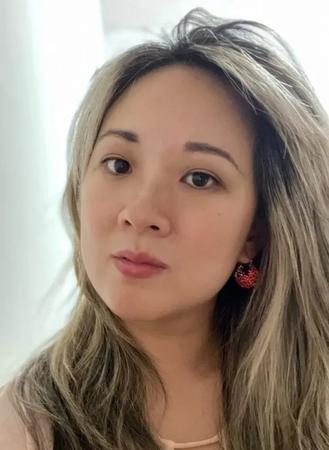 Eve J. Chung's debut novel Daughters of Shandong focuses on the mother and daughters of a landowning family who flee China for Taiwan as a result of the Communist revolution in the late 1940s. Chung has spoken about how she was motivated to write the book by her maternal grandmother's experiences of that period of history.
However, what became a work of fiction started as a simple attempt to record her family's past. In a note to readers, Chung portrays the special relationship she formed with her grandmother from having lived with her in Taiwan as a child. While they were close, bonding over competitive billiards and period dramas, Chung knew little of her grandmother's history as a refugee. After her grandmother passed away in 2013, Chung decided to record details about her life with the help of her mother and other relatives, for the purpose of sharing them with her children. But realizing that there were simply too many unknowns, she ended up embarking on the much larger project of fictionalizing her grandmother's story.
In an interview with Sampan, Chung talks about how another thread that informed her writing of Daughters of Shandong was her work as a human rights lawyer, which has focused on gender equality. Writing about a fictional Chinese family in the 1940s and '50s gave her the opportunity to address the sexism and misogyny inherent in society at that time. The poor treatment of women and girls, who are often shown to be given less importance and value than their male counterparts, is a major theme of the novel.
"I hope it helps draw attention to the entrenched sexism that women face in many cultures around the world," she says. Mentioning that she has seen both changes and continued "challenges" in her generation regarding sexism in Chinese culture, Chung also stresses that her interest in gender equality is not specific to any one group of people but extends across time and place, and also alludes to the unique difficulties and issues that women refugees face: "All over the world, there is backlash against women's rights, which is chipping away at hard-earned progress for gender equality—this is true as well in the country that I live in, the United States...What saddens me most is that there are still many women and girls who are refugees and/or suffer as a result of armed conflict, just like my grandmother and her family."
In a recent article for Writer's Digest, Chung writes about choosing the cover art for her novel, which ended up being a painting by Wang Yidong, an artist from her grandmother's home province of Shandong. In conjunction with this, she comments on the inspiration behind the novel's title, explaining that while her grandmother's remains are buried in Taipei, her roots were an important part of her identity: "Among Chinese people, it is common to ask a person where their lao jia, their 'old home' is—the roots of their origin, which is not where they were born, but where their family is from."
Filed under Books and Authors


The award-winning author of The Resisters returns with an engrossing, blisteringly funny-sad autobiographical novel tracing a tumultuous mother-daughter relationship.
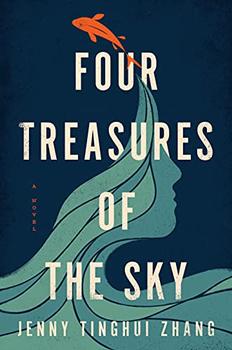
A propulsive and dazzling debut novel set against the backdrop of the Chinese Exclusion Act, about a Chinese girl fighting to claim her place in the 1880s American West.
Your guide toexceptional books
BookBrowse seeks out and recommends the best in contemporary fiction and nonfiction—books that not only engage and entertain but also deepen our understanding of ourselves and the world around us.

