

In This Edition of
The BookBrowse Review
Contents
Highlighting indicates debut books
Discussions are open to all members to read and post. Click to view the books currently being discussed.
Literary Fiction
Historical Fiction
Short Stories
Essays
Poetry & Novels in Verse
Thrillers
Romance
Fantasy, Sci-Fi, Speculative, Alt. History
Biography/Memoir
History, Current Affairs and Religion
Literary Fiction
Fantasy, Sci-Fi, Speculative, Alt. History
Graphic Novels
Biography/Memoir
History, Current Affairs and Religion

| BookBrowse: | |
| Critics: | |
| Readers: |
From the bestselling author of The Lincoln Highway, A Gentleman in Moscow, and Rules of Civility, a richly detailed and sharply drawn collection of stories, including a novella featuring one of his most beloved characters
Millions of Amor Towles fans are in for a treat as he shares some of his shorter fiction: six stories based in New York City and a novella set in Golden Age Hollywood.
The New York stories, most of which take place around the year 2000, consider the fateful consequences that can spring from brief encounters and the delicate mechanics of compromise that operate at the heart of modern marriages.
In Towles's novel Rules of Civility, the indomitable Evelyn Ross leaves New York City in September 1938 with the intention of returning home to Indiana. But as her train pulls into Chicago, where her parents are waiting, she instead extends her ticket to Los Angeles. Told from seven points of view, "Eve in Hollywood" describes how Eve crafts a new future for herself—and others—in a noirish tale that takes us through the movie sets, bungalows, and dive bars of Los Angeles.
Written with his signature wit, humor, and sophistication, Table for Two is another glittering addition to Towles's canon of stylish and transporting fiction.

THE DIDOMENICO FRAGMENT
Lunch at La Maison
The only advantage to growing old is that one loses one's appetites. After the age of sixty-five one wishes to travel less, eat less, own less. At that point, there is no better way to end one's day than with a few sips of an old Scotch, a few pages of an old novel, and a king size bed without distractions.
Certainly, some of this decline stems from the inevitable degeneration of the physical form. As we age, our senses grow less acute. And since it is through the senses we satisfy our appetites, it is only natural that when our eyes, ears, and fingers falter that we should begin to desire with a diminished intensity. Then there is the matter of seasoned familiarity. By the time our hair goes gray, not only have we sampled most of life's pleasures, we have sampled them in different locations at different times of day. But in the final accounting, I suspect the cessation of appetites is mostly a matter of maturity. Traipsing after a beautiful young thing late into the night, going from one trendy spot to the next and trying rather desperately to think of something witty to say while pouring a well-aged Bordeaux at our own expense... . Really. At this stage, who can be bothered?
But if a decline in the appetites brings some sense of relief to most who age, it is particularly welcome to those in their sixties who can no longer afford the lifestyle of their forties.
On the isle of Manhattan, this population is more sizable than you might expect. Well-meaning husbands, who have put off their financial planning for one decade too many, routinely strand their widows with insufficient funds. Others, who proved capable in commerce as younger men, become careless or even foolish in retirement, wasting badly needed resources on real estate speculations, mistresses, and charity. Then there are those sensible fellows—like me—who, having carefully calculated the necessary capital to support their retirement and prudently set aside savings from year to year, turn a blind eye to the frothiness of a bull market and smugly quit their job only to be brought up short six months later by the ensuing collapse. Whatever the excuses, many who reach their golden years on the Upper East Side find themselves suddenly forced to live below their prior means. So, it's just as well they no longer want what they can't afford.
"Are you finished, Mr. Skinner?"
"Yes. Thank you, Luis."
"Will there be anything else?"
"Just the check."
Clearing what is left of my salade niçoise, Luis winds his way to La Maison's kitchen through a maze of mostly empty tables.
There was a time when you could track the evolution of power in Manhattan by dining at La Maison. Located at 63rd and Madison, offering a serviceable execution of Continental cuisine, the restaurant welcomed real estate developers, advertising executives, financiers, and the ladies who lunched. Over the years, the decor grew a little tired, the food a little outmoded, and those "in the know" moved on to brighter venues serving brighter fare. But if La Maison was no longer the most sought-after table in town, it was not entirely déclassé. There were still a few veterans of commerce and society who, out of habit or lack of imagination, returned for the prix fixe lunch.
There in the corner, for instance, is Lawrence Lightman. A stately six-foot-two, Lawrence hasn't led a publishing house in over a decade, but he continues to wear a coat and tie; and he apparently made enough of a name for himself that aspirants in the field still make the occasional pilgrimage to his table.
Closer to the bar is Bobbie Daniels. A former partner at Morgan Stanley, Bobbie was once considered a prodigy in the field of acquisitions and divestments. In fact, this skill came so naturally to him, he had acquired and divested four different wives. He now has an office at some mahogany paneled trust company where his primary responsibility is the hanging of his hat in sight of the ...
Excerpted from Table for Two by Amor Towles. Copyright © 2024 by Amor Towles. Excerpted by permission of Viking. All rights reserved. No part of this excerpt may be reproduced or reprinted without permission in writing from the publisher.
Please be aware that this discussion guide will contain spoilers!
Unless otherwise stated, this discussion guide is reprinted with the permission of Penguin Books. Any page references refer to a USA edition of the book, usually the trade paperback version, and may vary in other editions.
Amor Towles's short story collection Table for Two reads as something of a dream compilation for those of us who have dearly wished we could spend just a bit more time in the company of his characters and in the fully imagined settings of his novels Rules of Civility (2011), A Gentleman in Moscow (2016) and The Lincoln Highway (2021). It appears that the author may have felt that way, too.
Although we get just a short whiff of the Moscow location of Towles's Gentleman in Moscow in "The Line," the first of six stories that make up the New York section of Table for Two, the general sensibility, gentle humor and expert storytelling we associate with Towles and, perhaps, his greatest character, Count Alexander Ilyich Rostov, reverberate through all of the stories, particularly the wry first-person narrative of "The Didomenico Fragment." Here, retired art expert Percival Skinner recounts his attempt to broker the sale of a fragment of an important Italian Renaissance painting of the Annunciation. His family has increasingly mutilated the masterpiece, as each successive generation has cut it into smaller pieces to pass down equal sections to their children in an ever-shrinking inheritance. This is only one element of the story, but it demonstrates how Towles can present us with an absolutely absurd proposition in such a reasonable manner that we don't even blink as we easily visualize the dwindling artifact. In this story, as in others in the volume, readers are kept engrossed by one surprising plot twist after another; Guy de Maupassant would be proud.
The second, and perhaps more satisfying, Los Angeles section of the book contains the novella "Eve in Hollywood," which serves as a sequel of sorts to Rules of Civility and reintroduces the intrepid character Eve Ross, now busy creating a new life for herself in late-1930s Hollywood. (I will note here that the novella stands alone and will still appeal to readers who have not read Rules.)
We last heard of twenty-something Eve at the end of Rules of Civility when she left New York still reeling from a series of traumatic events. Readers were told that, on the way to her parents' midwestern home, she suddenly changed her mind and extended her train ticket to Los Angeles. Later, she was glimpsed in a photograph from a gossip magazine in the company of a "boisterous Olivia de Havilland." From these two small pieces of information, Towles has constructed his novella.
Eve ends up at the elegant Beverly Hills Hotel, where she gathers a small collection of wonderful, eccentric friends, including the charming young actress de Havilland, who has just completed her role starring as Maid Marian opposite Errol Flynn in The Adventures of Robin Hood. The reader will be forgiven for again thinking of the Metropole Hotel setting of A Gentleman in Moscow. There is something about a grand hotel that Towles just can't seem to resist, and thank goodness for that. But instead of the grey Moscow skyline, Towles now harnesses the evocative setting of Los Angeles in the years just before the Second World War when Hollywood was at its peak of glamour and the jasmine-scented air felt ripe with possibility.
Of course, one can't write about Los Angeles of this period without giving a nod to the great LA writers of the era, particularly Dashiell Hammett and Raymond Chandler, and Towles includes an exciting mystery subplot in which Eve gets to the bottom of a blackmailing scheme using nothing but brains, clever repartee, friends with the right skills and a surprisingly handy recipe for concocting a drug-laced Micky Finn to knock out the baddies.
The introduction of real people into the mix, such as Olivia de Havilland and the film executive Jack Warner (see Beyond the Book), works wonders to establish a strong sense of time and place, as does the snappy dialogue that feels straight out of the mouths of Nick and Nora Charles in any of the Thin Man films. In all this is a delightful group of stories to dive into, and Towles will not disappoint any of his admirers.
It should be noted that as is often the case with story collections, several of the stories have previously appeared elsewhere. I distinctly remember sitting on an airplane some years ago listening to an Audible Original recording of "The Didomenico Fragment," read by the great John Lithgow, and an earlier version of "Eve in Hollywood" was published as a Penguin special edition. But regardless of the stories' publication history, readers will still appreciate having them in a single volume for the first time.
Reviewed by Danielle McClellan
Rated 5 out of 5
by Brenda_Wychock
Excellent stories
Table for Two is a book of short stories. The last story is a novella. I really enjoyed them. The characters in the stories are relatable and they are entertaining. The stories are entertaining but they make you think too. I did not want the stories to end. As usual, Amor Towels had done an excellent job!!
In the novella "Eve in Hollywood," in Amor Towles's Table for Two, Eve Ross becomes close friends with the actress Olivia de Havilland. It is 1938, and de Havilland's popular new film The Adventures of Robin Hood has just been released. All is not well in paradise, however, for the young star falls prey to blackmailers, even as she struggles to wrest more control over her career from a paternalistic Hollywood studio. While the first plot point is pure fantasy, the second, in fact, accurately reflects the real Olivia de Havilland's struggles with the Hollywood studio system.
Olivia de Havilland (b. 1916) and her younger sister Joan (b. 1917, later known as the actress Joan Fontaine) were born in Japan to British parents, but grew up in the California town of Saratoga. After high school, a teenage de Havilland was cast as second understudy for the role of Hermia in a splashy Hollywood Bowl staging of A Midsummer Night's Dream, produced by Max Reinhardt. When both the actress playing Hermia and the first understudy dropped out only one week before the play's premiere, de Havilland stepped into the plum role. In the subsequent film version Reinhardt made for Warner Bros., he again cast de Havilland as Hermia.
In November 1934, de Havilland signed a standard seven-year contract with Warner Bros., with a starting salary of $200 a week (about $4,600 today). De Havilland entered the film business during a period known as the golden age of the Hollywood studio system. Its five major studios—Metro Goldwyn Mayer (MGM), RKO, 20th Century Fox, Warner Bros. and Paramount Pictures—followed a business strategy known as vertical integration through which "they owned all aspects of production, distribution, and exhibition," according to writer Mike Maher. "From before cameras started rolling until the theaters projectors stopped, the entire process was controlled by the studios." And for contracted actors, powerful executives dictated all aspects of life, including molding their public image and deciding which roles they would take.
 In the first year of her contract, Warner Bros. cast 18-year-old de Havilland to star with 25-year-old actor Errol Flynn in the action-adventure film Captain Blood. Flynn and de Havilland would go on to make several films together, the most popular being The Adventures of Robin Hood. Although these films did well at the box office, de Havilland began to grow frustrated with the characters she was playing. In an interview, de Havilland explained: "The life of the love interest is really pretty boring.…The heroine has nothing much to do, except encourage the hero…. I longed to play a character who initiated things, who experienced important things, who interpreted the great agonies and joys of human experience. I certainly wasn't doing that on any level."
In December of 1938, de Havilland got a call from George Cukor, who was preparing to direct the film Gone with the Wind for David Selznick and MGM. He asked her if she would be interested in playing the coveted role of Melanie Hamilton. She was thrilled at the opportunity, but her contract required her to get permission from Warner Bros.'s infamously hard-nosed executive, Jack Warner. She later recalled that Warner "utterly refused to lend me for Melanie…. I even went to call on him and begged him. He said, no." Desperate, de Havilland made a bold move. She called Warner's wife, Ann, herself a former actress, and asked her to help: "Through her, Jack eventually agreed." The film became an instant classic, and de Havilland received a best supporting actress Oscar nomination.
In 1943, just as de Havilland looked forward to the end of her contract with Warner Bros., the studio announced that they would not release her until she had repaid them for time lost by her previous contract suspensions with another film. This was business as usual for big studios, which punished actors who rejected assigned roles by extending the length of their contract for the time it took another actor to complete the role. De Havilland sued Warner Bros., arguing that "the contract was for seven years, suspension or not, and that Warner Bros. was violating labor law." This led to a difficult, drawn-out trial in which Warner lawyers goaded her to make her look unreasonable. The strategy backfired. The court ruled in her favor, declaring that "the actress's contract was a form of 'peonage' or illegal servitude." The actress not only won her case but saw it become a landmark judgment still known as the "de Havilland law." Many think this marked the beginning of the end for the Hollywood studio system, which, in 1948, was forced in a major anti-trust decision to begin dismantling vertical integration.
Although Warner Bros. tried to ruin de Haviland's career, she persevered, achieving greater fame and eventually capturing two Academy Awards. However, as film professor Jeanne Basinger comments, "Other actresses have won Academy Awards. Other stars have been as famous. But few had as far-reaching an impact as de Havilland did," thanks to her stellar performance under a different spotlight in a court of law.
Olivia de Havilland and Errol Flynn in The Adventures of Robin Hood trailer, courtesy of Warner Bros.
Filed under People, Eras & Events


From the bestselling author of The Garden of Evening Mists, a spellbinding novel about love and betrayal, colonialism and revolution, storytelling and redemption.
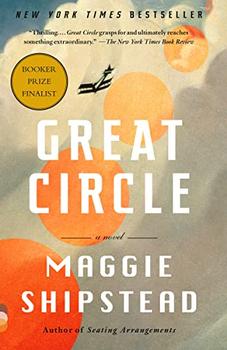
An unforgettable story of a daredevil female aviator determined to chart her own course in life, at any cost - Great Circle spans Prohibition-era Montana, the Pacific Northwest, Alaska, New Zealand, wartime London, and modern-day Los Angeles.
Books with similar themes
Your guide toexceptional books
BookBrowse seeks out and recommends the best in contemporary fiction and nonfiction—books that not only engage and entertain but also deepen our understanding of ourselves and the world around us.


