Anthony_Conty
They Need to Teach This in American Schools
Anthony_Conty
They Need to Teach This in American Schools
Taiwan has an immense, rich history for a land the size of Maryland with a population about the same as Florida. You could spend forever on their relations with China and Japan. “Taiwan Travelogue” by Yang Shuang-zi focuses on a curious Japanese novelist in Taiwan who falls for her Taiwanese interpreter on a culture bus-esque trip around the island nation.
Although I expected to learn some things, I did not expect so much about food, leading me to realize that I know less about Japanese and Taiwanese cuisine than I previously thought. Luckily, like any worthy translator, King takes a lot of time to teach you new vocabulary, though those of average aptitude will need to look back a few times.
For about the third time this year, Goodreads spoiled a plot twist by naming a genre that would not apply unless “something” happens that did not even begin to occur by the middle of the novel. This did not detract from the cultural experience I enjoyed, but it does not allow the reader to discover things organically.
The most engaging parts take the form of dialogue, when you can really see the bizarre relationship between the two women evolve and devolve. Can you ever truly love your implied oppressor? Are conflicts between individuals and those between cultures often the same thing? With so much left unspoken, the risk of misunderstanding increases. A language barrier only exacerbates these difficult moments.
If you tend to skip over the author’s notes at the end of the book, I would recommend giving them a chance here. So many writers and translators kept this story alive, and I forgot that we were reading about real people. They do not teach us enough about Taiwan and Japan in school, and we would benefit from learning.

Anthony_Conty
A Community I Barely Knew
People sometimes interpret reading books from minority cultures as virtue signaling, but I see it as an essential way to genuinely learn about communities I wouldn't otherwise encounter. With only two personal interactions with Native Americans—both culturally involved and memorable—I turn to books like this, which centers on a Frybread Drive-In, as a way to connect with authentic voices through stories by prominent Native authors.
The selections are true YA as far as the characters are concerned, but a lot of deeper meaning hides here. The bonds formed at the Frybread Drive-In connect seemingly separate individuals across different tribes, revealing how their paths intersect. You will find various lengths of writing and even an intense dose of poetry by Kaua Mahoe Adams that will resonate with you if you have ever felt that your anxiety was too much.
As often happens with collections of multiple voices, the audiobook comes highly recommended. Among the selections, I particularly enjoyed Kaua Mahoe Adams’s verse and the heartfelt, simple emergency baking in Andrea L. Rogers’ “You Had One Job.” For those who have lost a loved one, “I Love You, Grandson” by Brian Young offers clear, poignant resonance.
Continuing with the standout stories, “Hearts Aflutter” by A.J. Eversole captures the nuances of young love and confusion, evoking the awkwardness of first dates between people not quite ready. In “Jilly Bean and Jessa Jean,” Angeline Boulley—author of “Firekeepers’ Daughter”—thoughtfully explores youth relationships, attuned to a generation’s challenges in forging connections.
Successfully creating a YA collection that allows readers to truly meet and understand a diverse community is rare. This book achieves that, making the whole greater than the sum of its parts and offering readers not just entertainment, but an introduction to voices they might otherwise miss.
Cathryn_Conroy
A Contemplative Novel About Healing and Hope, Secrets and Confessions, Forgiveness and Understanding
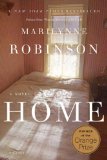
This is a quiet and contemplative book with very little plot; instead, it's a character study that is both profound and deeply sad. Like "Gilead" and "Lila," this novel philosophically examines life's biggest questions, but in this case it does so in a retelling of the Gospel of Luke's parable of the prodigal son: How do we forgive, especially ourselves? Why are we here? What is a soul? What is a family? Who is God? What does it mean to die?
Written by Marilynne Robinson, this novel continues the story of the Rev. Robert Boughton in his old age as he is nearing death. Retired as a minister in the Presbyterian church, he is a widower and the father of eight children, all of whom have moved away from their hometown of Gilead, Iowa. The youngest, 38-year-old Glory, a schoolteacher who was burned by a young man she thought of as her fiancé, has moved back to Gilead to care for her father in his last days. Surprising both of them, her brother Jack—the black sheep of the family, who has been incommunicado for 20 years and up to all kinds of mischief and misdeeds—suddenly appears on their doorstep. And while the other seven children did exactly what their parents expected, Jack did not. Yet, he remains his father's favorite child.
It's a hot summer in 1956. This is the story of the three of them as Rev. Boughton slowly dies and Glory and Jack begin to come to life again after experiencing heartbreak, disappointment, and despair. Jack is harboring some big secrets, and he's not disclosing any of them—for now. Meanwhile, he and Glory, who barely knew each other as children, begin a cautious and ever-so-careful dance toward one another, eventually forming a tight, loving bond as they both try to heal. Still, it's difficult. Jack is hostile. Jack is a thief, a liar, a coward, and a drunk. And Glory is suffering from her own secretive heartbreak.
This is a book that seems almost like a kind of prayer…a prayer for healing and hope, secrets and confessions, forgiveness and understanding.
As I wrote in my review of "Gilead: A Novel," this quartet of novels is an intelligent and accomplished literary achievement. Read this and the other three because they are masterpieces, but don't expect a compelling, page-turner of a story.
Unlike most book series, you do not need to read these novels in any particular order. They each—"Gilead," "Home," "Lila," and "Jack"—blend into the others in an imaginative way. And while each one stands alone, together they form a resonant whole.

Cathryn_Conroy
Literary Comfort Food for the Soul: A Lovely and Heartwarming Escape from the Real World
This is a lovely, thoughtful, and heartwarming escape from the real world. It is filled with joy and love. I call it literary comfort food for the soul.
Florence Greene is 92 years old, a widow who lives alone in the house she and her beloved husband, Terrence, owned for decades. Flo has just found out that she has four to six weeks to live, so she is spending this last precious bit of time writing a very long letter to Ruthie, the little girl who grew up in the house next door. Flo and Terrence weren't able to have children of their own, so Ruthie was a substitute. She spent hours and hours in their home, talking to Flo. And now Flo is leaving the house and all its contents to Ruthie, who is married with children of her own.
Flo describes the letter as an autobiography of things in the house and what they mean to her: a rubber band that is in a matchbox tied with a ribbon, a giant safety pin, a Mrs. Hen coffee mug, a metal box filled with recipes, and a teddy bear who lives in a blue cardboard suitcase, to name just a few.
About half the book is epistolary—the letter that Flo is writing to Ruthie to be delivered upon her death. The rest of it is the story of Flo's life past and present, as well as the people she is meeting now, mostly new neighbors and a funny encounter with Mimi the librarian. Oh, and Flo gets the first pedicure of her life and along with it a blue streak dyed in her hair.
This is a sweet, lovely novel with delightful characters and a simple plot that will light up your day. It is filled with solid life advice, offered in a tender and wise way. Like so many of Elizabeth Berg's books, especially the "Arthur Truluv" series, this one brilliantly captures the magnificence of life—and in this case, life at the end of life.
It's a treat! This is ChickLit at its finest.
Bonus: There is a fabulous recipe for corn-on-the-cob on page 51. (I read this on a Kindle, so the page numbers are a little wonky. If it's not page 51, it's close to it.)
Another bonus: The book cover is gorgeous!

Anthony_Conty
Live for Yourself, Live for Others
The phrase “trigger warning” triggers people in opposite directions. Some think it represents the weak in society, while others shy away from any book that could conjure up unwanted memories. Author Yiyun Li tells people with preconceived notions about suicide to stop reading “Things in Nature Merely Grow” after the first 40 pages, repeating the phrase “There’s no easy way to say this.”
Lit attempted suicide in her youth, and she lost two sons to the same end. To subject anyone to this well-written, pathos-driven piece, you would need to know about their history. I, for one, classify this as I do “Schindler’s List” and “Saving Private Ryan” as a brilliant, emotional work that I may struggle to endure again.
Li has a lot of questions about grammar as it relates to the tragic loss of a child, but they are not the ones that you consider. Are you still a parent if you die or your kid does? These thoughts populate the mind of a grieving parent who needs to move on but must do so at her own pace.
The ending of one’s life brings about many philosophical questions that require deeper thought. Do people actually want to die or just for their pain to end? Is it selfish, even among those who feel like a burden to their loved ones? To answer that, we will say that there are no answers, only empathy for the suffering parents.
The fact that Li finishes this book in a way that not only affirms life but also teaches you why your life is worth living is nothing short of a miracle. I still recommend the novel with caution because I would not dare tell anyone how to grieve. I, for one, will remember that people are counting on my presence.

Cathryn_Conroy
This Is Not Great Literature, but It is a Gripping Page-Turner
Oh, the hype! And, yes, it's all true. Even the venerable New York Times fell all over itself with praise and made it their June 2026 online book club selection.
While this is not great literature and will no doubt fade from the literary canon in a matter of years, this psychological thriller is a gripping page-turner that speaks volumes about our current culture.
Written by Caro Claire Burke, this is the story of an Internet influencer who is blatantly and falsely using her tradwife status to find fame and fortune—lots of fame and fortune. Natalie Heller Mills grew up in a poor family—single mom, one sister—in Idaho and studied hard to get to Harvard. Once there, feeling totally mismatched and out of place, she meets Caleb Mills, the youngest son of an incredibly wealthy and political father and a mother addicted to pills. Natalie falls for Caleb and drops out of Harvard to marry him. The fun and romance end with the wedding reception.
Caleb is weak, stupid, and completely unambitious, having no clue what he wants to do. Through some conniving and planning on the part of his frustrated wife and rich daddy, Natalie and Caleb buy a massive farm in the Idaho mountains where Natalie realizes she can make a living for her growing family by posting videos online of how she lives a pioneer-style life. A life that is simple, where everything is done from scratch. Except it's pretty much a lie. All the appliances and kitchen conveniences are hidden behind cabinets. Also off-camera are the two nannies who care for the five children and the producer who shoots the videos, as well as the hired hands who work the farm fields and care for the animals. Still, she has millions of followers and an online store. She is raking in the money! But what goes on behind the scenes is appalling and if her followers only knew…well, let's just say, Natalie would be finished.
And then one day, Natalie inexplicably wakes up in her house (but not her house), with her husband (but not her husband), and with her children (but not her children). It's 1855, and suddenly—like it or not (and she mostly hates it)—Natalie is a tradwife for real. She is horrified and terrified and very, very confused.
The plot twist at the end is big, but the author leaves several small clues and one big clue so we readers who pay attention are not totally blindsided.
While the plot is so compelling that it's hard to stop reading, I felt torn about the book for one simple reason: Natalie is not a likeable protagonist. She is not only meanspirited and unkind, but also malicious and spiteful. She actively dislikes—and even hates—her family and treats them accordingly. I found it difficult to sympathize with her.
Cathryn_Conroy
A Gripping Page-Turner with a Profound and Philosophical Message About the Power—and Hazards—of AI
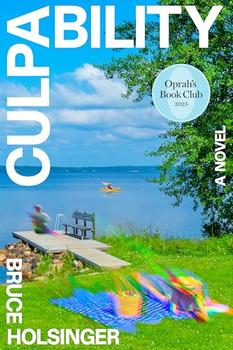
As much as this is a gripping page-turner, it is also an incredibly thoughtful, profound, and philosophical novel about the power, future, impact, and horror of the emergent field of artificial intelligence as it takes over so many aspects of our lives—like it or not.
Written by Bruce Holsinger, this family drama is peppered with suspense, secrets, and a smart storyline that will keep you glued to the novel.
A wealthy and privileged family of five is traveling from their home in tony Bethesda, Maryland in an AI-controlled minivan to son Charlie's lacrosse tournament on the Eastern Shore of Delaware. In a few months, handsome and athletic 17-year-old Charlie is headed to the University of North Carolina at Chapel Hill on a lacrosse scholarship. Charlie is driving…well, the AI system is actually driving, but Charlie is in the driver's seat. Riding shotgun is Charlie's dad, Noah Cassidy, an attorney for one of the top law firms in the country. But unlike many of his colleagues, Noah grew up with little money and attended less-than-prestigious schools. Riding in the backseat is the children's mother, Lorelei Shaw, a brilliant, double Ph.D. who is a world-renowned expert on artificial intelligence ethics and its future. Next to her is Alice, the middle child at age 13, and behind her in the very back is the youngest, Izzy, age 10.
As they are tooling along on a Delaware highway, it is Alice—not Charlie, whose head is down looking at his phone—who sees what is about to happen. A Honda Accord traveling in the opposite lane is crossing over and is about to hit them head-on. Alice screams. Charlie reacts to his sister's scream, but not quickly enough. Because Charlie jerked the wheel in a futile attempt to avoid the crash, the AI autonomous-mode controls switched off and did not take evasive action. The two cars collide, and the elderly passengers in the other car are killed, burned to death. Only Charlie and Noah escape without injuries. The Delaware State Police investigation begins. (This is not a spoiler. All of this happens in the opening pages and sets the premise for the rest of the book.)
So who is to blame for the fatal collision? Who has culpability? Is Charlie at fault for vehicular homicide? Could he land in prison for the next 20 years? Or is Noah to blame, as the responsible adult in the front seat? And the biggest question of all: What is the difference between legal guilt and moral responsibility?
In an attempt to recover emotionally and physically from the crash's horrors, the family retreats for one week to an isolated summer cottage on the Chesapeake Bay located on Virginia's Northern Neck. Nearby is a mammoth estate, a ridiculously ostentatious mansion owned by an AI billionaire named Daniel Monet. As the two families interact, beginning with Charlie falling head over heels for Daniel's 18-year-old daughter, Eurydice, secrets start to unravel—secrets big and small and some so big, so dark, and so insidious that they could tear apart the family.
This is a super-timely novel that has a fast-paced, compelling plot and a provocative, thoughtful message. In addition to being the perfect summertime read, it's ideal for book clubs because there is so much to discuss.
And for what it's worth: When I was not reading, I often thought to myself, "Oooh! I want to go read that book 'Calamity."" Except that is not the title. The title is "Culpability," but it might could also have been subtitled "Calamity." Because for this family, what happens is truly a calamity…a catastrophe or disaster.

Cathryn_Conroy
A Haunting, Almost Thriller-Like Novel with an Ending You'll Never See Coming
Desperate times. Even more desperate people. What would you do to feed your family and keep your loved ones safe if everything around you was collapsing?
Written by Megha Majumdar, this remarkable, multilayered novel takes place in the near future in Kolkata, India where temperatures have soared so high that the vegetation is dying, fish are swimming away to cooler waters, water is a precious commodity, and people are fleeing in droves. Those who are left are suffering from heat, hunger, and hopelessness.
Ma and her elderly father, Dadu, live in the house in which Dadu grew up. Mishti is a happy, precocious two-year-old, oblivious to the suffering all around her. The small three-generation family is preparing to move to Ann Arbor, Michigan where Ma's husband awaits them. They are climate refugees, securing the valuable and long-awaited passports and visas that will allow them entry into the United States. Their booked flight leaves in seven days. In the middle of the night one week before their departure, a thief breaks into their home, stealing not only the precious food they have hoarded and hidden, but also Ma's purse in which the prized passports, much of their money, and her cell phone are stored. When they awaken in the morning and discover the robbery, their small, safe world collapses.
The thief is Boomba, a teenager who has fled from the country to the city to try to make a better life for his parents and beloved baby brother, Robi, who are currently living under a leaky tarp. Boomba was essentially Robi's guardian, the one the little boy loved most in the world. Once he gets to the city, Boomba has a series of misadventures in which he gets work, makes money, and loses the money. He sleeps in a shelter, and it is there that he sees Ma—and what he sees is startling. Ma, who works in the shelter, is stealing food meant to go to the shelter's residents. He follows her home to rob her of the food. Boomba quickly sells the twice-stolen food; he also swiped the purse and tosses most of its contents into a garbage hillock, including the passports.
And so this haunting, almost thriller-like story begins. Ma and Boomba are both guardians and thieves. Will they be able to save themselves? Even if they are moral and ethical humans at heart, what is the breaking point when a fight for survival is paramount? This is a very close-up and personal look at the havoc and disaster wreaked by climate change.
And the ending? It is devastating and gut-wrenching. I never saw it coming, but it's a perfect statement on the ultimate meaning of the book.
With unexpected plot twists and wrenching emotional insights, this book is as much a chilling warning for the future as it is a gripping page-turner in the present.
Just a thought…a haunting, disturbing thought: I think of myself as a kind and compassionate person. I think that is who Ma was—in the before times. Who do we become when we are desperate? Who Ma becomes is frightening. Is that what happens?
Cathryn_Conroy
A Tragic Novel Filled with Difficult, Heartbreaking Truths About Living, Dying, and Loving
He was barely a grown-up…really just a boy. He made one unwise decision, accepting a ride with friends who ended up robbing a liquor store and killing the White owner. Before he died, the owner shot back and killed the two Black robbers, leaving the boy/man standing there amidst the carnage. Guilty! And sentenced to die in the electric chair.
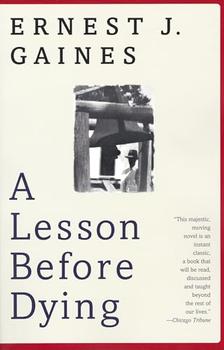
Written by Ernest J. Gaines, this elegiac novel is the story of that young Black man named Jefferson, in the months following his trial and before his execution. It is 1948, and segregation is the law of the land in Cajun country. While he is being held in the sordid and wretched small town jail of (fictional) Bayonne, Louisiana, Jefferson's godmother Miss Emma, whom he calls Nannan, asks her best friend's nephew, Grant Wiggins, to regularly visit Jefferson. In a misguided and deeply hurtful attempt to help his client, Jefferson's defense attorney told the all-white male jury that Jefferson was nothing more than a hog. And who would put a hog in the electric chair? The argument failed to win Jefferson an acquittal and only served to change his own opinion of himself.
Meanwhile, Jefferson has sunk into a deep depression, barely eating or sleeping, and yelling out about being nothing more than a hog. It is Grant's job to try to turn him into a man before he meets his death, a job Grant is reluctant to do. Grant is a teacher—his nickname among the Blacks in his tightknit community is Professor—and he is struggling in his job to teach all the Black children in one room in the church's sanctuary.
And now he must give a man who has been sentenced to death a lesson on living, to help Jefferson regain a sense of dignity and self-respect that he lost in the courtroom when he was so harshly labeled a hog. The lesson they both learn is something filled with grace and redemption—and power!—as both men realize that Jefferson has only one freedom left as he languishes in chains and in a lonely cell: He has the ability to choose whether he accepts death or not. His freedom is in the power of his mind.
This is a worthwhile novel to read—it is listed in "1,000 Books to Read Before You Die: A Life-Changing List," by James Mustich—but it is also a tough book to read not only because it is inherently tragic and deeply sad, but also because of the overt and cruel racism that affects all the Black characters.
Emotionally searing and deeply tragic, this is a novel filled with difficult, heartbreaking truths about living and dying—and most of all, loving.
Cathryn_Conroy
Taut, Thoughtful, and Simming with Tension: A Gripping Summer Read
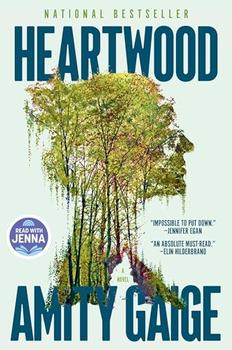
Where ever you are going on vacation this summer—road trip, beach, mountains, hiking the Appalachian Trail—this is the book for you. Oh, wait. Nix the AT. If you're hiking that, you might not want to read this thriller about Valerie Gillis, a 42-year-old registered nurse, nicknamed Sparrow, who hiked the Appalachian Trail to help heal and recover from Covid trauma and then…disappeared some 200 miles from her final destination at the northern terminus of the trail. Poof! She just seemingly vanished into the unforgiving wilderness of Maine.
Written by Amity Gaige, this is a twisty-turny, suspenseful thriller as hundreds of trained searchers on foot, as well as planes, helicopters, and K-9 teams, comb hundreds of acres of deeply forested woods, streams, and ridges in Maine during two weeks in August. Why did Sparrow veer off the Appalachian Trail? Was it a simple mistake or did something more sinister happen to her? As each day passes, her chances of living through this greatly diminish.
The story, which is more of a slow-burn than it is action-packed, is told primarily in the first-person by Maine State Game Warden Beverly Miller, a 57-year-old single woman who has devoted her 30-year career to finding lost people in the treacherous, deep forests of Maine. But we also learn tidbits about Sparrow from the journal entries she makes—a journal that is later found with her abandoned backpack.
And as much as this is a thriller against time to find a missing hiker and the quest for wilderness survival at its most basic level, it is also a love story about mothers and daughters and the many joys and complications of this relationship.
This beautifully written novel is so much more than a compelling page-turner that will keep you up past your bedtime. It is also introspective. Gaige has fleshed out the characters so we get to know their backstories, their hopes and dreams, and their crushing disappointments.
Taut, thoughtful, and simmering with tension, this is a gripping summer read.