

In This Edition of
The BookBrowse Review
Contents
Highlighting indicates debut books
Discussions are open to all members to read and post. Click to view the books currently being discussed.
Literary Fiction
Historical Fiction
Short Stories
Essays
Poetry & Novels in Verse
Thrillers
Romance
Fantasy, Sci-Fi, Speculative, Alt. History
Biography/Memoir
History, Current Affairs and Religion
Literary Fiction
Fantasy, Sci-Fi, Speculative, Alt. History
Graphic Novels
Biography/Memoir
History, Current Affairs and Religion

| BookBrowse: | |
| Critics: | |
| Readers: |
Holy City is the captivating debut from Henry Wise about a deputy sheriff who must work alongside an unpredictable private detective after he finds himself on the outs from his sheriff's department over his unwillingness to look the other way when an innocent man is arrested for murder.
After a decade of exile precipitated by the tragic death of his mother, Will Seems returns home from Richmond to rural Southern Virginia, taking a job as deputy sheriff in a landscape given way to crime and defeat. Impoverished and abandoned, this remote land of tobacco plantations, razed forests, and boarded-up homes seems stuck in the past in a state that is trying to forget its complex history and move on.
Will's efforts to go about his life are wrecked when a mysterious, brutal homicide claims the life of an old friend, Tom Janders, forcing Will to face the true impetus for his return: not to honor his mother's memory, but to pay a debt to a Black friend who, in an act of selfless courage years ago, protected Will and suffered permanent disfigurement for it.
Meanwhile, a man Will knows to be innocent is arrested for Tom's murder, and despite Will's pleas, his boss seems all too content to wrap up the case and move on. Will must weigh his personal guilt against his public duty when the local Black community hires Bennico Watts, an unpredictable private detective from Richmond, to help him find the real killer. It would seem an ideal pairing—she has experience, along with plenty of sand, and Will is privy to the details of the case—but it doesn't take long for either to realize they much prefer to operate alone.
Bennico and Will clash as they each defend their untraditional ways on a wild ride that wends deep into the Snakefoot, an underworld wilderness that for hundreds of years has functioned as a hideout for outcasts—the forgotten and neglected and abused—leaving us enmeshed in the tangled history of a region and its people that leaves no one innocent, no one free, nothing sacred.

Excerpt
Holy City
FIRE WAS THE DREAM that broke him.
He sat stiff as a dead cat, felt for the handle of his pistol under the seat, relaxed. The sad night came back to him, one of many like it, riding indefinitely, listening to the angry word of God through a thin static distance, the voice somehow both austere and intimate, seeming to speak directly to him with piercing certainty.
He listened because there was nothing else out here—no other radio station—between hamlets or villages or four-way intersections, some of which at one point probably had been towns, nothing to see between them but a country undulating in pursuit of some sort of equilibrium, a pulse one could assess only by covering its distances, surprising because the countryside felt dead otherwise. It was not the soft, green junglelike vegetation of so much of Virginia but a hard, coarse, spiky land. The lonely roads wended like snakes through close forest or open fields or woods felled entirely for their lumber, leaving the ground as naked and weird as a skinned bear.
And as he passed the fading houses like craters, kudzu-covered or through-grown with wild privet and poison ivy and chipping of paint, out of a wood-paneled darkness came the dark, paternal, familiar voice, companionate and suggestive of violence, of guile, the voice clean-shaven, austere, piercing and expectant, some local celebrity preacher in a countryside rife with bewildering crime.
Will Seems had returned from a decade in Richmond—the "Holy City"—to a land he had called home each year of that decade, a country he now saw was peopled by a kind of disparate lost congregation. Last year, a man had cut his wife's throat with a Buck lock-blade, shooting himself after with a Walther PPK, failing on both counts. His wife was able to stop the bleeding from her neck with a pillow before calling 911, and the man woke up in a hospital room missing most of his jaw and wearing handcuffs to boot. Then, a few months ago now, a man in Halifax County who had been stopped for a burnt-out taillight had shot the policeman dead and driven away without contest.
Even now, no leads. But one of the strangest incidents had occurred only recently. A complaint had been submitted in town because of an odor emanating from a particular home. The middle-aged unmarried resident had wrapped her dead mother—deceased by natural causes—in winter blankets, leaving the body in the house for over two months. Will remembered the investigation they'd conducted, wearing masks that did little to mitigate the stench, counting out with watering eyes 116 air fresheners sprinkled over the quilts. The sheriff was glad enough to let Troy St. Pierre, the medical examiner, remove the corpse, but he and Will were stuck with the daughter of the deceased. When questioned, the woman could not explain why she hadn't reported her own mother's death, the only reason they had cause to arrest her. Will saw in her a sad and childish desperation that was not necessarily unique; he'd seen it in the faces of the county, a puckered, hopeless, dopey defeat. Will guessed she was so afraid of being alone in this world that she had considered the dead welcome company.
Will got out of his truck and stretched and made use of a tree, looking down at the flat water of the creek, the dream still nagging him, a strong odor of smoke refusing to fade. He couldn't keep doing this, riding late-night to wear himself out, ending up back at the creek to sleep and leaving early, before the fishermen came with their buckets and their lines. He'd smoked too much last night, tasted the cotton mouth now, remembered an acute craving for a Coke with vanilla, the way it was served at the nearest Waffle House over in South Hill. He reached in the pickup and took a sip now of leftover coffee in an open Styrofoam cup he'd picked up yesterday evening from the Get N' Go, some cooked-down tired version of what it had been when brewed that morning, and now ...
Excerpted from HOLY CITY © 2024 by Henry Wise. Reprinted with the permission of the publisher, Atlantic Monthly Press, an imprint of Grove Atlantic, Inc. All rights reserved.
Having returned home to Euphoria County, Virginia, after a decade in the "Holy City," aka Richmond, Will Seems is the new deputy sheriff when a shocking murder implicates the father of a friend. In his debut novel, Holy City, Henry Wise goes beyond formulaic mystery tropes to deliver a satisfying—and deeply dark—story of faith, forgiveness, and redemption.
Growing up in Virginia's rural Southside region, Will, who is white, was close to many in the area's Black community, including his friend Sam Hathom. After the death of his mother, Will left the tobacco fields and razed forests of Southside to forget; but after ten years in the Holy City, he is done with forgetting and wants to pay back a debt he owes to Sam, who once took a beating that nearly killed him when he stood up to a ring of bullies at the creek where the two boys often swam. While saving Will, this courageous act left Sam physically scarred and disfigured…and put him on the road to drug addiction. Sam himself was saved that night by Tom Janders, an older Black boy and Southside football jock.
Now, ten years later, Will uses his new badge to get information about the boys (now men) who perpetrated the act, not entirely sure of what he will do when he finds them. But it is the murder of Tom Janders, stabbed and left to burn in an arson fire, that will merge the puzzle pieces of the past with the mysteries of the present. Tom's association with Sam makes the sight of Zeke Hathom, Sam's father, running away from the Janders's property shocking. Forced by his boss, Sheriff Jefferson Mills, to arrest Zeke, Will protests that he is innocent…he knows the man as well as his own father. Disagreeing with Sheriff Mills—a "celibate, monk-like figure" married to the law—Will is at cross-purposes, and when Mills refuses to look at other suspects, including Tom's girlfriend and the mother of his child, Ferriday Pace, Will goes off to investigate on his own.
Wise adds another fly in the ointment as Will shelters Sam at his secluded childhood home, Promised Land Plantation, after apprehending him a month earlier in a robbery attempt. Refusing to send Sam to jail, the guilt-ridden Will is a complex protagonist who breaks laws to find justice; in this case, to help Sam get clean of his drug habit. The notion of justice is a theme that Wise peppers throughout Will's thoughts:
"It took him a few more years to come to the belief that justice had no meaning, only consequence. And it did not just happen. It never just happened. It had to be made to happen, forced."
Wise's characters are all, to one degree or another, compromised by their secrets and shame. As Will comes up against Mills's obstructionism, he gets help from Floressa Hathom, Zeke's wife and Sam's mother, and Tom's mother, Claudette, when they hire an unorthodox private investigator from Richmond, Bennico Watts, to find answers. Bennico is eager for the job in Southside, since she is grappling with the possible dissolution of her marriage with her attorney husband, Custis. During her fact-finding, Bennico and Will mix as well as oil and water in their preferred investigative methods, but they nevertheless make a solid sleuthing team bent on clearing Zeke's name. Since Wise invests a compelling backstory for Bennico, it would have been nice to see more of her in the storyline—will she return in another novel? Readers can only hope, as she is a blunt, brave, and keen-eyed PI all about her business.
What makes Holy City unique for its anodyne "mystery" appellation is its evocation of a Southern town gone to seed, mirroring declining industries, crime, and poverty. Wise's vision is a hopeful one, and themes of faith and forgiveness are redolent throughout, as Will continues to hope that the past does not have to control the future, especially in the heart of the ex-Confederacy:
"People around here seemed to live in a cloud of defeat, self-wrought and inherited. Whites had the lost cause; Blacks had slavery. It would seem they should be pitted against each other, but they were really dug in behind the same trench…"
Using multiple POVs from a colorful assortment of characters, Wise captures a range of diverse insights that illuminate the tangled relationships among Southside's residents. And as Will and Bennico get closer to uncovering the shocking truth of Tom's death— and his killer—readers will race to the finish, if only to find a light in the dark narrative that includes instances of profoundly disturbing violence. If readers can transcend the overwhelming feeling of despair and cynicism, they will find the mustard seed of hope delicately placed among the brambles of derelict houses, drug abuse, and damaged souls.
Holy City is a literary mystery that eschews the "cozy" for the gritty and serves up a satisfying (if not necessarily unexpected) murder resolution, while saving a knockout punch of a surprise for the last pages.
Reviewed by Peggy Kurkowski
 Ace Atkins, author of The Heathens
Megan Abbott, New York Times bestselling author of The Turnout
S.A. Cosby, author of All the Sinners Bleed
Ace Atkins, author of The Heathens
Megan Abbott, New York Times bestselling author of The Turnout
S.A. Cosby, author of All the Sinners Bleed
Rated 5 out of 5
by Cloggie Downunder
literary crime fiction at its best
4.5
“People around here seemed to live in a cloud of defeat, self-wrought and inherited. Whites had the lost cause; Blacks had slavery.”
Holy City is the first novel by American poet, photographer and author, Henry Wise. After a decade in Virginia’s Holy City, Richmond, Will Seems returns to his hometown of Dawn and works as a Deputy with the Euphoria County Sheriff’s Department. He doesn’t share his reason for returning although some make educated guesses.
When he spots a fire at the Turkey Creek home of former high school football star, Tom Janders, he risks his life to drag Tom out of the burning house. When Sheriff Jefferson Mills arrives, he immediately rules it murder: Tom has been stabbed in the back. Sawmill worker, Zeke Hathom is spotted fleeing the scene, and Will reluctantly arrests him. The Sheriff has soon charged Zeke with Tom’s murder, but neither Will, nor the victim’s mother, nor many of the town folk, are convinced that Zeke could kill his neighbour.
Will finds Zeke’s story plausible and, while prints on the murder weapon implicate him, Will feels he owes Zeke and his family, so he decides to properly investigate despite the Sheriff’s lukewarm response. Zeke’s wife, Floressa has no confidence that justice will be served. She engages disgraced Richmond cop, Bennico Watts to solve the murder and exonerate her husband. And she insists that Bennico, a woman who always works alone, teams up with Will.
Will has a problem with the idea too: he’s harbouring a fugitive in his dilapidated old family home. And his opposition to the Sheriff’s attitude threatens his access to information about the case. There’s talk of a cash debt, and some disgruntled gamblers who lost big to Tom on the night he died. Will (and Bennico) are thorough in their enquiries, becoming steadily more certain that Zeke is innocent and someone else deserves their scrutiny.
The astute reader will wonder early on about the Sheriff’s motivation and, while the murderer is revealed to the reader at the halfway mark, the journey to this being generally acknowledged, and the aftermath, definitely keep the pages turning. Readers may appreciate a trigger warning: there are several explicit descriptions of deviant sexual behaviour, and the ambiguous ending may not be to everyone’s liking.
Wise’s characters are complex, and he certainly challenges them with difficult dilemmas. His protagonist is plagued with a long-standing guilt that affects his reasoning. Bennico has Will summed up fairly quickly: “wearing that badge just to carry out a personal vendetta you haven’t had the courage to complete.”
He does give them some wise words: “You have to ask yourself if you really want to solve a problem or if you’ve learned to use it as a crutch. Sometimes, we learn to savor our pain. Ask yourself if this is more about some guilt you feel than it is about bringing them to justice. No act undoes the past” and insightful observations “Things that don’t get said are just as true as those that do.”
He fills his debut novel with gorgeous descriptive prose: “They could hear, beyond the roar of wind through the open windows, the life buzzing and skittering out over the wide openness of the fields, ending in trees and vines thick and tall over the road, the sound of cicadas and other insects ebbing and searing, subsiding again when the land opened up to new fields where tall trees like explosions broke the sky” and “They drove, the sun long gone, the glowing headlights scanning the cowled land for whatever might emerge, the gradual highway undulating in serpentine curves and straightaways where you could see, far ahead, the gleaming road like a blade under the moon” are examples.
Atmospheric, haunting and beautifully written, this is literary crime fiction at its best. More of Henry Wise will be eagerly anticipated.
This unbiased review is from an uncorrected proof copy provided by NetGalley and Grove Atlantic.
Rated 3 out of 5
by labmom55
Needed a better editor
Holy City is the debut novel of Henry Wise; a southern noir mystery about a deputy trying to prevent a miscarriage of justice. I will admit to buying this based on S. A. Cosby’s recommendation.
Will Seems has returned to his small hometown, just south of Richmond, after a ten year hiatus. One night he notices smoke - the house of a friend is on fire. Inside, he pulls out the dead body. But the man didn’t die from the fire. He was murdered and the fire was meant to cover it up. The sheriff quickly makes an arrest, but Will is convinced they have the wrong man despite a preponderance of evidence. The mother of the dead man hires a female PI and she and Will start investigating on their own.
The strength of the story lies in the characters. They are all complex. The weakness of the story lies in the writing. It’s overly wordy which kept taking me out of the story. It was obvious from the first chapters who was the actual murderer. The suspense for me was to see how they would be uncovered. Then the book takes a weird turn. By the 75 mark, most everything has been revealed and I couldn’t figure out how the author intended to fill the remaining 25. And while it probably could have easily been condensed, it did tie up all the loose ends.
It’s obvious that Wise has talent. What he needed was a better editor. I listened to this and Chris Henry Coffey was a great narrator.
 The area where author Henry Wise's Holy City takes place—Southside—encompasses a swath of counties in the southern portion of Virginia's Piedmont region. Southside stretches from the James River south to the North Carolina border and extends as far east as Isle of Wight and Southampton Counties, bounded along the western edge by the foothills of the Blue Ridge.
Its history is rich in landmark events. In the nineteenth century, Southside comprised counties with some of Virginia's largest enslaved populations, and the region was the setting of two of the most dramatic episodes of the Civil War: Ulysses S. Grant's siege of Petersburg, Virginia, in 1865, led to Robert E. Lee's eventual retreat from the city on April 2 and his surrender of the Army of Northern Virginia at Appomattox Court House on April 9. In the twentieth century, Southside emerged in the national consciousness again during the fight for civil rights for Black Americans. In Prince Edward County in 1951, Black students at the Robert Russa Moton High School went on strike protesting unequal educational facilities.
Southside is historically the state's major center of tobacco farming, and the southeastern parts of the region have been known for producing cotton and peanuts. In the twentieth century, textile and furniture industries came to the areas around Danville and Martinsville, but in the twenty-first century, economic hardships increased as factories shuttered and tobacco production declined. As the protagonist in Holy City laments, "Euphoria County at times seemed to be a tangent, like an unmaintained road going nowhere. Many of the neglected houses were inhabited by vagrants and users, those who lived tobacco's tragic legacy…"
The economic challenges currently facing Southside (and Southwest), Virginia stem from the decline of four major industries: furniture, textiles, tobacco, and mining. In a 2023 report by the Virginia Economic Development Partnership, the authors found that "the region has seen a loss of production and employment over the last four decades, beginning in the 1980s. Across Southwest and Southside, over $2.2 billion in Gross Domestic Product (GDP) and 60,000 jobs disappeared from just those four industries alone."
The change in Southside fortunes over the decades is being addressed and compared to how well businesses and investments are doing in other parts of Virginia. In a 2022 Cardinal News article, editor Dwayne Yancey calls out the economic inequality across the state by citing some sobering statistics: "Today the state's poorest locality is Emporia, with a median household income of $27,063." Emporia may have served as inspiration for Wise's fictional Euphoria County.
Yancey draws from recent Fortune 1000 and Inc. 5000 lists to view the disparities, which he argues could be ameliorated by fostering entrepreneurship. Many of Virginia's emerging companies are gaining access to critical funding, he says, but "we see other parts of Southwest and Southside not growing any companies that have merited such funding." Still, there are signs of hope, as groups are forming in Southside (and beyond) to encourage entrepreneurship in their communities.
With his heartfelt debut novel, Wise puts Southside in the spotlight. Hopefully, as economies shift and change, so too shall the fortunes of this once vibrant and historic region of Virginia.
Map showing Southside in Virginia
By Ali Zifan (CC BY-SA 4.0), adapted from image by Alexrk2 (CC BY 3.0), via Wikimedia Commons
Filed under Places, Cultures & Identities


The new novel from New York Times bestselling and Los Angeles Times Book Prize-winning author S. A. Cosby, "one of the most muscular, distinctive, grab-you-by-both-ears voices in American crime fiction." —Washington Post.
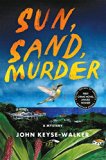
Written with a wry, witty narrative voice and a plot full of twists and turns, John Keyse-Walker's Minotaur Books/Mystery Writers of America First Crime Novel Award-winning debut is a pure delight.
Your guide toexceptional books
BookBrowse seeks out and recommends the best in contemporary fiction and nonfiction—books that not only engage and entertain but also deepen our understanding of ourselves and the world around us.


