

In This Edition of
The BookBrowse Review
Contents
Highlighting indicates debut books
Discussions are open to all members to read and post. Click to view the books currently being discussed.
Literary Fiction
Historical Fiction
Short Stories
Essays
Poetry & Novels in Verse
Thrillers
Romance
Fantasy, Sci-Fi, Speculative, Alt. History
Biography/Memoir
History, Current Affairs and Religion
Literary Fiction
Fantasy, Sci-Fi, Speculative, Alt. History
Graphic Novels
Biography/Memoir
History, Current Affairs and Religion

| BookBrowse: | |
| Critics: | |
| Readers: |
From the author of There Is a Rio Grande in Heaven, a piercing debut novel following two families in alternative timelines of the Salvadoran civil war—a stunning exploration of the mechanisms of fate, the gravity of the past, and the endurance of love.
Cambridge, 2018. Ana and Luis's relationship is on the rocks, despite their many similarities, including their mothers who both fled El Salvador during the war. In her search for answers, and against her best judgement, Ana uses The Defractor, an experimental device that allows users to peek into alternate versions of their lives. What she sees leads her and Luis on a quest through Havana and San Salvador to uncover the family histories they are desperate to know, eager to learn if what might have been could fix what is.
Havana, 1978. The Salvadoran war is brewing, and Neto, a young revolutionary with a knack for forging government papers, meets Rafael at a meeting for the People's Revolutionary Army. The two form an intense and forbidden love, shedding their fake names and revealing themselves to each other inside the covert world of their activism. When their work separates them, they begin to exchange weekly letters, but soon, as the devastating war rages on, forces beyond their control threaten to pull them apart forever.
Ruben Reyes Jr.'s debut novel is an epic, genre-bending journey through inverted worlds—one where war ends with a peace treaty, and one where it ends with a decisive victory by the Salvadoran government. What unfolds is a stunning story of displacement and belonging, of loss and love. It's both a daring imagining of what might have been and a powerful reckoning of our past.

Prologue
R,
I woke up thinking about Cuba. Do you remember the things we did as shadows danced on our shoulders?
That was only a year ago and already it feels like a lifetime has passed. Our cause, which started as musings and theory and theology, seems more important every day. It terrifies me that a war is around the corner, but I see no way of avoiding it.
Amid it all, the intensity of our relationship still rattles me. Being with you, I know I mislabeled my feelings in the past. Love is what I have for you. And I'm sorry for the moments I've failed to express it. You said once that love is a spring that wells inside you until you want to scream about it, and that your only regret is that the world doesn't want to hear it from men like us.
You're right that the world begs for our silence, pushing us into the shadows. I've shared their desires, beliefs I still cling to some lonely mornings. I know that makes you unhappy, and I'm sorry. At least I'm able to appreciate things for what they are, even if I'm not ready to shout them to the world. That also must be a sign of maturity, of growth. We're still young now, but we're no longer kids.
I miss you. The idea that people were made for one another seems melodramatic to me, and logically, it seems impossible. There are so many people on Earth and the idea that there is a perfect pair among billions is ridiculous. But sometimes, when I am missing you, I let myself believe that we were fated to meet. Made for each other.
Don't mistake my softness for weakness. I hold strong in the weeks we spend apart, even though some nights the yearning resembles physical pain. Of course, I can't continue on like this forever, but there's an end in sight. That keeps me going. I think back to Havana, and I think onward to the next time I can run my fingers along your bare back, touching the notches of your spine.
Love,
N
1984
The cautionary tales were endless. Desperate people viewed the device as a cure for their disappointments, some to the point of madness. Seeing their other lives didn't give them what they desperately desired: leadership skills, business acumen, emotional maturity, religious clarity, clairvoyance of all sorts. Thinking oneself more powerful than the All-Knowing had never worked out for man, and the issue of alternate universes was simply the latest iteration of a long line of mortal mishaps.
Ana's mother, Felicia, had echoed this warning many times, so when Ana first used the Defractor, she swallowed her shame and told herself it was for the sake of her academic work. Now, as she stared at the blue neon light that shone through a quarter-size hole on the machine's side, a pit formed in her stomach. There was no denying it: Ana was here for personal guidance.
The light shone bright as the base of a flame. Two earbud-size patches hung from the machine, just above a touch pad. Before she could lose her nerve, Ana attached them to her temples and looked into the machine.
THE DEFRACTOR© , HEARBY REFERRED TO AS "THE TECHNOLOGY," IS THE EXCLUSIVE PROPIETARY INTELLECTUAL PROPERTY OF DÍAZ MANUFACTURING LICENSED TO HARVARD UNIVERSITY, 2018.
USER AGREES TO USE THE TECHNOLOGY FOR: RESEARCH—HISTORICAL, SOCIOLOGICAL, AND/OR INTERDISCIPLINARY. PERSONAL USE IS SUBJECT TO PENALTIES, INCLUDING BUT NOT LIMITED TO: ACADEMIC SUSPENSION, LIFETIME BAN OF USAGE OF THE TECHNOLOGY, UP TO $1,000 FINE. ACCESS TO THE TECHNOLOGY IS LIMITED TO THREE USES PER ACADEMIC SEMESTER. REPEAT OFFENDERS MAY BE PLACED ON INVOLUNTARY LEAVE OF ABSENCE.
DO YOU ACCEPT THESE TERMS?
Yes.
ENTER LOGIN CREDENTIALS
ID: [email protected]
PASSWORD: *******
WELCOME, Ana Flores. LAST LOGIN, March 15, 2018. DURATION, 12 Minutes 34 Seconds. DESIGNATED INTERLOCUTOR, Canadian American singer and songwriter Alanis Morissette. HOW CAN I HELP YOU TODAY?
I need to see all the alternate ...
Excerpted from Archive of Unknown Universes by Ruben Reyes. Copyright © 2025 by Ruben Reyes. Excerpted by permission of Mariner Books. All rights reserved. No part of this excerpt may be reproduced or reprinted without permission in writing from the publisher.
Archive of Unknown Universes by Ruben Reyes Jr. examines two families across two timelines: one in 2018 starting in Cambridge, Massachusetts, and the other covering 1978–1980 in El Salvador. The story explores the impact of the Salvadoran Civil War through alternate history.
In 2018, we are introduced to Ana Flores and Luis Guzmán, two Salvadoran American Harvard students facing relationship issues despite their similarities—"neither had a relationship with their biological fathers, a civil war loomed in the background of their families' arrival in the United States, they both felt unequipped and out of place at an institution that valorized wealth." Ana, feeling lost in her research and life, turns to the Defractor, a widely accessible technology that allows users to explore alternative versions of their lives by posing a specific question. The device communicates through a chatbot and offers visual or textual renderings from parallel universes, presenting different possibilities. However, the Defractor is strictly forbidden for personal use and meant for academic or professional purposes, which Ana ignores. What she discovers sparks a journey that Luis joins, and they search for answers to their family histories, hoping that visits to Havana and San Salvador will bring them clarity.
The other timeline begins in 1978. We meet Neto, a Salvadoran revolutionary, and Rafael, a Nicaraguan revolutionary, who share an intense, forbidden love. Separated by their roles as document forgers for their respective countries, they communicate through letters until the Salvadoran War, along with growing fears and threats, ultimately tears them apart. We see how the war's outcome affects Neto and Rafael's lives, and how their stories intertwine with Ana and Luis's. An alternate universe set in 2018 where the Salvadoran government was victorious adds depth.
What-ifs are common reflections, but in reality, we never truly see the different possible paths our lives could take. The role of the Defractor, both embraced and challenged by the characters, echoes sentiments about modern technology that are relevant in our world: "At best, it'd be a waste of time and money. At worst, society would suffer, seeking salvation in another distraction from the Anthropocene's failures." It also allows for exploration of questions both personal to the characters and about Salvadoran history. Why wasn't El Salvador another Guatemala? What would life be like if the revolution failed?
The brutality of the war is revealed through the emotional reality of Salvadorans. Ana and Luis's mothers immigrated to America, and their trauma has translated into overprotectiveness and secrecy in their parenting, which their children do not understand. "Ana had no idea why her mother was overly cautious, had been all her life…Felicia's overprotectiveness was an offshoot of her love. Whatever she'd gone through, whatever she'd lost, had created a force field between her and the world, one Ana couldn't escape." The war has instilled a fear within them that they haven't been able to release or shake. Similar fears are reflected in the romantic relationship between Neto and Rafael, as their sexuality as gay men is not accepted, and they are not only hiding their work as forgers but also their relationship: "...it didn't matter that the revolutionary government they risked everything for would also treat their love as a disease to be weeded out." Despite their efforts to stay connected through their letters, it is difficult to imagine a world where they can be happy together. "Neto was scared by the unshakeable feeling that he and Rafael would never be able to establish the sort of life they wanted — no matter which way the war shifted." As Ana and Luis learn more about Neto and Rafael and their relationship, they are compelled to question their own relationship and whether it is worth trying to fix something that is broken, driven by a fear of the alternative. Their situation illustrates how comfort and stability can make it hard to notice when two people are no longer compatible.
Archive of Unknown Universes explores themes of queer love, family secrets, and the impact of war through the connections between characters and events across time. The letters between Neto and Rafael are especially meaningful, as the details of their personal experiences during the war influence their families. By following the characters' journeys between 2018 and 1978, readers see how past lives shape future possibilities. Imagining how history might have turned out differently emphasizes the tough realities of the immigrant experience—what life could have been if not for the need to leave home due to war, with fewer deaths and secrets, less trauma and family separation. The narrative considers the complex circumstances countless immigrants in America and elsewhere face. Archive of Unknown Universes is a love story and a historical novel that vividly portrays the realities of war, survival, and destiny. It's perfect for fans of magical realism and historical fiction eager to uncover hidden truths about the lives we forge for ourselves.
Reviewed by Letitia Asare
.jpg "Monument for victims of the Salvadoran Civil War") Ruben Reyes Jr.'s Archive of Unknown Universes explores the impact of the Salvadoran Civil War by contrasting one alternative timeline that shows a decisive victory by the government with another that shows the war ending with revolutionaries overthrowing the government. In reality, the Salvadoran Civil War lasted 13 years, from 1979 to 1992, and ended with peace talks facilitated by the United Nations. It was seen as a response to a brutal regime.
Ruben Reyes Jr.'s Archive of Unknown Universes explores the impact of the Salvadoran Civil War by contrasting one alternative timeline that shows a decisive victory by the government with another that shows the war ending with revolutionaries overthrowing the government. In reality, the Salvadoran Civil War lasted 13 years, from 1979 to 1992, and ended with peace talks facilitated by the United Nations. It was seen as a response to a brutal regime.
"It's simple," an organizer tells the character Neto in Reyes's novel, "We want more political space in this country. We want to be able to vote for candidates who actually represent the masses. We're asking for basic promises a government should offer its people: a political voice, less repression, literacy, health care. That's the basis of it, but a revolution looks like the only way to achieve those goals."
El Salvador came under various dictatorships from 1930 through the 1970s. During this period, the Farabundo Martí National Liberation Front (FMLN), a leftist group of guerrilla factions, was formed.
The United States supported the Revolutionary Government Junta (JRG), the Salvadoran military government that took power in 1979, due to economic ties and concerns that the leftist movement might overthrow the government and establish an anti-US communist regime. Over time, US aid increased, including funds for weapons and training for Salvadoran troops, despite ongoing human rights abuses by the JRG. The US provided the JRG with a total of $4 billion in aid to counteract the support the FMLN received from Cuba and the Soviet Union.
"The United States is trying to make El Salvador into another Puerto Rico. The Salvadoran government no longer works for us. They speak of those who dare organize as puppets controlled by the Soviets, but don't look at the fish-wire moving their own limbs," says Anabel, one of the leaders of the activist group fighting the Salvadoran government in the novel.
The conflict continued without significant developments on either side throughout the 1980s. In 1991, the United Nations intervened to facilitate peace talks between the FMLN guerrillas and the government. On January 16, 1992, the Chapultepec Peace Accords were signed in Mexico, officially ending the war. The peace agreement called for a major reduction of armed forces, the dissolution and disarmament of guerrilla groups, a new civilian police force (Policía Nacional Civil, PNC), and a commission to investigate human rights abuses committed by the Salvadoran Armed Forces and the FMLN during the war. The FMLN later became a political party. During the conflict, over a million Salvadorans were displaced, many fleeing to the United States seeking asylum. Since then, violence and political oppression in El Salvador have continued. Recent years have seen a decline in violent crime under the authoritarian government of President Nayib Bukele, a former FMLN member who was expelled from the party, but also a decline in civil rights and due process.
In Archive of Unknown Universes, we see the characters impacted by the war as some face displacement, violence, and trauma that gets passed through generations. The story sheds light on an essential part of El Salvador's history, highlighting how, in war, it is innocent civilians who suffer the most.
Monumento a la Memoria y la Verdad (Monument to Memory and Truth), a black marble monument containing the names of thousands of victims of the war in El Salvador
Photo by Olivia Isabel Flores, CC BY-SA 3.0
Filed under People, Eras & Events


Three women in three different eras encounter danger and witchcraft in this eerie multigenerational horror saga from the New York Times bestselling author of Mexican Gothic.
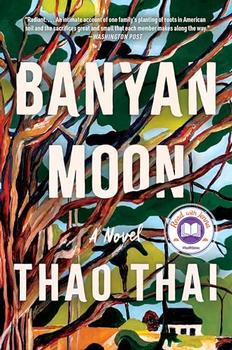
A sweeping, evocative debut novel following three generations of Vietnamese American women reeling from the death of their matriarch, revealing the family's inherited burdens, buried secrets, and unlikely love stories.
Your guide toexceptional books
BookBrowse seeks out and recommends the best in contemporary fiction and nonfiction—books that not only engage and entertain but also deepen our understanding of ourselves and the world around us.

