

In This Edition of
The BookBrowse Review
Contents
Highlighting indicates debut books
Discussions are open to all members to read and post. Click to view the books currently being discussed.
Literary Fiction
Historical Fiction
Short Stories
Essays
Poetry & Novels in Verse
Thrillers
Romance
Fantasy, Sci-Fi, Speculative, Alt. History
Biography/Memoir
History, Current Affairs and Religion
Literary Fiction
Fantasy, Sci-Fi, Speculative, Alt. History
Graphic Novels
Biography/Memoir
History, Current Affairs and Religion

| BookBrowse: | |
| Critics: | |
| Readers: |
Bury Your Gays is a heart-pounding new novel from USA Today bestselling author Chuck Tingle about what it takes to succeed in a world that wants you dead.
Misha knows that chasing success in Hollywood can be hell.
But finally, after years of trying to make it, his big moment is here: an Oscar nomination. And the executives at the studio for his long-running streaming series know just the thing to kick his career to the next level: kill off the gay characters, "for the algorithm," in the upcoming season finale.
Misha refuses, but he soon realizes that he's just put a target on his back. And what's worse, monsters from his horror movie days are stalking him and his friends through the hills above Los Angeles.
Haunted by his past, Misha must risk his entire future―before the horrors from the silver screen find a way to bury him for good.

MEMENTO MORI
The backlot is humming with energy today, and I'm not thrilled about it. Rolling up to the east security gate is typically a surefire way to cruise right in and get any tedious studio afternoon over with, but I've discovered a line of five or six cars waiting for me.
It's always something with this place, and today that something is poor traffic management.
I settle in, watching April at the security booth as she flashes her welcoming smile at each producer, actor, writer, and director making their way through the checkpoint.
I can't quite see who she's talking to, the rising California sun washing my eyes in its golden glow. Even through these dark sunglasses it's hard to get a read on the driver of the McLaren with the scissor doors and obnoxious paint job, but a shock of stark white hair hints at Raymond Nelson, head of the animation department and real-deal Hollywood legend. This would make sense, as he rarely keeps the same car for more than a month and I've yet to notice this vehicle on the lot.
Ray is old-school. I used to be terrified of the guy, but have since come to appreciate his no-bullshit approach to this business after two decades of weathering it myself. Regardless of your opinion on Raymond Nelson's studio battles and legendary tantrums, there's a lot to be said for sticking around as long as he has.
A few years back I worked for him on a pitch, a cartoon concept that never really got off the ground and eventually became a live-action TV pilot, and while his ideas about certain social issues are alarmingly dated, he maintains the spark that once propelled him to the top. The guy isn't just some suit. Raymond put in the hours, hand-drawing every cell of his first animated short before I was even born. He's part of the rare handful still with us who built this studio from the ground up.
On the other hand, he's also a blowhard asshole.
Ray eventually pulls onward in his six-figure sportscar, this lime-green vehicle acting as yet another billboard for his decades-deep midlife crisis. The absurd sight of Ray's new luxury vehicles usually triggers a smile of bemusement, but as Ray leaves the checkpoint I notice a look of exaggerated distaste on April's face.
This expression quickly shifts back to her usual warmth as the next car pulls up, and the process begins anew.
I move forward in turn, the whole line shifting one space, then put my car in park again. For the life of me, I can't remember it ever taking this long.
It's also possible my nerves are just stretching my perception of time like taffy. I'm rarely tense over a meeting—I just show up, tell them to fuck off, and leave—but this one feels different.
Everything in this town feels different lately.
I lean back in my seat and turn down the car stereo, which has been blasting the snarling howl of British punk band IDLES into my eardrums at an admittedly dangerous volume, and check in on myself. Deep breaths fill my lungs—in and out, in and out—and I facilitate this moment of peace even more by cracking the windows a bit.
To my right lies the Harold Brothers backlot, a sprawling mass of offices and breathtakingly large soundstages. To my left is an empty field of tall yellow grass that leads right up to the backside of Griffith Park. The studio owns these unused swaths of land, and one day they, too, will be covered in monstrous, rectangular soundstages. For now, however, these rare natural spaces peeking through the vast Los Angeles sprawl are treating my ears to a soft, brittle rustle, the gentle wind shifting millions of dry grass blades against their neighbors.
My eyes close as the sun warms my skin.
Honk! Honk!
The sounds are unexpected, but too far away to prompt much of a reaction. This invasion of my auditory space consists of two staccato blurts from a horn, an instrument that could just as easily belong to a circus clown as it could a passing bicycle.
I slowly open my eyes and turn my head toward the open field.
A cardboard cutout ...
Excerpted from Bury Your Gays by Chuck Tingle. Copyright © 2024 by Chuck Tingle. Excerpted by permission of Tor Nightfire. All rights reserved. No part of this excerpt may be reproduced or reprinted without permission in writing from the publisher.
Chuck Tingle, for those who don't know, is the pseudonym of an eccentric writer best known for his prolific career in bizarre erotica. Well over 400 stories have been published as ebooks, most with titles like My Billionaire Triceratops Craves Gay Ass, Open Wide For The Handsome Sabertooth Dentist Who Is Also A Ghost, and My Macaroni And Cheese Is A Lesbian Also She Is My Lawyer. It seemed like an elaborate troll job at first, and an irony-poisoned internet responded in kind. (An alt-right group got Tingle nominated for a Hugo Award, a campaign the author himself has firmly disavowed.) But while Tingle is frequently funny, his body of work is no joke: he is something of an outsider artist, animated by a sex-positive, radically sincere ethos.
Bury Your Gays, Tingle's second mainstream offering after Camp Damascus, is a horror novel that satirizes modern Hollywood as a world of soulless executives who reanimate dead actors with AI and defer their decisions to the almighty Algorithm. One such directive from the C-suite of Harold Bros., a thinly-veiled parody of Warner Bros., is addressed to a cynical screenwriter named Misha Byrne who serves as our narrator. It demands that he kill off a lesbian couple on the TV show he writes for. He's not at all pleased by this, but he's not given much time to process it before he watches a lecherous old bigwig get crushed by a falling piano.
What follows is a sort of queer meditation on pop culture, weaving in threads of Buffy the Vampire Slayer, The X-Files, and Who Framed Roger Rabbit. Misha is a frustrated creative forced to suppress his truest self for the sake of his career, just as he suppressed his sexuality growing up in the conservative state of Montana. As in I Saw the TV Glow, a recent film whose queer metafictional horror narrative is not too far removed from Bury Your Gays, nothing good comes from hiding: everything has to come to the surface eventually, and swallowing it only makes it fester.
Tingle has no shortage of great, provocative ideas, and there are plenty of amusing digs at Hollywood that add up over the course of the story. (When Misha asks if the actor resurrected by AI to play a mob boss was even Italian, he receives a stern response that the script didn't specify nationality.) But as imaginative as the author clearly is, his prose rarely does more than get the job done. There's the occasional burst of gnarly imagery (as when the aforementioned bigwig "pops like a water balloon" under the falling piano), but too often Tingle settles for phrases like "breathtakingly large" or describes a gaze as cutting "directly into your soul." Clichés become cliché for a reason, but such vivid ideas deserve equally vivid prose.
Still, it's hard to quibble when you're given a narrative as interesting as this. Simply put, you want to see where the story goes next, and Tingle is adept at making sure you never quite know what's about to happen. And as Hollywood executives seem eager to sacrifice the human condition at the altar of Silicon Valley, it's downright cathartic to see a novel portray algorithms and AI as the existential threats that they clearly are: call it Pounded in the Butt By Corporate Greed and the Insidious Devaluation of the Humanities.
Reviewed by Joe Hoeffner
 CJ Leede, author of Maeve Fly
Josh Winning, author of Burn the Negative and Heads Will Roll
Rachel Harrison, national bestselling author of Black Sheep
CJ Leede, author of Maeve Fly
Josh Winning, author of Burn the Negative and Heads Will Roll
Rachel Harrison, national bestselling author of Black Sheep
 The meaning behind Bury Your Gays' title becomes clear as soon as oily Harold Bros. executive Jack Hays orders protagonist Misha to do the bidding of the algorithm for the sake of his streaming TV show and kill off two lesbian characters. Author Chuck Tingle is commenting on the cynical use of queer representation in entertainment, especially on streaming television: characters are flaunted for brownie points, then casually discarded when they've served their purpose. But the "bury your gays" trope, in which queer characters are more likely to die than their straight counterparts, has been around for much longer than the likes of Netflix, and these character deaths have been motivated by many different factors.
For a long time, if gay characters were shown at all in film or television, it was as a villain, monster, or general person of ill-repute. The Hays Code, which censored Hollywood from the early 1930s to the mid-'60s, forbid the portrayal of homosexuality as anything other than wicked behavior to be punished. Certain characters, usually villains, were "coded" as gay or bisexual — recall Peter Lorre as Joel Cairo in The Maltese Falcon, or Laurence Olivier's Crassus in Spartacus — which, as discussed in Vito Russo's The Celluloid Closet, certainly didn't help the reputation of actual queer people.
Even as social mores shifted and queer characters were portrayed with a modicum of humanity, they usually met a tragic fate. From The Children's Hour, William Wyler's 1961 film about a lesbian school teacher being driven to suicide, through the AIDS epidemic, queer characters rarely ended their stories unscathed: in the documentary version of The Celluloid Closet, a lengthy montage depicts one gay or lesbian character after another dying, dying, dying.
Contemporary television is rife with examples of the trope: it has appeared in some form on everything from LA Law and Ally McBeal to Supernatural and Doctor Who. These shows are often lauded by critics for including queer characters despite killing them off for a cheap source of drama or tragedy, their deaths used to highlight the strengths and range of feeling of the heterosexual protagonist(s). A long list of examples can be found on the TV Tropes website.
Of course, a tragic ending for a queer character can be as dramaturgically sound as a happy ending, and demanding a rosy, sanitized picture of queer reality is as misguided in its own way as the Hays Code. But the history of the trope shows how cynical its execution has been, and Tingle's take is a necessary rejoinder. Like the New Queer Cinema movement that emerged post-AIDS, Bury Your Gays is a reminder of how important it is for queer writers to tell their own stories.
Cropped version of Televisión gay, by Esther Vargas (CC BY-SA 2.0)
Filed under Cultural Curiosities
By Joe Hoeffner

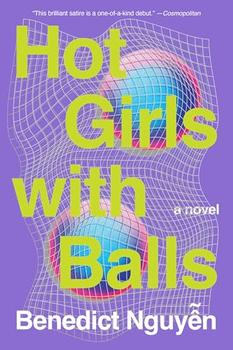
In this outrageous and deeply serious satire, two star indoor volleyball players juggle unspoken jealousies in their off-court romance ahead of their rival teams' first rematch in a year.

If Guy Ritchie directed a James Bond caper starring a queer 007, it might look something like this hilarious and action-packed spy thriller by Paul Rudnick, acclaimed screenwriter and author of Farrell Covington and the Limits of Style, that blends espionage and social commentary, with an elite, gay secret society.
Your guide toexceptional books
BookBrowse seeks out and recommends the best in contemporary fiction and nonfiction—books that not only engage and entertain but also deepen our understanding of ourselves and the world around us.
