
-
Your next favorite book
is waiting.
Summary | Excerpt | Reviews | Beyond the Book | Readalikes | Genres & Themes | Author Bio
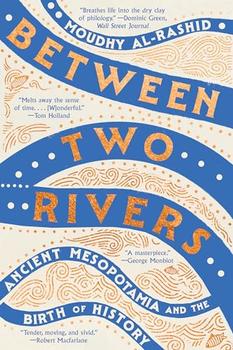
Ancient Mesopotamia and the Birth of History
by Moudhy Al-Rashid Book Reviewed by:
But while the palace dated to the sixth century BCE, the collection of objects found within the room all came from wildly different eras. Excavators found a small dark stone obelisk dating to around 1400 BCE – almost a millennium before the palace was built. The stone was carved with the iconography of various deities, symbols, and mythical monsters, and it recorded a long-dead man's ownership of property in the city, like an illustrated stone title deed. Elsewhere in the room was an even older item, a cone made from clay and covered in the wedge-shaped characters of cuneiform script, the writing system used throughout ancient Mesopotamia. The inscription, written around 1900 BCE, commemorated some building work by a man named Kudur-Mabuk, who dedicated the home improvements to the gods. Dating to the same era, the excavators found several clay tablets with the telltale, messy handwriting of young kids – typical school exercises, pressed into clay. As the team continued, they also found part of a statue of a king known to have ruled around 2100 BCE, as well as the round granite head of a weapon called a mace, which appeared to pre-date both the clay cone and the statue fragment. How did these objects, with thousands of years between their original makers and their final resting place, come to be here? What circumstances could have led to such a disparate collection of objects under a single roof?1
It would have been like finding a sculpture of the Greek god Zeus alongside bronze Islamic coins minted by a seventh-century caliph in a castle built by Christian Crusaders in Jordan, or a Roman dagger with Celtic coins amid the remains of a medieval monastery in England. As I explained to my curious dinner companion, archaeological sites are like rainbow layer cakes, with each coloured layer representing a different time period – newest on top and oldest at the bottom. If these objects had lain undisturbed, relegated to their own timelines, they would have been buried under layers of debris far deeper than the unbroken floor of this small palace chamber in the appropriate layer of the cake. Yet, here they were, out of place and out of time, like a patchwork instead of a rainbow. The 1920s excavation team were confounded: what could it mean?
Some explanations make for less sensational headlines than others. Archaeology is imperfect, and some of the older objects found in the debris may have simply ended up there by some accident of preservation. A slab of flooring could have crumbled in just the right way to reveal something from an era buried further below, or a wall made of reused materials could have collapsed. Alternatively, the chamber could have been an organised storeroom, where artefacts found in the building's foundations or environs were collected for safekeeping. After all, ancient Mesopotamia's sixth-century BCE inhabitants already had millennia of history to contemplate.
Ancient Mesopotamia and its cities like Ur were home not to a single civilisation, but to various peoples and cultures in antiquity. The Sumerians, Babylonians, and Assyrians were among those who lived in and around these two rivers thousands of years ago, so the whole region is thickly layered with the remnants of past civilisations. When the princess's palace was built, Ur would have been, without a doubt, one of the most important of the many cities in that very long history. Continuously occupied for almost three and a half millennia, the city covers an area of at least 120 hectares (295 acres), more than twice the size of Vatican City, but at its largest might have been a sprawling 500 hectares (1,250 acres), about one and a half times the size of Central Park in New York.2 It would have been a major cultural hub as well as a vital port on what is now the Persian, or Arabian, Gulf at a time when the coastline cut further inland than it does today.
The 1920s archaeologists were of course aware of this long history, and likely had this in mind when they eventually found a clue amid the rubble that would help make sense of the mysterious collection. A cylindrical lump of clay covered in cuneiform script, like a little drum small enough to fit in the palm of your hand, gave them the answer they needed. They were convinced that they had found the world's first ever exhibition label and, by extension, the world's first museum.
Excerpted from Between Two Rivers by Moudhy Al-Rashid. Copyright © 2025 by Moudhy Al-Rashid. Excerpted by permission of W.W. Norton & Company. All rights reserved. No part of this excerpt may be reproduced or reprinted without permission in writing from the publisher.

L.A. Women by Ella Berman
Two ambitious writers in 1960s LA face betrayal when one writes a novel based on the other's life.






Your guide toexceptional books
BookBrowse seeks out and recommends the best in contemporary fiction and nonfiction—books that not only engage and entertain but also deepen our understanding of ourselves and the world around us.


