
-
Your next favorite book
is waiting.
Summary | Excerpt | Reviews | Beyond the book | Read-Alikes | Genres & Themes | Author Bio
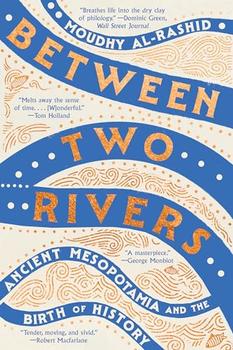
Ancient Mesopotamia and the Birth of History
by Moudhy Al-Rashid Book Reviewed by:
In a palace in the Mesopotamian city of Ur, sometime around 530 BCE, the princess Ennigaldi-Nanna gathered together objects that would have been ancient even to her. She brought into her home the statue of a legendary king, the head of a mace, even school exercises pressed into clay tablets some 1,500 years before her reign. Some of these objects dated from what the princess would have considered "modern times"; others came from the very start of "history"—the point at which human beings developed writing systems and began documenting the world around them. Whatever Ennigaldi-Nanna's intention was in collecting these artifacts, the archaeologists who uncovered her palace in the 1920s (two millennia later) were in little doubt: here was the world's very first museum.
That was the theory, at any rate. As Moudhy Al-Rashid points out in Between Two Rivers—her engrossing new history of the civilizations that sprang up between the Tigris and Euphrates rivers between 3500 and 500 BCE—archaeological digs are "organised chaos," and who can really be sure these objects were even found anywhere near each other? Nevertheless, she is loathe to abandon such a romantic explanation completely: at the very least, she sees in it a handy literary device to help make these 3,000 years of history digestible in a little over 300 pages.
Between Two Rivers is structured around the objects found in Ennigaldi-Nanna's ancient "museum" as if they were still on display, with each chapter focusing on a different object and what it can reveal about the people, beliefs, and technological advances of the society that produced it. As with a visit to any museum, one can get lost: the reader will be forgiven for now and then losing track of which royal dynasty—or even millennium—they're faced with. But the book's "museum tour" conceit is a useful one, introducing those of us unfamiliar with the finer details of Mesopotamia's many peoples and languages to the broad strokes of humanity's fascinating first cities.
Al-Rashid is an engaging and endearing guide through these muddled layers of history, one who knows how to breathe life into dry clay fragments. An Oxford University academic immersed in her subject, she isn't afraid to weave herself into the story. Indeed, it's often through personal anecdote that the immensity of the timescales she's dealing with comes into stark relief. Telling the Epic of Gilgamesh (see Beyond the Book) to her three-year-old daughter as a bedtime story, she's filled with a sense of wonder at the thought that the same tale (albeit in a less child-friendly version) was recounted by poets in the palaces of Mesopotamia some 5,000 years earlier. It's hard not to share her frisson in moments like those, when we can feel the ancient world brush against our own.
Al-Rashid aims above all for that kind of intimacy: to shake hands with strangers across the millennia, as she terms it. She acknowledges the kings and the myths, but she strives to see beyond them and into what little can be gleaned about the everyday lives of everyday Mesopotamians. The role of women—understudied no matter the era—is particularly enlightening. Far from being silent and invisible "incubators" for the next generation, Between Two Rivers shows how they formed the backbone of several key industries, and sometimes attained the power and respect that was then (as it is too often now) typically reserved for their male counterparts.
Not all of the book's efforts to bridge the past and the present are necessarily successful—should we really compare the Sumerians' cosmic understanding of their own history to the Marvel Universe, for example? But more often than not Al-Rashid's passion and knowledge bring alive the collection of enigmatic objects curated by a Babylonian princess all those years ago. The overall result is a rewarding and enjoyable read: Between Two Rivers manages to be thorough without being overwhelming, erudite without being dry. And, like an untouched palace waiting to be unearthed, it's filled with wonders.
 This review
first ran in the September 10, 2025
issue of BookBrowse Recommends.
This review
first ran in the September 10, 2025
issue of BookBrowse Recommends.

If you liked Between Two Rivers, try these:

by Elif Shafak
Published 2025
In the ancient city of Nineveh, on the bank of the River Tigris, King Ashurbanipal of Mesopotamia, erudite but ruthless, built a great library that would crumble with the end of his reign.
by David Graeber, David Wengrow
Published 2023
A dramatically new understanding of human history, challenging our most fundamental assumptions about social evolution―from the development of agriculture and cities to the origins of the state, democracy, and inequality―and revealing new possibilities for human emancipation.

by Barry Unsworth
Published 2010
In Land of Marvels, a thriller set in 1914, Barry Unsworth brings to life the schemes and double-dealings of Western nations grappling for a foothold in Mesopotamia (now Iraq) in the dying days of the Ottoman Empire.
L.A. Women by Ella Berman
Two ambitious writers in 1960s LA face betrayal when one writes a novel based on the other's life.






Your guide toexceptional books
BookBrowse seeks out and recommends the best in contemporary fiction and nonfiction—books that not only engage and entertain but also deepen our understanding of ourselves and the world around us.

