
-
Your next favorite book
is waiting.
Summary | Excerpt | Reviews | Beyond the Book | Read-Alikes | Genres & Themes | Author Bio
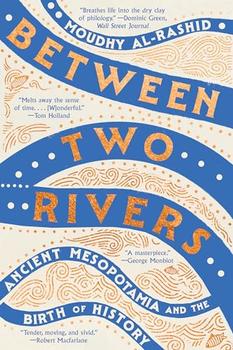
Ancient Mesopotamia and the Birth of History
by Moudhy Al-Rashid Book Reviewed by:
This article relates to Between Two Rivers

 Between Two Rivers by Moudhy Al-Rashid explores the history of the early city-states that sprang up in Mesopotamia between the Tigris and Euphrates rivers in the third millennium BCE, focusing on the beliefs, practices, and technological advances that impacted the lives of everyday people. One of the most important cultural artifacts from that time is the Epic of Gilgamesh, considered today to be the oldest surviving literary work. As Al-Rashid notes in her book, this tale of a legendary king not only played an important role in how Mesopotamian rulers determined what made a good monarch, but also continues to resonate to this day.
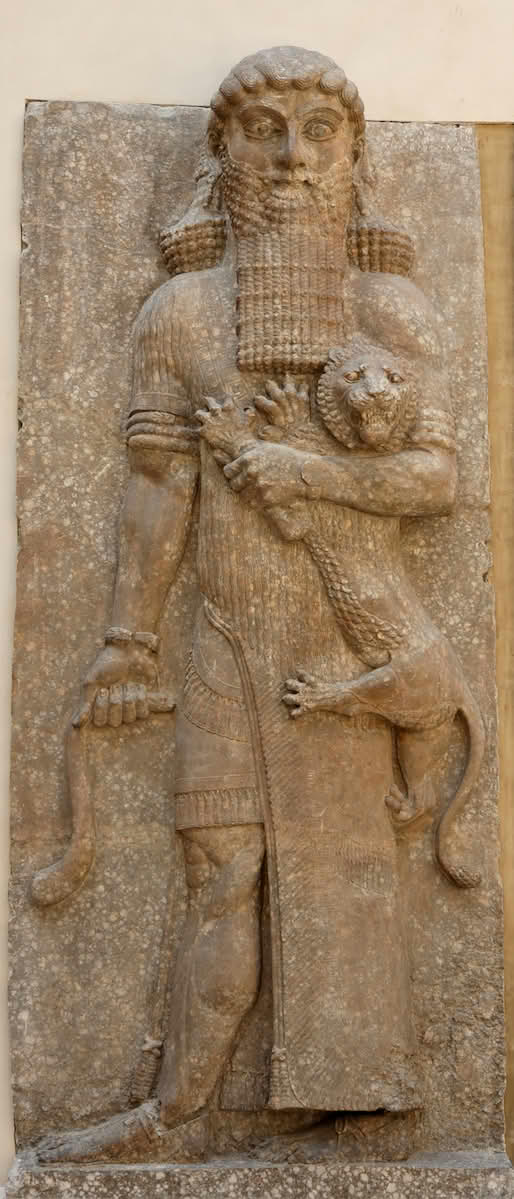
Although Gilgamesh is widely accepted to have been a real historical figure and an early king of the city of Uruk, he had transformed into a semi-mythical figure by the time the Epic came to be composed. The Sumerian King List (a purported record of the rulers of some of the world's first cities) confidently states that his father was a phantom and that he ruled for 126 years. Certainly, it seems as if the historical Gilgamesh became surrounded by legends relatively quickly. The Epic as we know it today comes from tablets written down roughly 1,000 years after his death, but stories of the king's exploits would have been transmitted orally for centuries before then.
The tale begins with the sky god Anu deciding to punish Gilgamesh—"knower of all things on land and sea"—by creating Enkidu, a man who can put an end to his despotic rule. Gilgamesh proves too powerful even for Enkidu, however, and bests him in a test of strength. Nevertheless, the pair soon form a friendship (or, as Al-Rashid notes in Between Two Rivers, possibly more than that) and embark together on a series of quests in which they vanquish various mythical beasts. The gods don't take kindly to these heroics and decide to kill Enkidu, who foresees the underworld in a dream as a "House of Dust." Gilgamesh is so distraught that he won't accept the loss, not even allowing Enkidu to be buried until seeing that "a maggot fell out of his nose."
The second half of the Epic deals with Gilgamesh's grief at the death of his friend and his realization that he, too, will die. Determined not to meet that fate, he seeks out the secret to immortality, eventually coming face to face with Utnapishtim, another ancient Mesopotamian king. The gods have granted Utnapishtim eternal life for having built a boat that carried humanity safely through a legendary flood. Sadly, he leaves Gilgamesh with little doubt that his immortality was a unique gift, never to be given again. The Epic ends with the king of Uruk returning to his city, still mortal and with the knowledge that, like all the subjects he rules over, he too will meet Enkidu in the House of Dust.
Clearly considered an important text in its own time, the story of Gilgamesh has been found in fragments across the Middle East, with the legendary king also being referenced in Greek and Roman literature. We can see Gilgamesh and Enkidu's quests reflected in the labors of Hercules, and the similarities between the immortal Utnapishtim and Noah in the Genesis flood narrative are so striking that some scholars believe either it derives from Mesopotamian legend or the two myths draw from the same, even older tradition. Even today, the Epic of Gilgamesh continues to capture modern imaginations, cropping up in countless books, films, and video games.
What is perhaps most striking about this 5,000-year-old tale, however, is the enduring power of its themes. Strip away the ancient gods and the arcane language and you'll find a story that is the same as the ones cultures all over the world continue to tell themselves today—one about love, death, and the meaning of life.
Depiction of Gilgamesh from the 7th century BCE
By Marie-Lan Nguyen, via Norsk biografisk leksikon
Filed under Books and Authors
 This article relates to Between Two Rivers.
It first ran in the September 10, 2025
issue of BookBrowse Recommends.
This article relates to Between Two Rivers.
It first ran in the September 10, 2025
issue of BookBrowse Recommends.
L.A. Women by Ella Berman
Two ambitious writers in 1960s LA face betrayal when one writes a novel based on the other's life.

Your guide toexceptional books
BookBrowse seeks out and recommends the best in contemporary fiction and nonfiction—books that not only engage and entertain but also deepen our understanding of ourselves and the world around us.

