
-
Your next favorite book
is waiting.
Summary | Excerpt | Reading Guide | Reviews | Beyond the book | Read-Alikes | Genres & Themes | Author Bio

A Novel (Twenty-Fifth Anniversary Edition)
by Kate Atkinson Book Reviewed by:
Years before Kate Atkinson gained acclaim for her Jackson Brodie mysteries (later dramatized in the BBC series Case Histories) or for her sophisticated historical novels like Life After Life and A God in Ruins, she debuted with Behind the Scenes at the Museum, which won the Whitbread Book of the Year Award, much to the surprise of literary pundits, who had overwhelmingly placed odds on Salman Rushdie's The Moor's Last Sigh. The Guardian showed its hand in its writeup of the awards: "A 44-year-old chambermaid won one of Britain's leading literary awards last night."
Rereading Atkinson's debut almost thirty years on, however, it's easy to see both why it was dismissed at first and how, even in this early work, Atkinson displayed the intricate, inventive storytelling for which her later work has been praised. For one thing, Atkinson's novel centers on a working-class family in the less-than-glamorous northern English city of York. It's also narrated, in unforgettable fashion, by Ruby Lennox, who is a young child for most of the novel, and much of its attention is focused on the humble, often quietly tragic lives of the women in Ruby's family.
Ruby herself, however, is anything but humble, and perhaps rightly so. From the moment of her conception in 1951, she's vibrantly, gloriously alive, and proclaims her own existence in the novel's very first line: "I exist!" From the womb, Ruby describes her mother, Bunty, who is already exhausted by the drudgery of parenting Ruby's older sisters, tired of keeping house and tending the family pet store, fed up with her husband's philandering, and (the reader surmises, in the novel's first skillful use of dramatic irony) unlikely to be thrilled once she becomes aware of her pregnancy. Ruby is undeterred, however, and boldly celebrates herself: "My name is Ruby. I am a precious jewel. I am a drop of blood. I am Ruby Lennox."
Ruby's own story of growing up as the product of a loveless marriage and in a household that has seen more than its fair share of domestic tragedy is interspersed with chapters that ostensibly take the form of footnotes, offering background information about family heirlooms (a locket, a teaspoon) or less tangible items (a smile used as a tool of self-preservation). But these "footnotes" are where much of the novel's narrative takes place, as an omniscient Ruby gazes back through four generations of her family, illustrating the losses and traumas that reverberate across the decades, the patterns and decisions that echo through the years.
The events of World War I and World War II are central to these historical narratives; because so much of the story centers Ruby's mother, grandmother, and great-grandmother, these wartime tales tend to focus on the home front, although readers also get horrifying glimpses of the front lines via stories of the women's brothers and suitors. These global narratives are interwoven with quieter but no less affecting domestic scenes; Ruby's great-grandmother Alice, for example, may be the first woman in her family to say to herself, "I have been living the wrong life!" but she's hardly the last one to think it. Against the backdrop of York, which, in Ruby's perception or imagination, is peopled with ghosts dating back to Roman times, these smaller dramas gain the heft of history: "The past is a cupboard full of light and all you have to do is find the key that opens the door."
Ruby's irrepressibility takes a hit when, as she enters her teenage years, she begins to realize that her apparent omniscience does not extend to her own personal history, particularly to a childhood tragedy that seems to lurk like a shadow, affecting her life but escaping her understanding. Once the truth is finally revealed, readers might just be prompted to reread the entire novel, picking up on the clues Atkinson leaves throughout and noticing other clever and affecting details besides. Behind the Scenes at the Museum, with its focus on a precocious child's perception and on the family lineage of working-class women, might not have been an obvious choice for Whitbread Book of the Year, but its inventive structure, and especially the empathy and clarity with which it approaches its subjects, make it a deserving one, worthy of rereading or of discovering for the first time.
 This review
first ran in the July 16, 2025
issue of BookBrowse Recommends.
This review
first ran in the July 16, 2025
issue of BookBrowse Recommends.

If you liked Behind the Scenes at the Museum, try these:

by Olivia Wolfgang-Smith
Published 2025
A gorgeously written and irresistibly intimate queer novel that follows one family across four generations to explore legacy and identity in all its forms.
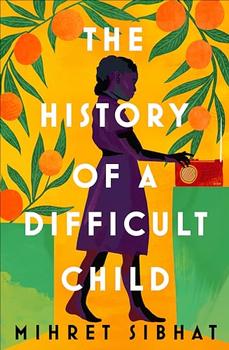
The History of a Difficult Child
by Mihret Sibhat
Published 2024
A breathtaking, tragicomic debut novel about the indomitable child of a scorned, formerly land-owning family who must grow up in the wake of Ethiopia's socialist revolution
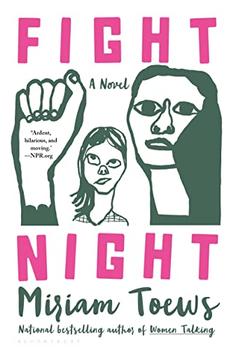
by Miriam Toews
Published 2023
From the bestselling author of Women Talking and All My Puny Sorrows, a compassionate, darkly humorous, and deeply wise new novel about three generations of women.

L.A. Women by Ella Berman
Two ambitious writers in 1960s LA face betrayal when one writes a novel based on the other's life.






Your guide toexceptional books
BookBrowse seeks out and recommends the best in contemporary fiction and nonfiction—books that not only engage and entertain but also deepen our understanding of ourselves and the world around us.

