
-
Your next favorite book
is waiting.
Summary | Excerpt | Reading Guide | Reviews | Beyond the Book | Read-Alikes | Genres & Themes | Author Bio

A Novel (Twenty-Fifth Anniversary Edition)
by Kate Atkinson Book Reviewed by:
This article relates to Behind the Scenes at the Museum

Alternate chapters in Kate Atkinson's novel Behind the Scenes at the Museum are "footnotes" to the main narrative, ostensibly offering background information about specific objects but actually offering windows into the history of generations of the narrator's family. Atkinson is not the only novelist to play with footnotes or endnotes as narrative devices; here are a few other examples of novels where readers definitely won't want to gloss over the footnotes.
 Infinite Jest by David Foster Wallace
At more than a thousand pages, Wallace's novel isn't just encyclopedic in length; it also includes 388 endnotes, some of which have footnotes of their own, that take up almost a tenth of the novel. These endnotes aren't just afterthoughts: they include not only humorous digressions but also significant plot and character points that are only alluded to in the "main" text.
Pale Fire by Vladimir Nabokov
Nabokov's 1962 novel takes the form of a 999-line poem by a fictional writer named John Shade, annotated by the fictional critic Charles Kinbote, whose critical apparatus includes a foreword, commentary, and endnotes. Kinbote spends very little time actually explicating Shade's poem but a lot of time indulging his own fantasies.
 Confessions of the Fox by Jordy Rosenberg
In a similar vein, Jordy Rosenberg's 2018 debut purports to be a long-lost manuscript about the escapades of a 19th-century thief, complete with footnotes by an academic on probation, who hopes his discovery of the manuscript might salvage his tarnished reputation as a scholar. What starts as straightforward commentary on little-known 18th-century terms and customs becomes something else entirely, as the scholar gradually reveals his own epic struggle with the academy.
The Thursday Next series by Jasper Fforde
Comedic fantasy writer Fforde employs a clever use of footnotes in his series that begins with The Eyre Affair. Here, footnotes are not just a literary device, but an actual tool within the world of the novel. In Fforde's universe, the "Book World"—i.e., all the fictional characters in books and the worlds they inhabit—are real, and they can use a "footnoterphone" to send messages to one another across their pages.
Jonathan Strange and Mr. Norrell by Susanna Clarke
Clarke's epic fantasy novel imagines an alternate history of England in which magic exists, and its folkloric storytelling extends to what Kirkus calls "faux-scholarly (and often hilarious) footnotes," some of which go on for many thousands of words and offer entire standalone narratives about characters or incidents confined to a single line in the main text.
Filed under Reading Lists
 This article relates to Behind the Scenes at the Museum.
It first ran in the July 16, 2025
issue of BookBrowse Recommends.
This article relates to Behind the Scenes at the Museum.
It first ran in the July 16, 2025
issue of BookBrowse Recommends.
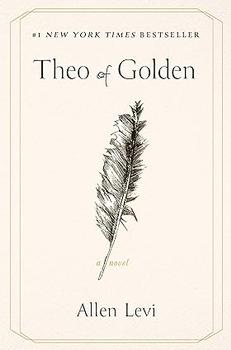
Theo of Golden by Allen Levi
One spring morning, a stranger arrives in the small southern city of Golden. No one knows where he has come from…or why…






Your guide toexceptional books
BookBrowse seeks out and recommends the best in contemporary fiction and nonfiction—books that not only engage and entertain but also deepen our understanding of ourselves and the world around us.

