

In This Edition of
The BookBrowse Review
Contents
Highlighting indicates debut books
Discussions are open to all members to read and post. Click to view the books currently being discussed.
Literary Fiction
Historical Fiction
Short Stories
Essays
Poetry & Novels in Verse
Thrillers
Romance
Fantasy, Sci-Fi, Speculative, Alt. History
Biography/Memoir
History, Current Affairs and Religion
Literary Fiction
Fantasy, Sci-Fi, Speculative, Alt. History
Graphic Novels
Biography/Memoir
History, Current Affairs and Religion
| BookBrowse: | |
| Critics: | |
| Readers: |
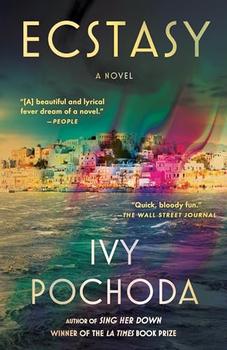
A deliciously dark horror reimagining of a Greek tragedy, by Ivy Pochoda, winner of the LA Times Book Prize.
Lena wants her life back. Her wealthy, controlling, humorless husband has just died, and now she contends with her controlling, humorless son, Drew. Lena lands in Naxos with her best friend in tow for the unveiling of her son's, pet project--the luxurious Agape Villas.
Years of marriage amongst the wealthy elite has whittled Lena's spirit into rope and sinew, smothered by tasteful cocktail dresses and unending small talk. On Naxos she yearns to rediscover her true nature, remember the exuberant dancer and party girl she once was, but Drew tightens his grip, keeping her cloistered inside the hotel, demanding that she fall in line.
Lena is intrigued by a group of women living in tents on the beach in front of the Agape. She can feel their drums at night, hear their seductive leader calling her to dance. Soon she'll find that an ancient God stirs on the beach, awakening dark desires of women across the island. The only questions left will be whether Lena will join them, and what it will cost her.
Ecstasy is a riveting, darkly poetic, one-sitting read about empowerment, desire, and what happens when women reject the roles set out for them.

Before
The young ones call me Mama Ghost because I've been at this so long.
I am a specter. A vampire. A night-creature.
You think I don't eat. You imagine I don't sleep.
I can see in the dark. I can hear what goes unsaid. I can hear your heart beat harder, faster than the DJ's dubstep, speed garage, trance buildups, jungle beats.
I've been there from the beginning-when the music was underground, when it was heavy, dark, and full of tribal calling. I was there for the first mainstream sounds, the candy and the kandi kids, the Technicolor dancers trading sticky necklaces and bug-eyed kisses on the dance floor. I'm there now, on the festival circuit, the commercial parties, the destination events. The three days of high-priced escape and brand-name DJs.
I'm there at bars. At after hours. At after-after hours.
I'm there when you need me. I keep your secrets. I've seen you at your worst. I know your bad habits. I've seen you beg and grovel. I've seen you plead for more, for favors, for just a taste.
I am your conscience. I am the devil on your shoulder. I am what you want, not what you need.
I've heard your desperate voice at 4 a.m. I've heard it at 7 a.m. I've heard it at noon. I can hear it even when you are stone-cold sober. I hear it when you are silent.
I hold the reins. I know exactly how much power I have to make your night or to ruin it. All of that in the palm of my hand-in the handoff, the hand-game-a quick palm to palm.
You put your life in my hands. Night after night. Party after party.
I can make you invincible and I can kill you.
I can make you stay up all night and find god on the dance floor or in the mirror or in the bathroom stall or in the toilet or in the face of a stranger.
I've seen you weave tapestries from the air.
I've seen your fingers communicate in Morse code.
I can make you see. And I can blind you.
I can make you divine. I can destroy you.
But I look after you. I protect you. I keep you coming back.
I am your best friend and I always pick up when you call.
The young ones come and go. They attach themselves to me. They want to do what I do. They want my superhuman strength. They think that all it takes is the ability to stay up all night and sleep all day. They think that comes from handfuls of pills. Envelopes of powder. But it takes more than drugs to sell drugs. Especially when you're me-a woman.
You didn't expect that, did you? The first time you called? The first time someone pointed me out to you across the club, on the beach, at the back of the bar?
A woman. A mother. A wife.
Have you noticed that I'm sober when you're not? Have you noticed that I keep an eye on everything-that I'm keeping tabs, keeping track, keeping count, and keeping score. That I know who took what, who needs more, who has had too much?
You ever walked into the back room of the back room of the back room of a party at 3 a.m. to find seven guys on the wrong end of the night? Angry and amped, their attention-their fury and impatience-trained on you?
You ever been held up at gunpoint in an empty warehouse by a new supplier who wanted your cash?
You ever been pawed, patted, probed-fingers inside you-to make sure you weren't carrying a gun yourself?
You ever had to stand up to men twice your size, ten times as high, and forty times as brutal?
You probably think it's all parties and perks and VIP areas and backstage passes and comps.
You ever been raided? Surveilled?
Chased? Beaten? Choked? Cheated out of thousands of thousands?
You ever been caught at the UK border carrying five thousand pills destined for Creamfields and been offered a deal-flip on your suppliers and walk?
You ever sit there as they ask and ask and ask you to name names? As they isolate you and dehumanize you?
Three years I spent locked up in a foreign country at the mercy of guards and the sort of women I manipulated on the outside-the sort of women who begged and begged for a favor, a freebie, just one more. And then it was my turn for begging.
And that wasn't the worst of it.
My son. He turned...
Excerpted from Ecstasy by Ivy Pochoda. Copyright © 2025 by Ivy Pochoda. Excerpted by permission of G.P. Putnam's Sons. All rights reserved. No part of this excerpt may be reproduced or reprinted without permission in writing from the publisher.
Please be aware that this discussion guide will contain spoilers!
Unless otherwise stated, this discussion guide is reprinted with the permission of G.P. Putnam's Sons. Any page references refer to a USA edition of the book, usually the trade paperback version, and may vary in other editions.
Lena has spent decades living under the thumb of her husband, a wealthy, Greek hotel developer. When he dropped dead from a suspected heart attack, Lena hoped for a fresh start; an opportunity to reclaim the wild abandon she had in her youth, which she spent as a professional dancer and unashamed party girl. Instead, her plans are upended by her adult son Drew, who essentially takes his father's place. Just as controlling, condescending, and misogynistic, Drew makes it his mission to complete his father's final unfinished venture—the luxury resort Agape Villas.
Drew takes his pregnant wife Jordan, Lena, and her friend Hedy to the Greek island of Naxos to test-run the resort before its grand opening. Here, he finds himself at odds with a group of women camping on the adjoining beach. Led by Luz, an enigmatic drug dealer, the group's hedonistic lifestyle and late-night, wine-fueled dance parties threaten to spoil the carefully curated façade of glamour that Drew has cultivated. He wants the women gone, but Lena and Hedy are drawn to the group's apparent feral freedom and begin attending their nocturnal gatherings.
Author Ivy Pochoda creates a stifling yet gripping atmosphere as the women's nightly meetings become increasingly violent and hallucinogenic. Striking, surreal visual tableaux during these scenes allow her to delve into the book's themes in a deeper, allegorical way, while also making more direct references to The Bacchae by Euripides (see Beyond the Book)—the ancient Greek tragedy that served as inspiration for the novel. Those familiar with the play will likely enjoy these nods, but prior knowledge of the text is certainly not required to feel immersed in the singular fever dream that is Ecstasy.
Drugs and alcohol play the role of grounding and contextualizing these more bizarre moments. Men transform into animals, flesh is peeled from bodies, and yet the reader can never be certain how much of this is meant to be magical realism, and how much is simply the imaginings of susceptible minds under the influence. The narration, which is primarily from Lena's perspective with other characters' points of view sprinkled throughout, thus feels unreliable. This adds yet more tension to the reading experience, and effectively demonstrates the dangers inherent to avoiding reality and chasing the past through substance abuse.
This idea is exemplified in Hedy's story arc. Suffering from macular degeneration, Hedy is gradually losing her sight. As such, she is particularly keen for her and Lena to tap back into their youthful frivolity before she feels she will no longer be able to. But though the wildness of the beach group's dancing and Luz's promise that she can restore Hedy's sight are initially tempting, she ultimately knows that any vision brought about by Luz's mysterious pills and potions would be "[…] only a trick. An exaggerated illusion of a world that doesn't exist."
The arcs of the other characters primarily explore the dark side of motherhood and the taboo subject of women who regret succumbing to societal pressures to have a child. Lena and Drew's relationship is deeply unhealthy, as he increasingly fights to belittle and control her. We also learn that Luz was betrayed by her own son and ended up in prison as a result. Jordan, having had a very strained relationship with her own mother growing up, witnesses the toxicity surrounding her, and begins to feel ever more fearful of the potential "monster" growing inside her womb. After all, she muses, "We bear the agents of our own destruction."
The characters' unhappiness, toxic relationships, and refusal to address their problems in a healthy way propel them all towards a brutal climax. Numbed to reality as they are by this point, the emotional fallout is perhaps not mined as thoroughly as it could have been, but the shocking final images and wild ride leading to them are all but guaranteed to make a lasting impression.
Reviewed by Callum McLaughlin
 Alma Katsu, author of The Hunger
Gabino Iglesias, author of House of Bone and Rain
Paul Tremblay, author of the New York Times bestseller Horror Movie
Alma Katsu, author of The Hunger
Gabino Iglesias, author of House of Bone and Rain
Paul Tremblay, author of the New York Times bestseller Horror Movie
 In ancient Greco-Roman mythology, the Bacchae—also known as Maenads—were female followers of Dionysus (also known as Bacchus), god of wine and revelry. While some devoted themselves to him voluntarily, others were said to be possessed, driven mad and forced into servitude by his intoxicating power.
Dionysus journeyed throughout the land, claiming cities and enacting his rule on the population. If a city rejected his rites in service to another god, he would punish the residents by setting the women among them into a frenzy, ultimately converting them into Bacchae and bolstering his cohort.
While under the influence of Dionysus, the Bacchae were imbued with superhuman strength, capable of tearing apart animals and men alike with their bare hands. When not carrying out these violent acts, they were typically engaged in wild celebration, abandoning their roles as wives and mothers and taking to the hills, where they would sing and dance in praise of their god. All of this led to a culture of fear and mistrust surrounding them, and the perception that the women were mad. Indeed, the Greek name Maenads translates to "raving ones."
 First performed in 405 BCE, the play by Euripides, The Bacchae, features perhaps the best-known depiction of the titular women. In the story, they are compelled to abandon their homes and head for the mountains, where they sing, dance, drink, and have sex in a display of ritualistic hedonism. As Dionysus' power grows, so too does his lust for chaos and vengeance against those he feels have dishonored him. As a result of his frustrations, the women are driven to greater acts of madness, kidnapping children from a nearby village, slaughtering a herd of cattle, and ultimately committing murder.
In her novel Ecstasy, Ivy Pochoda reimagines Euripides' work in a distinctly modern setting. Here, the Bacchae take the form of a group of women camping on a beach on the island of Naxos. Their late-night dance parties—fueled by drugs and alcohol—escalate into increasingly violent acts, just like their ancient counterparts. But Pochoda gives their story a dark feminist twist. Led by a woman this time around, the group eventually channels their rage against the men who seek to oppose or command them. It's a clever reframing of their role within the narrative, flipping the script from enslaved women in service to a man against their will, to a group of women raging against societal norms and taking back control.
"Dance of the Maenad" circa 1765 by Andries Cornelis Lens, located at the Kunsthistorisches Museum, courtesy of Wikimedia Commons
"En bacchantinde på en søtiger" by Christen Køble circa 1839, located at the Glyptotek, courtesy of Wikimedia Commons CC by PDM 1.0
Filed under Places, Cultures & Identities

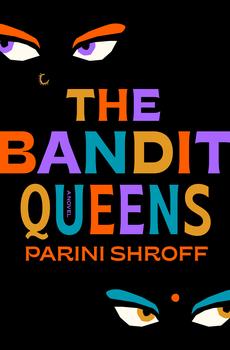
A young Indian woman finds the false rumors that she killed her husband surprisingly useful—until other women in the village start asking for her help getting rid of their own husbands—in this razor-sharp debut.
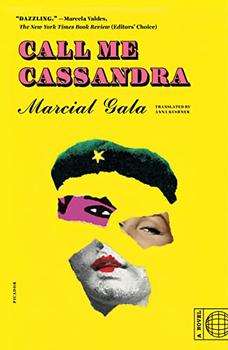
From Marcial Gala, the author of the award-winning The Black Cathedral, Call Me Cassandra is a darkly magical tale of a haunted young dreamer, born in the wrong body and time, who believes himself to be a doomed prophetess from ancient Greek mythology.
Your guide toexceptional books
BookBrowse seeks out and recommends the best in contemporary fiction and nonfiction—books that not only engage and entertain but also deepen our understanding of ourselves and the world around us.


.jpg)