

In This Edition of
The BookBrowse Review
Contents
Highlighting indicates debut books
Discussions are open to all members to read and post. Click to view the books currently being discussed.
Literary Fiction
Historical Fiction
Short Stories
Essays
Poetry & Novels in Verse
Thrillers
Romance
Fantasy, Sci-Fi, Speculative, Alt. History
Biography/Memoir
History, Current Affairs and Religion
Literary Fiction
Fantasy, Sci-Fi, Speculative, Alt. History
Graphic Novels
Biography/Memoir
History, Current Affairs and Religion

| BookBrowse: | |
| Critics: | |
| Readers: |
A prize-winning memoirist and nature writer turns to the lives of plants entangled in our human world to explore belonging, displacement, identity, and the truths of our shared future
A seed slips beyond a garden wall. A tree is planted on a precarious border. A shrub is stolen from its culture and its land. What happens when these plants leave their original homes and put down roots elsewhere?
In fourteen essays, Dispersals explores the entanglements of the plant and human worlds: from species considered invasive, like giant hogweed; to those vilified but intimate, like soy; and those like kelp, on which our futures depend. Each of the plants considered in this collection are somehow perceived as being 'out of place'—weeds, samples collected through imperial science, crops introduced and transformed by our hand. Combining memoir, history, and scientific research in poetic prose, Jessica J. Lee meditates on the question of how both plants and people come to belong, why both cross borders, and how our futures are more entwined than we might imagine.
We so often think of plants as stationary creatures—they are rooted in place, so to speak—that it can be easy to overlook the biological ingenuity that allows them to thrive in many locations at once. Plants are in fact anything but sedentary. Throughout human history we've moved them with us intentionally and unintentionally, and that adaptability can appear menacing when we no longer see a benefit to having a plant in its adopted home.
Some of these botanical movements may have happened too long ago to remember, or perhaps they were too sudden to stop, but Jessica J. Lee slows time down to explore all sorts of connections between humans and plants in a series of meditative essays compiled as Dispersals: On Plants, Borders, and Belonging. Lee wrote these essays during a time of personal upheaval, which coincided with the general social re-examination of the early pandemic period. She experienced job changes, multiple moves, including between countries, and having a baby all in the span of just two years. As a result, the book ruminates on what it means to be from a certain place and how anyone, or anything, truly makes a new home.
Plants are a lens through which Lee tries to understand her own identity and that of her family. Born to a Welsh father and Taiwanese mother who settled in Canada, she is attuned to the realities of migration and a sense of "otherness" wherever she goes, be that her own home, her parents' birthplaces, or the many places she moved during a peripatetic adulthood. Of herself and her sister she says, "We wear a border in our bodies."
Lee weaves together personal stories—of her family's gardens, trees from her youth, and learning to grow plants as an adult—with historical events and current social issues reflected in the natural world. For example, she describes how plants have been an instrument of empire, with the example of Japan gifting cherry trees during its imperial period in the 19th and 20th centuries.
Power dynamics have worked in the other direction, too. Nations like Britain and the United States took plants from colonized areas and used them for their own purposes. Sometimes these were devastatingly large-scale changes, such as British demand for tea driving a corollary desire for sugar, which fueled trans-Atlantic slavery and plantation agriculture. Or, the demand for tea sparking the opium trade with China and the catastrophic Opium Wars (see Beyond the Book).
Lee also examines how plants can act as a reflection of our prejudices. When we call plants "alien invasives," what do we really mean? She doesn't impugn the idea of invasive plants being problematic with no check on their growth, nor does she shy away from the unintended consequences of people bringing plants to new places. But she thoughtfully reveals how a plant like the soybean, which is integral to Chinese culture, can become a convenient symbol for xenophobia elsewhere. American dairy farmers and proponents of "meat-heavy fad diets" found common cause in decrying largely unproven health risks of soy (it causes cancer!), and denigration of this bean even made its way to plainly bigoted insults ("soy boy" in the parlance of the alt-right). Describing the growth of this hysteria in the last 20 years, Lee summarizes, "The rumors cut across racial and gender lines, built on stereotypes and patriarchal fears."
In another chapter, we see how seaweeds and algae were dismissed and overlooked by 19th-century male scientists. They readily ceded this area of botany to female scientists who proceeded to make important discoveries about the plants. Lee also addresses how plants' responses to climate change affect how we modify the natural world and still turn to nature to solve the resulting problems—i.e., seed banks to hedge against future famines, and seaweed going from slimy afterthought to potential industrial-scale carbon sink.
These ideas are spread across different essays, looping back around rather than unfolding in a linear way. The chapters that connect plants to larger social forces are the strongest. Lee's beautiful descriptive language forms like petals around the durable nuggets of analysis she shares: "Daubs of seafoam pulse where the chalk reef creeps onto land, and the rocks are furred with algae and red weeds. This is a zone of transition, where the tide fills the space between land and sea."
At other times her natural tendency towards poetry leaves the reader a little disjointed—a choppy chapter on citrus trees, for example, where the personal memories and historical anecdotes struggle to come together in a coherent way. Fortunately, these are minor detours in the winding stories of plants that Lee cherishes, ones she seeks to understand, and her search for roots and a sense of belonging in an unpredictable world. In a time of uncertainty and climatic instability, Dispersals is a quiet yet probing meditation on what it means to inhabit our world as we've made it.
Reviewed by Rose Rankin
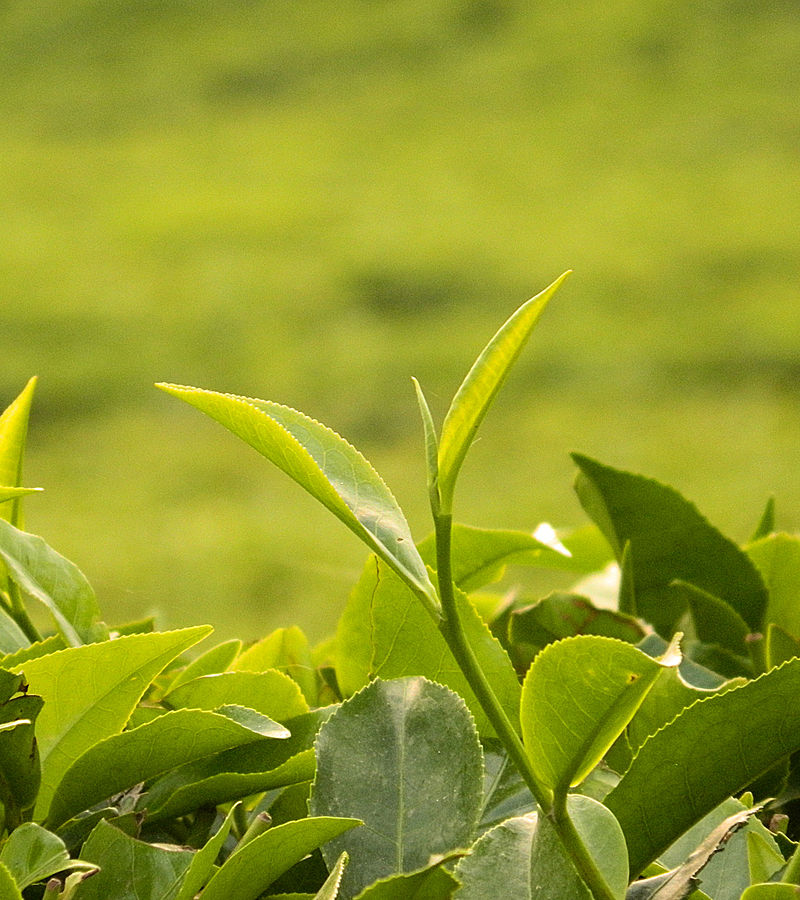 Few plants have impacted world history as profoundly as Camellia sinensis, the tea plant. Jessica J. Lee, in her book Dispersals: On Plants, Borders, and Belonging, describes how tea is integral to both seemingly disparate halves of her family tree—her Welsh paternal grandparents and her Taiwanese maternal family all loved tea and consumed it constantly, in different permutations and customs all stemming from the same plant. Even as she struggles to re-learn Mandarin, the many words for tea spill out effortlessly when she remembers childhood teachings, so embedded is this plant in her being.
Tea is indeed intertwined with both Asian and British history—central to East Asian cultures for thousands of years, its introduction to the British in 1657 was a watershed event. By the mid-1700s, tea had become increasingly popular with all classes of British society—that dose of caffeine was helpful to aristocrats and laborers in newly established factories alike—and this demand drove two related reactions.
The first was the growing popularity of sugar, which had been a luxury but became a common addition to one's cup of tea. Sugar plantations exploded across the Caribbean, with Barbados, Haiti, Jamaica, and Cuba all being dominated by sugarcane production via slave labor. As Bill Laws explains in Fifty Plants That Changed the Course of History, wealthy British merchants "supported their banks with large loans and generous deposits, using revenue from the sugar and slave trades. Money was loaned to the plantation owners for the purchase of African slaves; profits were put back in to the business from the domestic sales of refined sugar."
This was the horrific "triangular trade" that took finished goods from Britain to Africa, enslaved people from Africa to the Caribbean, and sugar and rum back to Britain to start the cycle over again. Even after the legal end of the slave trade, sugar plantations continued to stunt economic growth and impact societies: sugar production dominated Cuba's economy until prices collapsed in the 20th century, leaving a failing financial system that had been focused on a monoculture crop.
The second historical change engendered by tea consumption involved poppies, or more specifically, the opium they produce. In the mid-1700s, as tea was gaining popularity, the British East India Company was struggling to trade for sufficient quantities with China. Chinese traders wanted silver in exchange for tea leaves, not the paper money the British offered them. Frustrated, the British instead began trading opium, mass-produced in India, parts of which were by this time under British control.
The Company smuggled opium into China like any other drug trafficker. Chinese officials banned opium as addiction destabilized society, but in 1839 and again in 1856 the British attacked China militarily in the Opium Wars. The ensuing weakening of the Qing Dynasty and devastating social impacts of rampant opium addiction led to conquest and revolution in China into the 20th century.
The connections between tea and sugar and between tea and opium are complex to recount. As Lee notes, "Entire books are needed for that task." But the centrality of a non-descript shrub to the course of human history is staggering in scope, and it reminds us we are intimately connected to the products of the plant world.
Photograph of a fresh tea plant bud by Mandeep Singh (CC BY-SA 3.0)
Filed under People, Eras & Events
By Rose Rankin


A groundbreaking investigation of the Caribbean as both an idyll in the American imagination and a dark laboratory of Western experimentation, revealing secrets to racial and environmental progress that impact how we live today.

A book to sweep you away from the shore, into a wild world of water, whale, storm, and starlight— to experience what it's like to sail for weeks at a time with life set to a new rhythm.
Books with similar themes
Your guide toexceptional books
BookBrowse seeks out and recommends the best in contemporary fiction and nonfiction—books that not only engage and entertain but also deepen our understanding of ourselves and the world around us.


