-
Your next favorite book
is waiting.
Summary | Excerpt | Reviews | Beyond the Book | Readalikes | Genres & Themes | Author Bio

Five Families and One Hundred Years of Blood, Migration, Race, and Memory
by Jazmine Ulloa Book Reviewed by:
Police said that they caught up to him at a nearby traffic light after he fled, and that, with his hands raised in the air, he exited his car and declared himself the shooter. He was arrested near a park, a stone's throw away from where I went to high school. With those hours of terror in August, El Paso became one more battleground over the nation's identity-a place, much like the rest of the United States, caught between two visions of itself, one rooted in division, another in connection.
From my perch on top of the mountain, I thought about how, when I was in high school, my friends and I would come up to this same spot in the evenings. The stone steps and ledges would be packed with teenagers kissing. Children and their parents straddling the tower viewers. Young women wandering about in sparkly quinceañera dresses, their royal courts, families, and photographers in tow. My mind then was often on the future and where I would go next. On that afternoon, however, the overlook was nearly empty. There was a warm breeze blowing, and I wanted to take in the city one last time the way I remembered it, before the violence.
I knew the next few days would be like entering the darkest depths of a pit. I knew this because some of my earliest years as a young reporter had been on the night cops' beat. With heavy police scanners strapped to my belt, I had become well-acquainted with the circling highways of San Antonio by homicide. The codes and chatter from the radios led me from scene to scene. I learned to arrive quickly, to gather my bearings, and to withdraw somewhere deep inside of myself in the face of fierce, raw emotions-to become someone on the outside looking in-as I knocked on doors or tracked down officers and firefighters, witnesses and survivors, people who were living through what could well be one of the worst days of their lives. It was a grisly assignment and a lowly one. Veteran journalists who had been around when newsrooms had healthy staffs and people read the morning print paper often told me that if I could do this job, I'd be able to do any in the business.
I had expected covering American politics to be different. But as Donald J. Trump rose to power in 2016, he demonized Mexicans and immigrants as gang members, murderers, and terrorists. He promised to build a wall along the nation's southern border and to have Mexico pay for it. He called for restrictions on trade and warned of threats from abroad. Once in the White House, he embarked on an isolationist "America First" agenda and a harsh immigration crackdown. The moves energized many everyday Americans-largely white and Christian-who felt their values under attack by foreigners and had for years watched manufacturers shutter plants and ship jobs overseas. They also emboldened the Patriot militias, border vigilantes, and white power activists who had operated in the shadows of our national political system for decades. All through Trump's first term, we reported on the anti-Trump protests and counterprotests flaring up across the nation. Violent clashes between neo-Nazis and anti-white supremacists became commonplace eruptions on college campuses and state capitols.
In Trump's telling, immigration was at the root of all of the nation's problems. By the summer of 2019, with another presidential election cycle beginning to heat up, the border-and El Paso specifically-had become a powerful backdrop: a symbol of the fear of the other and the outsider, of the invaders and the invaded, of the potential loss of white cultural status and power in a quickly changing nation. In the weeks and months before the shooting, the images circulating online and on television from my hometown had been jarring. Migrants penned up and waiting to plead asylum at an international bridge. Brown children marching out of nearby tent camps. Families separated at the border.
We were only starting to understand it then. We were not covering everyday political contests and disputes. We were at the front lines of a grave and fundamental fight over who we were-over who should belong in the United States and who should not, over whether we believed in, would live up to, and could uphold a multiracial, multiethnic democracy or craved a strongman's control and promises of a return to a white Christian nation-in a world where companies and industries were getting too big, moving too fast, breaking too many things, and leaving too many people behind. Those tensions had drawn a white supremacist to the border, and now they had also brought me home.
Excerpted from El Paso by Jazmine Ulloa. Copyright © 2026 by Jazmine Ulloa. Excerpted by permission of Dutton. All rights reserved. No part of this excerpt may be reproduced or reprinted without permission in writing from the publisher.
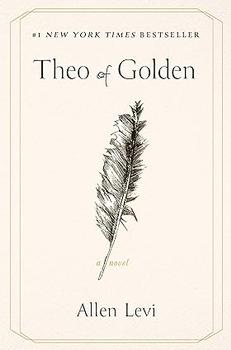
Theo of Golden by Allen Levi
One spring morning, a stranger arrives in the small southern city of Golden. No one knows where he has come from…or why…

Your guide toexceptional books
BookBrowse seeks out and recommends the best in contemporary fiction and nonfiction—books that not only engage and entertain but also deepen our understanding of ourselves and the world around us.