
-
Your next favorite book
is waiting.
Summary | Excerpt | Reviews | Beyond the Book | Readalikes | Genres & Themes | Author Bio

Five Families and One Hundred Years of Blood, Migration, Race, and Memory
by Jazmine Ulloa Book Reviewed by:
We stopped at the adobe bungalow where Fernando and my aunt Bertha, public-school principals, lived on a hilly street named after a dead president. I said a quick goodbye and moved my luggage into a worn black SUV that they loaned me for reporting. As I pulled out of their driveway, I debated whether to head straight to the crime scene or make one more quick stop to see the rest of my family. We're Mexican American, tight-knit and proud and complicated, and I was sure to answer for it later if I did not. But before I knew it, I found myself taking a detour through the scenic road that curves around the edge of the Franklin Mountains. High above the city, I stopped at the main overlook and sat on one of the stone walls.
Police say the shooter left his home north of Dallas on a warm summer night. He was twenty-one. I picture him as he appeared in his mug shot: pale and disheveled, with dark, matted hair and dull brown eyes. The court records I have read say he could not sleep, that his mind was racing with violent thoughts when he climbed into his car and started driving. On his way out, he passed manicured lawns and shady oak groves, running paths, tennis courts, and affluent homes with tall, pitched roofs and walls of stone veneer-quiet blocks, each one nearly identical to the next, carrying the faraway sounds of grackles and the faint scent of freshly mowed Bermuda grass.
He traveled for at least ten hours. Ten hours to reconsider. To stop. To turn around. But he did not. Suburban roads gave way to open Texas highways, to farms and ranchland where other men had waged other wars. The place he had left behind was one of the many across the United States that had become so diverse in recent years that it reflected what demographers like to describe as the changing face of America. The place where he arrived the next morning had always been that kind of place, the borderland between Mexico and the United States, where life and culture can be fluid and identities often bend, meld, and collapse into one another.
The temperatures in El Paso that Saturday had been hot and quickly getting hotter. Prosecutors say he drove around aimlessly for a while. Delusions in his broken brain. Hate in his heart. It was in those wayward moments when he posted an angry screed to a website known to attract white supremacists and extremists. It ran some 2,300 words and issued a warning against the "Hispanic invasion of Texas." Its ideas reflected a racist doctrine known as the "Great Replacement," which has long circulated in the far-right-wing corners of the internet and holds that Western elites, sometimes manipulated by Jews, want to "replace" and disempower white Americans with Black and Hispanic people. He and his way of life were under attack, the shooter wrote, by foreigners and immigrants, by people who did not look or act or sound like him, and whom he believed were supplanting white people. "If we can get rid of enough people," he said, meaning Mexicans and Hispanics, "then our way of life can be more sustainable."
Seventeen minutes later, court records say, he arrived at a Walmart lot in a commercial center, encompassing big-box stores, a cinema, and a shopping mall frequented by residents on both sides of the border. He had in his trunk a loaded semiautomatic rifle in the mold of an AK-47 and 1,000 rounds of hollow-point bullets that he had bought online. He pulled out the weapon, slung it up against his shoulder, and opened fire. The grounds descended into chaos. Workers and customers, some hurt and bleeding and carrying others, ran for the exits or fell to the ground. Hundreds of people scrambled to their cars, ducked under tables, and fled into movie theaters and storage rooms. First responders and SWAT teams and helicopters rushed to the scene, encircling the area and blocking off roads. People who were there that day have told me what they remember. Billowing smoke. Blood on the pavement. Surveillance footage captured the man moving through the Walmart's clear sliding doors and stalking the aisles, a cold and unfeeling figure dressed in a black T-shirt, khaki cargo pants, safety goggles, and protective earmuffs that drowned out the screams.
Excerpted from El Paso by Jazmine Ulloa. Copyright © 2026 by Jazmine Ulloa. Excerpted by permission of Dutton. All rights reserved. No part of this excerpt may be reproduced or reprinted without permission in writing from the publisher.
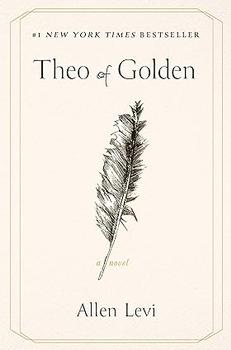
Theo of Golden by Allen Levi
One spring morning, a stranger arrives in the small southern city of Golden. No one knows where he has come from…or why…






Your guide toexceptional books
BookBrowse seeks out and recommends the best in contemporary fiction and nonfiction—books that not only engage and entertain but also deepen our understanding of ourselves and the world around us.


