
-
Your next favorite book
is waiting.
Summary | Excerpt | Reviews | Beyond the Book | Readalikes | Genres & Themes | Author Bio

Five Families and One Hundred Years of Blood, Migration, Race, and Memory
by Jazmine Ulloa Book Reviewed by:
1
Amazing Grace
El Paso and Ciudad Juárez sit at the foot of the mountains. The two cities remain so bound together by land and fate that they almost seem to blend, all rust and amber hues, stretching on either side of a narrow, shallow river that Juarenses call the Rio Bravo, and El Pasoans the Rio Grande. International bridges connect them like arteries. People ebb and flow through them like blood.
On the Mexican side, a giant Mexican flag and a red sculpture in the form of an X, a symbol of country pride and identity, towers over a highway and the thirty-foot-tall steel bars of the border wall. On the American end, a small cluster of downtown skyscrapers rise far above the urban sprawl, flat redbrick offices and old churches, strip malls and restaurants and spaghetti soups of roadways, grids and grids of terra-cotta, Prairie-style, and stucco homes set against the creosote and the yucca.
Interstate 10 cuts through on its way to more exciting destinations like Los Angeles, from metro areas that Americans tend to associate more with Texas like San Antonio, Houston, and Austin. But it is El Paso that is the gateway to the American Southwest-a place of rugged beauty, where from up above as you fly in, the sun reflects off glistening pools and rivulets, where after the blistering heat breaks, before the city lights glimmer, the brownness of the desert is cloaked in gold. A place in between two nations, fixed, depending on your perspective, at their center or at their margins. A place that no matter where else I've lived, or how long I've been away, I call home.
On August 3, 2019, I was nearly 2,000 miles away, in Washington, D.C., where I worked as a national political reporter in the bureau of The Boston Globe. It was a Saturday, and I was in a movie theater when my phone lit up with calls and messages. Friends and family in El Paso were checking in on each other and letting me know they were safe: There had been a mass shooting at a Walmart near the most popular shopping mall in town. Photos and videos from the scene showed bloody victims wheeled out in shopping carts, customers murmuring prayers amid the gun blasts.
The nation had scarcely processed what had unfolded when another mass shooting wracked Dayton, Ohio, thirteen hours later. We jumped into covering the twin tragedies from afar, another deadly day in a politically divided nation replete with guns. But I could not help but feel we were missing the story in the place where I was from. Unlike the killings in Ohio, where authorities had found no political or racial motive, federal enforcement officials were calling the El Paso rampage an act of homegrown terrorism and one of the deadliest attacks on Latinos in the United States. The massacre, as one federal prosecutor would later say, had "spared no one-no one, not the old, not the young, not men, not women, not white, not black, and certainly not brown." Yet a police detective who filed a report from the scene on that day said the man had stated his target as simply "Mexicans."
On Monday morning, with our breaking news deadlines met, I got on a plane to El Paso. When I landed that afternoon, word was still spreading of lost loved ones and close calls. Nearly every passenger around me was scrolling through news stories or whispering, in shock and in grief, about what they had heard or thought they knew. One of my closest childhood friends, Andrea, had texted a group of us to let us know her father was safe, though I did not know yet just how close he had been to the gunfire.
I grabbed my bags and made my way through the terminal, a sense of comfort swelling inside of me at the sight of the old carpet with Southwestern motifs and the mountains beyond the glass windows. It was a familiar routine, the coming and the going. I had been doing it since I had left for college at seventeen. Outside, the desert heat warmed my cold, bare arms. My eyes adjusted to the glare of the brightness. I spotted my uncle Fernando waiting for me in his car by the curb and I hopped in. We drove west through winding highways as we chatted in Spanish about my life in D.C. and where each of us had been when we learned of the shooting. el paso strong signs already decked billboards and businesses. There was a sadness in the air. The city felt apagada-dim and in mourning.
Excerpted from El Paso by Jazmine Ulloa. Copyright © 2026 by Jazmine Ulloa. Excerpted by permission of Dutton. All rights reserved. No part of this excerpt may be reproduced or reprinted without permission in writing from the publisher.
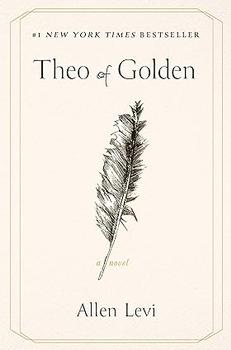
Theo of Golden by Allen Levi
One spring morning, a stranger arrives in the small southern city of Golden. No one knows where he has come from…or why…




Your guide toexceptional books
BookBrowse seeks out and recommends the best in contemporary fiction and nonfiction—books that not only engage and entertain but also deepen our understanding of ourselves and the world around us.


