-
Your next favorite book
is waiting.
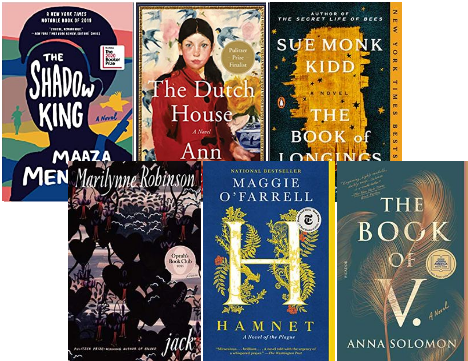
Historical fiction can be an entertaining tool for learning about days past. It can also be much more. Many novels set in previous periods go beyond a simple rendering of life in a particular time and place in history. For instance, authors may take advantage of the freedom provided by writing outside of their own eras to play with the notion of time itself, or to examine deeper truths about humanity. Books that provide the fun opportunity to reflect on historical details while introducing larger thematic topics often make for great book club selections.
Below are six such books that come highly recommended from our reviewers, with reading guides to spark ideas for discussing them with your book group. Several of these novels employ multiple timelines or cover a longer span of time, and some include connections to well-known people or events but speak from perspectives that have not always been considered historically significant. They all put a unique and valuable spin on the genre.
In anticipation of the publication of Sally Rooney's Beautiful World, Where Are You September 7, we invite you to take a tour of Dublin from a literary perspective with our "beyond the book" article:
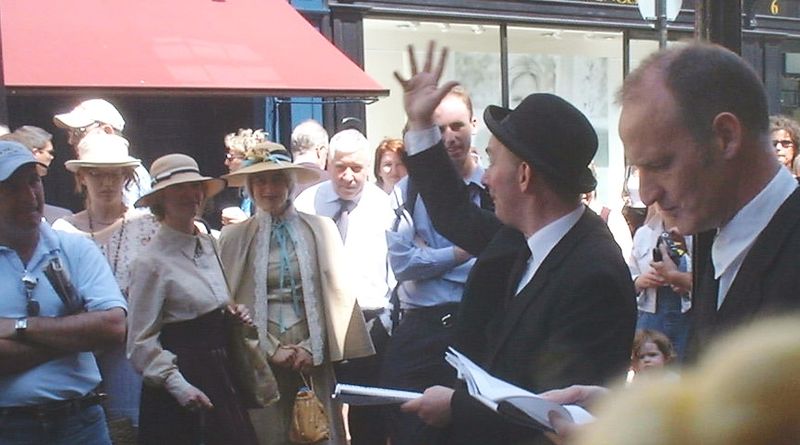 The backdrop of Sally Rooney's Beautiful World, Where Are You is the city of Dublin and its environs. Rooney herself lives in this UNESCO City of Literature, a metropolis that boasts a flourishing literary scene and an impressive inventory of influential authors, poets and playwrights. The streets of the vibrant capital are infused with the presence of its bookish greats, with landmarks never more than a few minutes away.
Jhumpa Lahiri wrote her novel Whereabouts in Italian, a language she learned in adulthood, and later translated it into English. Many authors have at some time made the decision to become exophonic (to write in a language other than one's native tongue), whether for personal, artistic, practical or political reasons.
The author who is possibly best known for doing this is Irish writer Samuel Beckett, who famously adopted French in order to write "sans style" (without style). While he eventually returned to English, some of his most famous works were originally composed in French, including the play En attendant Godot (Waiting for Godot) and the trilogy of novels beginning with Molloy.