
-
Your next favorite book
is waiting.
Summary | Reading Guide | Discuss | Reviews | Beyond the book | Read-Alikes | Genres & Themes | Author Bio

 Book Reviewed by:
A masterpiece of horror and an astonishingly immersive, maze-like reading experience that redefines the boundaries of a novel.
Years ago, when House of Leaves was first being passed around, it was nothing more than a badly bundled heap of paper, parts of which would occasionally surface on the Internet. No one could have anticipated the small but devoted following this terrifying story would soon command. Starting with an odd assortment of marginalized youth—musicians, tattoo artists, programmers, strippers, environmentalists, and adrenaline junkies—the book eventually made its way into the hands of older generations, who not only found themselves in those strangely arranged pages but also discovered a way back into the lives of their estranged children.
Now made available in book form, complete with the original colored words, vertical footnotes, and second and third appendices, the story remains unchanged. Similarly, the cultural fascination with House of Leaves remains as fervent and as imaginative as ever. The novel has gone on to inspire doctorate-level courses and masters theses, cultural phenomena like the online urban legend of "the backrooms," and incredible works of art in entirely unrealted mediums from music to video games.
Neither Pulitzer Prize-winning photojournalist Will Navidson nor his companion Karen Green was prepared to face the consequences of the impossibility of their new home, until the day their two little children wandered off and their voices eerily began to return another story—of creature darkness, of an ever-growing abyss behind a closet door, and of that unholy growl which soon enough would tear through their walls and consume all their dreams.
What’s the last book you purchased? Why did you select it? Paperback, hardback or ebook?
...r review. I think I've read one physical book in the past three years - https://www.bookbrowse.com/reviews/index.cfm/book_number/5112/house-of-leaves House of Leaves by Mark Z. Danielewski - and that's only because the book's formatting doesn't work well as an ebook. So, like almost every other book I've purchased, Theo of Golden is an...
-kim.kovacs
What’s your favorite epistolary novel?
Oh, I love the Griffin & Sabine books. I recently read https://www.bookbrowse.com/reviews/index.cfm/book_number/5112/house-of-leaves House of Leaves by Mark Danielewski and thought about those books the entire time (although HoL is horror, not romance).
-kim.kovacs
What are you reading this week? And what did you think of last week’s books? (10/09/2025)
...d, a scapegoat."). I then moved on to a scary novel: https://www.bookbrowse.com/bb_briefs/detail/index.cfm/ezine_preview_number/23189/house-of-leaves House of Leaves by Mark Z. Danielewski. Has anyone here read this one? Although "read" might not be the right term. It's experimental fiction so it's as much something one experiences as r...
-kim.kovacs
At the heart of House of Leaves is the question of what's real within the context of the novel and what isn't. Zampanò claims The Navidson Record exists, but Truant can't find any record of the film or of the sources Zampanò credits in his footnotes. Zampanò himself cites others who indicate that while the movie does exist, it's a hoax and the events documented never happened. Truant is stalked by a shadowy figure that attacks him, but then he decides he's imagining things…but if so, where did that scratch on his neck come from? It's disorienting, but that's part of what makes this such an exhilarating read. Further complicating the narrative is House of Leaves' physical layout. The book is widely cited as a prime example of ergodic literature, which requires effort from readers beyond how they'd normally approach a text. Its non-linear arrangement enhances the feeling that one is reading an incomplete manuscript, and it also makes the book challenging...continued
Full Review
 (916 words)
(Reviewed by Kim Kovacs).
 Bret Easton Ellis, bestselling author of American Psycho
Thrillingly alive, sublimely creepy, distressingly scary, breathtakingly intelligent—it renders most other fiction meaningless. Jonathan Lethem, award-winning author of Motherless Brooklyn
This demonically brilliant book is impossible to ignore.
Bret Easton Ellis, bestselling author of American Psycho
Thrillingly alive, sublimely creepy, distressingly scary, breathtakingly intelligent—it renders most other fiction meaningless. Jonathan Lethem, award-winning author of Motherless Brooklyn
This demonically brilliant book is impossible to ignore.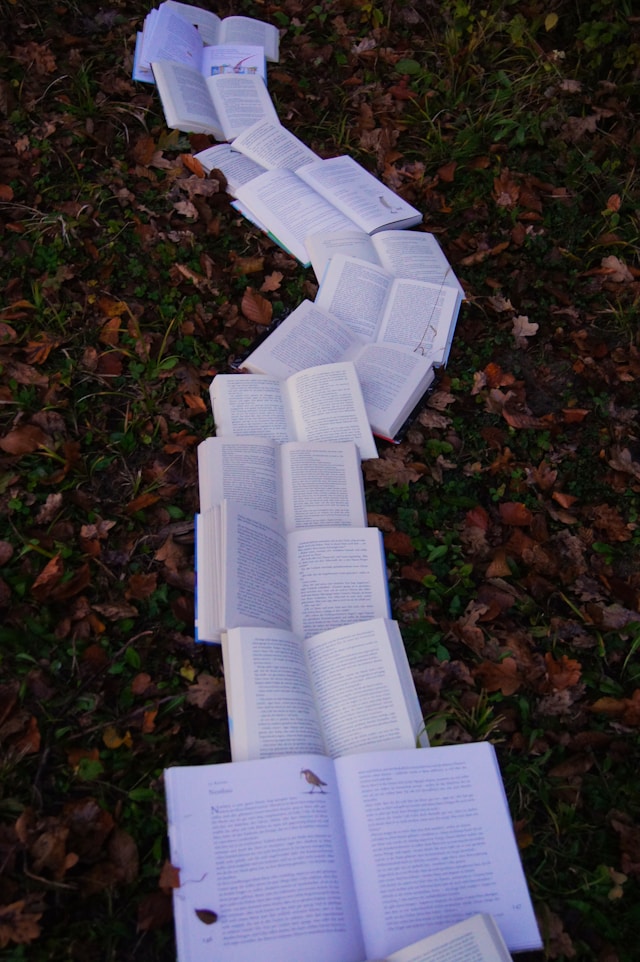 Ergodic literature is defined as fiction where "nontrivial effort is required to allow the reader to traverse the text." Derived from the Greek words ergon ("work") and hodos ("path"), it's a relatively new literary term, coined by Espen J. Aarseth in his 1997 book Cybertext: Perspectives on Ergodic Literature. Mark Z. Danielewski's novel House of Leaves has been frequently cited as a prime example of ergodic literature because of its complex and unusual formatting.
One's first experience with the nonlinear nature of House of Leaves is a physical interruption of the normal reading process. Most books are read sequentially (page one leads to page two which leads to page three and so on). This novel departs from that expectation ...
If you liked House of Leaves, try these:
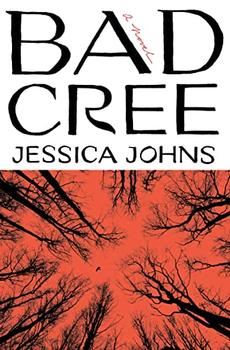
by Jessica Johns
Published 2023
In this gripping, horror-laced debut, a young Cree woman's dreams lead her on a perilous journey of self-discovery that ultimately forces her to confront the toll of a legacy of violence on her family, her community and the land they call home.
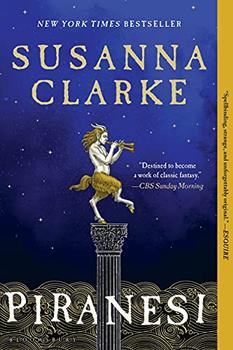
by Susanna Clarke
Published 2021
From the New York Times bestselling author of Jonathan Strange & Mr Norrell, an intoxicating, hypnotic new novel set in a dreamlike alternative reality.

by Italo Calvino
Published 2013
Italo Calvino's beloved, intricately crafted novel about an Emperor's travels—a brilliant journey across far-off places and distant memory.
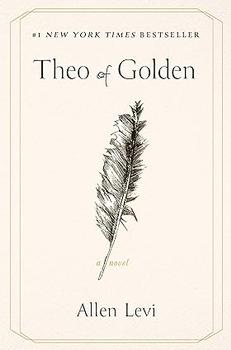
Theo of Golden by Allen Levi
One spring morning, a stranger arrives in the small southern city of Golden. No one knows where he has come from…or why…






