
-
Your next favorite book
is waiting.
Summary | Excerpt | Reading Guide | Reviews | Beyond the book | Read-Alikes | Genres & Themes | Author Bio

 Book Reviewed by:
The puzzle that is Mark Z. Danielewski's debut book, House of Leaves, begins with its title page, where the work claims to be not by Danielewski, but "By Zampanò with introduction and notes by Johnny Truant." As we turn the page, we're greeted with a single, ominous line of text—"This is not for you."—already hinting that this will not be a straightforward reading experience. Following this menacing sentence is Truant's Introduction, where he informs us that some time ago, he came into possession of a trunk containing loose pages of a manuscript penned by Zampanò, now deceased, whom he's never met. He goes on to tell us that as he assembled the pages into a book, the darkness hidden in its depths took over his mind, leading to hallucinations and nightmares—and he warns us that we, too, are at risk if we choose to continue. He writes,
"Out of the blue, beyond any cause you can trace, you'll suddenly realize things are not how you perceived them to be at all…You'll detect slow and subtle shifts going on all around you…Old shelters—television, magazines, movies—won't protect you anymore. You might try scribbling in a journal, on a napkin, maybe even in the margins of this book. That's when you'll discover you no longer trust the very walls you always took for granted…And then the nightmares will begin."
The narrative that follows is Truant's reconstruction of Zampanò's analysis of The Navidson Record, a film compiled by the Pulitzer Prize-winning photojournalist Will Navidson. Famous for his coverage in high-stress, war-torn environments, Navidson has moved his family to a house in rural Virginia in an attempt to save his relationship with his partner Karen. They soon find their idyllic home has anomalies, however; for example, it's bigger on the inside than on the outside. Doors and hallways appear where none existed before, and, ever the filmmaker, Navidson proceeds to document his explorations of these dark spaces. As he enlists the aid of others, the record becomes increasingly surreal until tragedy ensues.
There's quite a lot of erudite analysis in Zampanò's text, covering a host of topics from filmmaking techniques to mythology to psychology and many more besides. "It's impossible to appreciate the importance of space in The Navidson Record without first taking into account the significance of echoes," he writes. "However, before even beginning a cursory examination of their literal and thematic presence in the film, echoes reverberating within the word itself need to be distinguished." This is followed by 10 pages of discussion about echoes, including resonance frequencies and physics calculations. And, in keeping with the faux academic nature of this part of the narrative, Zampanò includes myriad footnotes to indicate his scholarly sources. (Indeed, some have suggested House of Leaves is a satire of academia, based on the format.)
These sections can get a little dry, to be sure, but Zampanò's vivid descriptions of the movie more than make up for the digressions. These frightening segments draw the reader in and may well haunt their imagination long after the conclusion.
Interspersed with the text are Truant's footnotes on Zampanò's footnotes. These start out as fairly basic commentary, but as Truant becomes obsessed with the project, his comments digress until they no longer discuss either the book or the movie, instead documenting his own descent into madness. These sections may be even more terrifying than those dealing with Navidson's explorations, as Truant describes his fear of what lurks in the shadows. And although Truant is an unreliable narrator, his character is richly crafted; we know who he is by the end of the book. I'm always impressed when an author accomplishes this feat using only a first-person point of view, and getting inside Truant's mind is a highlight of the book for me.
At the heart of House of Leaves is the question of what's real within the context of the novel and what isn't. Zampanò claims The Navidson Record exists, but Truant can't find any record of the film or of the sources Zampanò credits in his footnotes. Zampanò himself cites others who indicate that while the movie does exist, it's a hoax and the events documented never happened. Truant is stalked by a shadowy figure that attacks him, but then he decides he's imagining things…but if so, where did that scratch on his neck come from? It's disorienting, but that's part of what makes this such an exhilarating read.
Further complicating the narrative is House of Leaves' physical layout. The book is widely cited as a prime example of ergodic literature, which requires effort from readers beyond how they'd normally approach a text (see Beyond the Book). Its non-linear arrangement enhances the feeling that one is reading an incomplete manuscript, and it also makes the book challenging. For me this is a plus—I enjoy books that color outside the lines—but those interested in tackling it should understand that a certain amount of fortitude is required to reach its conclusion, and, while the scenes of horror are brief, they become progressively gorier as exploration of the house continues.
House of Leaves has been a favorite of mine since I first encountered it 25 years ago, and my opinion of it has only strengthened with each reread. Its unique structure, complex plot, and compelling characters draw me in each time, and I highly recommend it, particularly to readers looking for a fascinating book outside of the normal reading experience. Those willing to undertake the challenge will undoubtedly find much to appreciate.
 This review
first ran in the November 5, 2025
issue of BookBrowse Recommends.
This review
first ran in the November 5, 2025
issue of BookBrowse Recommends.

If you liked House of Leaves, try these:
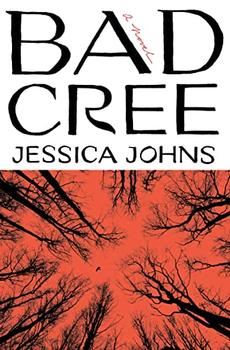
by Jessica Johns
Published 2023
In this gripping, horror-laced debut, a young Cree woman's dreams lead her on a perilous journey of self-discovery that ultimately forces her to confront the toll of a legacy of violence on her family, her community and the land they call home.
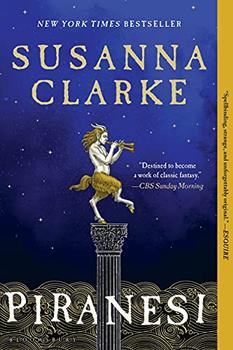
by Susanna Clarke
Published 2021
From the New York Times bestselling author of Jonathan Strange & Mr Norrell, an intoxicating, hypnotic new novel set in a dreamlike alternative reality.

by Italo Calvino
Published 2013
Italo Calvino's beloved, intricately crafted novel about an Emperor's travels—a brilliant journey across far-off places and distant memory.
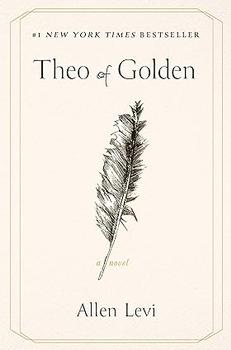
Theo of Golden by Allen Levi
One spring morning, a stranger arrives in the small southern city of Golden. No one knows where he has come from…or why…

Your guide toexceptional books
BookBrowse seeks out and recommends the best in contemporary fiction and nonfiction—books that not only engage and entertain but also deepen our understanding of ourselves and the world around us.

