
I'll Be Right Here: A Novel
by Amy Bloom
Ingenious, Beautifully Written, and Idiosyncratic: I Thought It Was Superb, but Not Everyone Will Agree (10/20/2025)
This book is bit odd, quirky, and even eccentric. And though it can be confusing if you don't pay close attention to the narrative, it is superb!
Written by Amy Bloom, this is the story of siblings Samir and Gazela, who are orphaned at a young age while living in Paris during World War II. Algerian by descent, they manage to elude authorities and remain together. Samir goes to work in a bakery, while Gazela gets a job as a caretaker for the author Collette. Thanks to Collette's generosity, Gazela emigrates to the United States; Samir goes back to Algeria but eventually finds his way to Gazela in Poughkeepsie, New York. Gazela meets two lively sisters—Anne and Alma Cohen—and the three become inseparable.
The novel is then the story of their lives together until their deaths, bouncing back and forth in time from 1930 to 2015—so pay close attention to the chapter headings. After Samir joins them, the four become the head of an unconventional family. Secrets abound, especially sexual secrets, but the unconditional love they feel for one another buoys and protects them throughout their lives.
This is a multigenerational family saga with lots of sex and intimacy in a story about power and love that is more focused on the women than the men.
While this book won't be beloved by everyone, I thought it was ingenious, beautifully written, and just idiosyncratic enough to make it special.

Dominion: A Novel
by Addie E. Citchens
Short but Powerful: It Starts Out Very Sloooowly and Then Hits with a Literary Sucker Punch (9/29/2025)
This is a short but powerful novel that begins very (very) sloooowly, but at about 40 percent into the book—so you have to stick with it and read quite a while—it packs a literary sucker punch that left me breathless. And from then on, I could not turn the pages fast enough.
Written by Addie E. Citchens, this is a Southern Black family drama about a revered and respected preacher, his pill-popping/alcohol-drinking wife, and five sons. Sabre J. Winfrey Jr. is not only the head pastor of The Seven Seals Missionary Baptist Church in Dominion, Mississippi, but also owns the town barbershop and radio station. He rules his family. His wife, Priscilla, is held on such a pedestal by the congregation that they call her the First Lady.
The Winfreys have five boys, all of whom except the youngest, Emanuel (nicknamed Wonderboy), are grown. Wonderboy is finishing his junior year in high school when the novel opens. He excels at seemingly everything—from football to academics to music. While the girls just fall all over him—all he has to do is smile—he has one special girlfriend, Diamond. While Wonderboy grew up in a huge home with all the advantages money can buy, Diamond is an orphan with a heartbreaking childhood. Meanwhile, Wonderboy isn't as perfect as he seems. The violent activities that make up his shocking secret life are building to a fever pitch that will eventually strike down this illustrious family in a way they never saw coming.
The novel is creatively structured. The book begins with a history of The Seven Seals Church, and then many chapters start with Sabre's Sunday sermon notes, including a brief scripture passage. Pay attention to this as it foreshadows what will happen in the next pages.
The story, which is primarily told in the alternating first-person voices of Priscilla and Diamond, focuses on the joys and corruption of sex, the pain of misogyny in a patriarchal world, and the fight for women's independence in a society that wants to keep them in their lowly place.
The title of the book, "Dominion," has several meanings in the novel from the name of the town to the way men govern women.
Pay attention! The cover illustration is priceless (and hilarious) once you read a passage on page 25.
A Hundred Flowers: A Novel
by Gail Tsukiyama
Beautifully Written: A Profound Novel About Loss and Courage (9/26/2025)
With evocative descriptions of everything from the thorns of a kapok tree to the sooty grime of a train, this lovely novel by Gail Tsukiyama will transport you to China at the beginning of the Chinese Cultural Revolution when so many traditional elements of Chinese society were brutally purged—including many who disagreed with the government and had the courage to say so. It was a dangerous time.
It's 1957. Sheng and Kai Ying are happily married with a 7-year-old son named Tao. They live in Sheng's family's villa in Guangzhou, a bustling port city on the Pearl River, along with his aging father, Wei, and an old family friend, Auntie Song. The family endures two crises. Although Mao has decreed "Let a hundred flowers bloom; let a hundred schools of thought contend," the government cracks down hard on any one with a dissenting point of view. One day, Sheng is arrested for writing a letter criticizing the Communist Party and is sent 1,000 miles away to Luoyang, a diminished industrial city, to be "reeducated," a brutal years-long process of intense labor and near starvation that most do not survive.
One year later, Tao is climbing the kapok tree in the villa's courtyard in an attempt to see the peaks of White Cloud Mountain in the far distance, but he slips and falls 30 feet to hard surface below. While his injuries are severe, he survives the fall, but it forever changes all their lives. And then during a monsoon, a 15-year-old pregnant girl stumbles into the courtyard in hard labor. Who is she? Why did she choose this home? Meanwhile, secrets abound in this household, but Wei's secret is so dark and disturbing, it is taking a toll on his health.
This is a beautifully written historical novel filled with grace and remarkable insight into the human condition, especially when lives are irrevocably torn asunder and the only way to survive is through courage. But as sad and troubling as it is, the story ends with a sense of hope and redemption.
We All Want Impossible Things: A Novel
by Catherine Newman
Reading This Book Is as Comforting as a Hug (9/24/2025)
This is a novel about a beloved friend dying in hospice. And…are you ready?...it's hilarious. Yes, it's incredibly sad, but author Catherine Newman is able to find the funny without being sacrilegious about death and dying.
Edith is married to Jude and they have one precious little boy named Dash. Edi is dying of ovarian cancer, and her physician says it's time for hospice. Edi, Jude, and Dash live in New York City, while Edi's BFF for life, Ashley—they first became besties in preschool—lives in Western Massachusetts. For a number of reasons, Jude and Ash decide the best place for Edi to be in hospice is near Ash so she can be with her almost 24/7 and 7-year-old Dash will not have to endure the trauma of watching his mama die. So that's what they do. Edi moves into a hospice facility named Shapely where there are resident dogs, a resident singer, a palliative care physician they call Dr. Soprano because he resembles James Gandolfini, and many caring nurses. Except for the dying part, it's perfect.
Meanwhile, Ash's life is a mess. She and her husband, Honey (yes, that's his name), have separated, but they're still in love. Ash is having sex with two men (Edi's brother Jonah and Dr. Soprano), as well as a woman. Her older daughter, Jules, is in college studying engineering, while the younger daughter, Belle, is in high school—except she is skipping school almost every day. Ash's life may be a shambles, but it's grounded in love.
It's winter. It's snowing. And Ash is grieving and laughing and remembering and, most of all, not wanting to let Edi go.
More than anything else, this is a love letter to those deeply abiding friendships between women, a loving embrace to losing a loved one, and a profound statement about the joy of living. There are also many wise words about death, dying, and grieving and what it feels like to be survivor.
Reading this book is as comforting as a hug, especially because it will make you laugh out loud—a lot.

The Eights
by Joanna Miller
A Magnificently Written History of the First Women at Oxford, but It's Also a Bit Sluggish and Flat (9/22/2025)
This is magnificently written and deeply researched historical fiction about the first class of women at England's prestigious Oxford University. But… And this is a big but. It's slow-going. Parts of it are fascinating and sometimes the women's stories rise to almost being a page-turner, but for the most part it's a bit sluggish.
Written by Joanna Miller, this is the story of four very different women who live in Corridor Eight of St. Hugh's College, and they are quickly nicknamed "The Eights." The novel traces their journey at Oxford as they forge a path for women—after 1,000 years of being a male bastion—despite much opposition, ridicule, and uncouth comments from the men at the university. The novel begins in October 1920, soon after the end of the Great War when so many men were killed or maimed that a generation of women would never be able to marry.
The four women who make up The Eights:
• Beatrice Sparks is socially and physically awkward, standing six feet tall and always struggling in clothes that do not fit her large frame. She is the daughter of a militant suffragette, who rarely pays attention to Beatrice except to reprimand her.
• Marianne Grey is the impoverished daughter of a widowed Anglican rector. Her mother died giving birth to her, so sorrow has followed Marianne all her life. She is a scholarship student, studying literature with the hope of teaching someday. Marianne is carrying a tragic secret—one she dare not reveal to even her closest friends. It is so scandalous that if the truth came to light, she would be forced to leave Oxford in disgrace.
• Theodora Greenwood, nicknamed Dora, is perhaps the most beautiful woman on campus, but her heart is filled with grief. She not only lost her favorite brother, George, in the war, but also her fiancé, Charles, whose body is buried in an unmarked grave in France. Her parents allow her to attend Oxford because George cannot. Several months into the academic year, Dora learns a shocking secret that devastates her to her core, threatening everything she holds dear.
• Ottoline Wallace-Kerr, nicknamed Otto, is wealthy, beautiful, fashionably dressed, an absolute flirt, and a mathematical genius. Her mother is so angry she has matriculated at Oxford, eschewing marriage, that she has not spoken to her in a year. Otto flaunts Oxford's quite restrictive rules for women—so much that she is at risk of being sent down (permanently expelled).
The novel focuses on these four women, their abiding friendship, and their arduous days as the first females in what had been for centuries an all-male university, as the unsettled ghosts of the Great War still haunt their lives. The plot is minimal, but the well-developed characters and the historic descriptions of Oxford make up for some of that.
While you'll learn a good bit of history and have a new appreciation for these pioneer scholars, the novel is not a particularly riveting read and even falls flat in places.
Note: Before you even begin reading, bookmark the highly useful glossary at the end of the book. Terms such as chap rules, cuppers, Hilary term, pigeon post, rustication, tute, and many more are defined, and most are critical for understanding the text. (Or you can just Google it term-by-term.)
Call Us What We Carry: Poems
by Amanda Gorman
A History of Covid Creatively and Heartbreakingly Told in Poetry: Lovely and Subversive (9/16/2025)
I read a lot, and I read many types of books—fiction, nonfiction, classics, short stories, and essays. Rarely do I read poetry. Even though it's more than four years later, I still am haunted by the beautiful, evocative words of poet Amanda Gorman when she stood on the west front of the U.S. Capitol reading her poem "The Hill We Climb." She was only 22, and she took my breath away. So I read this book of poetry, which includes that extraordinary piece.
Taken as a whole, this volume is a history of the Covid pandemic creatively and heartbreakingly told in poetry. Although there are a lot of facts sprinkled throughout the book, it is primarily an accounting of how we felt during that time of quarantine and isolation, fear and uncertainty, life and death. And while it did bring it all back for me, it was also a solace filled with a special kind of healing and even hope.
While the "The Hill We Climb" is my favorite poem in this selection, my second favorite is title "The Miracle of Morning" with plays on the words morning and mourning, but primarily about how just taking an early morning walk in Covid times brought a welcome sense of normalcy. It's not just a poem; it's also a story. And that is true of many of the pieces in this book.
It starts out like this:
"We thought we'd awaken to a world in mourning.
Heavy clouds crowding, a society storming.
But there's something different on this golden morning.
Something magical in the sunlight, wide & warming."
Unlike a novel or a history book, this tome is not read for content. I had to change how I read, going much slower, rereading, pausing to contemplate, and then returning the next day to reread something that I couldn't stop thinking about.
This is not only a lovely small book but also a subversive one.

Broken Country
by Clare Leslie Hall
Oh, This Is a Good Book! A Delicious ChickLit/Soap Opera Story That Simmers with Tension and Sex (9/15/2025)
What a book! This is an intense love story—an impossible love triangle shrouded within a whodunit murder. It's a delicious ChickLit/soap opera plot that is unputdownable.
Written by Clare Leslie Hall, this is the story of Beth Johnson, who is madly, passionately, and totally in love with two men. Two very different men. It's the 1950s in the (fictional) rural village of Hemston, England when Beth first meets Gabriel Wolfe one hot summer day. Beth, an avid reader, excellent student, and aspiring poet, is the daughter of two teachers. Gabriel is the son of the wealthiest family in town, living on a posh estate with his older father and snobby, angry mother. But it's love at first sight for Beth and Gabriel, and even though Beth is still in high school and Gabriel will soon be starting college at Oxford, they have a steamy and fiery sexual relationship that lasts all summer.
Beth aspires to go to Oxford herself, hoping to snare one of the few spots allocated for women. When she goes to the college to take the entrance exams and interviews, she learns a horrifying fact about Gabriel. She bids him farewell forever, heartbroken and distraught. Soon after, she takes up with Frank Johnson, a steady, safe farmer who has loved Beth from afar since he was 13. Frank is kind, compassionate, and filled with a pure love for Beth. They marry and have a wonderful life together until their little boy, Bobby, dies, leaving them inconsolable and forever changing their marriage.
Fast forward to 1968. Gabriel, who is now a famous and wealthy novelist, returns to Hemston and his family's estate with a little boy of his own and an American wife who divorced him and moved to California. Beth tries to avoid Gabriel, but to no avail. The attraction is too strong, too vital, leaving her with an impossible choice to make: Gabriel or Frank? As dangerous secrets that had long been buried in the past rise up again, tragedy strikes. A man is killed—but is it murder or an accident?
Beth's love stories—past and present—are interwoven with the tale of the murder trial. With colorful characters, a riveting and multilayered plot, and superb pacing, Clare Leslie Hall has written a perceptive, mesmerizing novel that simmers with tension and sex. It's the perfect escape read.
And the ending? It is completely unexpected, incredibly powerful, and absolutely perfect.
Oh, this is a good book!
The English Teacher
by Lily King
A Profound and Moving Tale That Is Emotionally Charged and at Times Deeply Unsettling (9/12/2025)
Vida Avery has a secret. A horrifying, life-altering secret that she has never told anyone. Now it's 1979--15 years later.
Fiercely independent Vida is living a satisfying, albeit not particularly happy, life at Fayer Academy, a posh prep school nestled on a secluded island off the coast of New England. She is an English teacher in the upper school so she is able to immerse herself in novels—so much so that the characters on the pages are more real to her than her colleagues and friends. Vida, who never married, has a teenage son, Peter. She loves him, but she has recurring nightmares about hurting or even killing him. Now Vida has impulsively accepted widower Tom Belou's proposal of marriage, and she and Peter move in with patient, understanding, and wonderful Tom and his three children. Simon is 18 and has dropped out of life since his mother's death, embracing weird philosophies while entertaining girls in his room at night. Fran is in 11th grade and vacillates between being snippy and mean and kind and compassionate. Little Caleb is a sweetheart. Peter is ecstatic about being part of a real family, even as he begins failing most of his classes at Fayer and his classmates seemingly shun him. Meanwhile, complex and wounded Vida is terrified of sex, so the newlyweds are having great difficulty in bed.
Brilliantly written by Lily King, the novel reflects the plot of Thomas Hardy's "Tess of the d'Urbervilles," as Vida, who teaches the book annually to her 10th graders, realizes that Tess's life is mirroring her own. Vida's mental state is precarious at best as she realizes her marriage was a huge mistake. Meanwhile, Tom knows that Vida isn't telling him something and it's creating a huge wedge in their relationship.
We readers are eventually apprised of Vida's lifechanging secret long before anyone else finds out (although it's fairly easy to figure it out if you're paying attention), making her psychological downfall all the more harrowing.
This is a profound and moving tale that is emotionally charged and at times deeply unsettling as all the characters must deal with their own kind of grief if they want to move forward with their lives.
Note: While it's not necessary to read "Tess of the d'Urbervilles" before reading "The English Teacher," your experience will be much richer if you do—or at least Google the plot of "Tess."
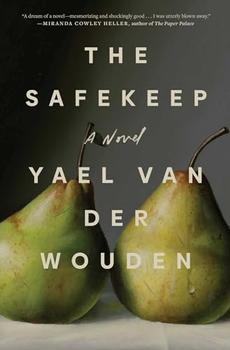
The Safekeep
by Yael van der Wouden
An Extraordinary Novel: Masterful Writing and an Engrossing, Erotic Story with a Stunning Plot Twist (9/11/2025)
I could tell from the first page that would be an excellent book, but then there is a plot twist that was so unforeseen and astonishing that it transforms the novel into something truly extraordinary.
Written by Yael van der Wouden, this is the story of Isabel, a lonely, bitter, mean 20-something woman with a face so stern that "not even honey could sweeten that vinegar." It's the summer of 1961 in a small town of Zwolle in The Netherlands in the rural province of Overijssel. World War II is long over, but the wounds and scars still seem fresh. Isabel lives in the small country house she shared as a child with her widowed mother and two brothers, Louis and Hendrick. The house was purchased for them by their generous Uncle Karel. Their mother is now dead. Louis is living the bachelor life with a new girlfriend every few weeks, although he swears each one is the woman he will marry. Hendrick is gay and lives with his longtime lover, Sebastian. Isabel is alone in the house, a house that will someday go to Louis, according to Uncle Karel. But it is Isabel, not Louis, who loves and cares for this old house that is filled with secrets and cherished relics.
One day Louis begs Isabel to allow his latest girlfriend, Eva, to move into the house for most of the summer while he leaves on an extended business trip. Isabel cannot imagine anything worse. While Isabel is obsessively neat and ordered and follows a strict routine, Eva is a free spirit, who talks incessantly and walks loudly. Most troubling of all, she touches everything. And Louis has said she could stay in their mother's room—a room that has been off-limits to everyone since their mother died.
It takes a few weeks, but Eva breaks through Isabel's mighty defenses and her repressed desires, and the two become unlikely lovers—wary and frightened at first and then devoted and passionate.
But then Isabel makes a horrid accusation about Eva and soon after discovers a truth about Eva's life that changes everything in a stunning plot twist that was so shocking I actually had to close the book and just breathe for a minute or two.
The writing is masterful, the rather erotic story is utterly engrossing, and the remarkable symbolism—pay especial attention to the pears—transforms this novel into literature.

Saltwater: A Novel
by Katy Hays
This Mystery-Thriller Gave Me the Chills That No Hot Summer Sun Could Warm! (8/31/2025)
It's summer on the picturesque island of Capri where we are cavorting, sailing, swimming, and partying with the rich and famous…and possibly the murderous. Oh, this mystery-thriller gave me chills that no hot summer sun could warm because evil lurks in this luxurious paradise.
Written by Katy Hays this is the complicated story of the incredibly wealthy Lingate family, who annually summer for one week in Capri. In July 1992, tragedy struck the family and island when Sarah, the wife of the younger brother Richard and mother of three-year-old Helen, fell to her death from the rugged cliffs that surround most of the island. A lengthy investigation was unable to determine if her death was a murder, accident, or suicide.
Even so, the family has always insisted on returning to Capri and staying in the same opulent villa. As Helen grew up she became best friends with Ciro, the son of the villa's housekeeper Renata. Renata had been close to Sarah, knowing she was different from the rest of them. Before she married Richard, Sarah was a successful, up-and-coming playwright in New York City. Soon after her marriage, the paranoid, highly insular family made sure she never wrote again. Until one day…she did. In secret. The result was a play titled "Saltwater," but after her husband read it, he called the attorneys to make sure it would never be mounted on any stage anywhere because Sarah had written about Lingate family. Years later when Helen was in college, she gave an interview to someone she thought of as a friend, but she was betrayed…and the Lingates essentially put her under house arrest forevermore. The Lingates always say "no comment."
Fast forward 20 years. Helen and the rest of the Lingates—her remote Uncle Marcus and her alcoholic/pill-popping Aunt Naomi, along with her controlling father Richard, and her boyfriend Freddy—have once again arrived on Capri. This year, Lorna, Marcus's assistant and Helen's good friend, has accompanied them for the first time. Lorna and Helen are up to no good, having created a blackmail plot so they can both get their hands on some Lingate money. Just as the investigation into Sarah's death is reopened thanks to new evidence, another body turns up, but this time it's hauled out of the Mediterranean Sea.
The Lingates are shrouded in secrets and tragedy, and everything is about to be exposed.
Author Katy Hays is masterful. She has written a complex, multilayered plot that bounces back and forth not only in time, but also among the characters. Yes, it's a soap opera, it's a delicious, pager-turner soap opera!
The suspense builds ever so slowly until the unexpected twists and turns grip the reader in a sinister and chilling reveal that is truly surprising.

The Diana Chronicles
by Tina Brown
A Balanced Interpretation of a Glamorous and Troubled Life: It's a Page-Turner! (8/23/2025)
From the blushing, young "Shy Di" to the heartbreaking "England's Rose," Princess Diana was an unlikely person to take on the formidable royal family traditions and forever change them. Her story is iconic and one we (mostly) know. From riding in the golden carriage for her fairytale wedding to Prince Charles to her tragic death that haunted a grief-stricken world, Diana Spencer's life story reads more like a novel than a biography.
Tina Brown, British-American journalist and magazine editor, took on the big task in the writing of this book—one of many, many, many books on the princess. She tells Diana's life story, separating fact from fiction, truth from rumors, and actualities from mythology.
The book begins and ends with the story of Diana's death, the events that led up to it, the role of the paparazzi, the medical care she received on the scene of the crash deep in a Paris tunnel, the reactions of the royal family—from the queen to Prince Philip to Prince Charles to William and Harry—and the unprecedented reactions of the British public.
But the book is more than that. Find out about:
• Diana's troubled childhood, including the histrionics of her parents' divorce and her relationship with her two older sisters and younger brother.
• Her education—or startling lack thereof.
• Her dreamlike, fairytale vision she always had of marrying a prince, and the machinations she undertook to make that dream come true. (Did you know that Diana's older sister, Sarah, dated Prince Charles, but following a serious blunder she was left weeping alone?)
• All about the wedding! The details from the engagement, her deep love for Charles, the dress, her friends' reactions, her family's lack of support, and the interference from Prince Philip that made the whole thing happen.
• All about Camilla Parker-Bowles! She was key in helping Charles choose Diana as his wife and was just as key in breaking up the marriage.
• Diana's suffering as a new bride, the birth of her sons, and the trials and tribulations of bulimia.
• Her eventual sense of "superstar entitlement" and how this impacted her everyday life.
• How she handled and manipulated the paparazzi from the time she was rumored to be Charles's girlfriend to the time of her death.
• Details of day-to-day royal life.
• How Prince Charles was desperately caught between Diana's expectations of him as her husband and the queen's expectations of his duty as the prince of Wales. Spoiler alert: Charles was in a no-win situation.
• How Charles was threatened very early on by Diana's extreme popularity and the formidable and crushing impact this had on their marriage.
• How clever, smart Diana "won" big time in the divorce wars. It was Diana vs. the palace…and (shockingly) Diana was the decided victor.
• She only had one year to live after her divorce from Charles, but Diana made that year count. Find out all she did worldwide that had a lasting impact that not only eased human suffering, but also helped save countless lives.
Even though we all know how this story begins and ends, this book is still a page-turner thanks to Tina Brown's excellent writing, savvy sources, and ability to sort out what really happened vs. all the tabloid gossip. While she is sympathetic to Diana, she also honestly portrays many of the princess's less-than-honorable actions, maneuvers, foibles, and decisions in an open manner. It's a balanced interpretation of a glamorous and troubled life.
Bonus: The end of the book features several iconic photos of Diana, including the shot in front of the nursery school when her skirt became see-through, the engagement photo, wedding photos, and lovely pictures of her sons.

Dream Count: A Novel
by Chimamanda Ngozi Adichie
A Remarkable and Sophisticated Novel That Is an Emotionally Searing Story of the Human Heart (8/20/2025)
Is there anything more consuming of our stray thoughts than past lovers? Four single African women, three of whom live in the United States and one of whom lives in Abuja, Nigeria, each remembers the men in their lives whom they once loved and then lost—their dream count. This poignant, masterfully written novel by award-winning author Chimamanda Ngozi Adichie is a book to which all women—no matter their race—will relate.
• Chiamaka, the only daughter in a fabulously wealthy Nigerian family, lives in the United States and works (without making much money) as a freelance travel writer. When the Covid pandemic hits in 2020, her almost frantic international travels cease, and she spends the quiet time in her Maryland home remembering many failed love affairs.
• Zikora, an attorney in Washington, D.C., is Chiamaka's best friend. It took a long time, but Zikora finally fell in love with the perfect man. Well, he was perfect until Zikora got pregnant…and he immediately fled. Now she is a single mother, filled with resentment and a broken heart, blaming past boyfriends for stealing her time.
• Omelogor, Chiamaka's cousin, lives in Abuja, Nigeria. She is tough, forthright, and opinionated. She is also a huge success in business, although much of it is dishonest and illegal, earning her enormous wealth and prestige. After leaving a high-level banking job, she runs a website called "For Men Only" where she parcels advice about dating, love, and sex. But after an offhand comment from her Aunty Jane, who called Omelogor's life empty because she isn't married and a mother, she is seriously questioning who she is and what she stands for.
• Kadiatou, Chiamaka's housekeeper, has a teenaged daughter, Binta, whom she is raising alone. Binta's father died before he even knew his new wife was pregnant. Her childhood best friend, Amadou, helped her escape from an oppressive situation in Guinea and move to New York. Although they intended to marry, Amadou was caught selling marijuana and received a long prison sentence in faraway Texas. Kadiatou is proud of all she does, especially when she gets a job as a hotel maid. All is well until one day a French VIP guest rapes her as she is cleaning his room. The case goes viral internationally with Kadiatou's identity revealed where she is devoured online by rapacious strangers who know only the barest facts of what really happened. (If it sounds familiar, it's because it's based on a similar, real-life case inspired by Nafissatou Diallo.)
This is a book about friendship, love, heartbreak, and the reverberations of the choices we make in life when our dreams, especially for marriage and motherhood, don't come true. But it is always the sisterhood of friendship that abides throughout the years, offering grounding and solace.
With vividly drawn characters that pop off the page, this remarkable and sophisticated novel is an emotionally searing story of the human heart.
The Marriage Portrait: A novel
by Maggie O'Farrell
This Is Literature at Its Finest That Is Also a Captivating and Provocative Page-Turner (8/9/2025)
This is an all-consuming novel. It is haunting. When I stopped reading to do something mundane, such as make dinner, I couldn't stop thinking about it. When I fell asleep at night, I dreamt about it—and it was not always a good dream.
Masterfully written by Maggie O'Farrell, this is the multilayered story of an obscure Italian duchess named Lucrezia de' Medici. Taking place in 1560 in Renaissance Italy, she is summarily married against her will at age 15 to Alfonso II d'Este, the duke of Ferrara, Modena, and Reggio, and off she goes—barely out of her girlhood—from her loving family in Florence to a formidable castle in Ferrara.
This is not a spoiler because it's revealed on page one: Lucrezia dies less than a year after her marriage, ostensibly of "putrid fever" (what physicians would now define as pulmonary tuberculosis), but rumors immediately surfaced that she was poisoned by her husband.
When I describe this as "masterfully written," I mean it. The book alternates chapters between Lucrezia's last days of life when she suspects Alfonzo is trying to murder her and the first 15 years of her life. The fifth child and third daughter of Cosimo I de' Medici, Duke of Florence and Eleanor of Toledo, she was unlike her siblings. Instead of being pliant and obedient, she is daring, defiant, and determined, thriving on adventure and risk-taking. Her own mother describes her as "intractable" and "savage."
Lucrezia's older sister, Maria, was supposed to have married Alfonzo, but Maria died of a lung infection, and at age 12, Lucrezia was unhappily betrothed to the duke.
After they are married, the duke commissioned a portrait of his bride to be painted by the Italian artist Il Bastianino, something Alfonso called the marriage portrait. The book's title comes from this, but it is also an intriguing and witty double entendre in that the novel is also a portrait of this troubled and dysfunctional marriage.
Lucrezia quickly realizes that despite Alfonzo's loving words and his pledge to never hurt her, he and his men are malicious sadists who must always be in control—physically and psychologically—of all those around them. They achieve this through a reign of terror that even touches Alfonzo's sister, Elisabetta, in a most horrific way. And it's not too much longer that Alfonzo turns his heartless and hateful eyes on his very young bride, turning this novel into a psychological thriller.
The power of the book and the magnificent writing is that we, the readers, are transported back in time to Renaissance Italy to almost become part of this haunting, tragic story. You will learn what is expected of women—even strong, determined women like Lucrezia—in a society that devalues them. Crossing those boundaries will always result in punishment. And sometimes that punishment is severe.
With vivid and bold characters, a plot that never lets up, and prose that reads almost like poetry, this is a book to be treasured. It is literature at its finest, but it's also a captivating and provocative page-turner.
So it's history, right? We know what's coming because we were told on the first page. Well, don't be too sure because there are some surprising twists and turns for a most unexpected ending.

Memorial Days: A Memoir
by Geraldine Brooks
A Deeply Sad, but Also Honest and Hopeful Memoir of Love, Loss, and Living Again (8/3/2025)
Oh, this book made me cry. And smile…and a few times, I even laughed. This is the deeply sad—but also honest and hopeful—memoir of a widow in the days, weeks, months, and years after her beloved's untimely and unexpected death.
Geraldine Brooks met her husband Tony Horwitz at Columbia University in the early 1980s when they were both studying for a master's in journalism. She is a native of Sydney, Australia, and he is a native of Chevy Chase, Maryland. They married in 1984, and had two sons. They had a storybook life. Throughout their more than three decades of marriage, they were very much in love. They also had professional success, each winning a Pulitzer Prize—she for fiction in 2006 and he for national reporting in 1995.
It was on Memorial Day, May 27, 2019, when Tony was 60 and on a grueling book tour to promote his latest book, "Spying on the South: An Odyssey Across the American Divide," that he collapsed on a sidewalk on the border between Maryland and Washington, D.C. just blocks from his childhood home. He died instantly. And for Geraldine, who was at their home on Martha's Vineyard at the time, life forever changed.
This is her story. Her story of this profound, heartrending loss. Her story of grieving and learning to live again. Her story of managing all the complex tasks—from taxes to health insurance to credit cards—that Tony had always taken care of and about which she knew nothing. Her story of escaping three years later to the extremely remote Flinders Island, northeast of Tasmania, Australia, so she could properly grieve for Tony.
Written with grace and aplomb, this is a story of a deep, abiding love and the wrenching emotions that occur when it all ends. It's a story of hope, of living again even when you think that's not quite possible. It's a book that will resonate with anyone who is in love, and it will make all readers truly appreciate the here and now.
When Tony died, Brooks was writing her acclaimed novel "Horse," but she was struggling with it. She says that he believed in the book more than she did, but she wanted to finish writing it just so she could dedicate it to her beloved. This is the dedication, and it gave me goosebumps when I read it the first time in 2022, just as it does now:
FOR TONY
It will be the past and we'll live there together. –Patrick Philips, "Heaven"

The Wedding People: A Novel
by Alison Espach
Is Erudite ChickLit a Genre? That Best Describes This Wonderful, Insightful, and Hilarious Novel (7/30/2025)
Is erudite ChickLit a genre? Even if it's not, this is the best way to describe this surprising book by Alison Espach about a hoity-toity six-day (!) wedding in posh Newport, Rhode Island. But this is so much more than champagne bubbles; this book has real substance.
Smart and studious Phoebe Stone has a PhD in 19th-century literature. She is an adjunct college English professor at a university in St. Louis with minimal hope for promotion to a real position. Phobe is still reeling from multiple failed IVF treatments and a divorce two years ago from her cheating husband, Matt, a philosophy professor at the same college. She is clinically depressed and even her therapist isn't much help. At 40 years old, Phoebe has lost all hope so she makes a shocking decision: She will travel to a posh hotel in Newport and die by suicide. On the second day of classes for the fall semester, she just skips out without telling anyone and flies to the East Coast.
When Phoebe arrives at the opulent 19th century hotel, the place is surprisingly mobbed. The check-in line feels miles long. It's a Tuesday! What is going on? What is going on is a wedding—a six-day, $1 million wedding. Lila, 28, is marrying Gary, 40, a widower with an 11-year-old daughter who is nicknamed Juice. Lila is rich (very, very rich) and spoiled (very, very spoiled). She has bought out the hotel—or so she thought. When she realizes that Phoebe is not only not a wedding guest, but also has snagged the penthouse suite with the best view of the ocean, she is upset. But that is nothing compared to how she feels when Phoebe lets her know her unsettling plans. Phoebe would turn Lila's wedding into a crime scene!
It's not a spoiler to say that although Phoebe tries to die by suicide, she fails. (It's not a spoiler because that is the whole point of the book.) And that failure has given her a new way of viewing her life. She shouldn't be here…but she is. If Phoebe is not going to die, then Phoebe is going to live in a whole new way. And with that decision, everything changes. Lila finds that Phoebe is the only one who will be honest with her. Gary realizes that he can confide in Phoebe, who will really listen to him. Phoebe embraces "the wedding people" as she calls them, and they in turn embrace her—changing all their lives.
For me, two things made this novel so special that it rose far above standard summer ChickLit to become smart and bookish ChickLit:
1. There are many intelligent and even eloquent discussions of various psychological and emotional matters with smart insights and understandings.
2. This is a literary dream come true. As an English professor and a lifelong avid reader, Phoebe throws out book titles and even mini-analyses of several of them. I kept track of the books cited in the novel, and it's a fun booklist: "Jane Eyre," by Charlotte Bronte; T.S. Eliot poems; "Moby-Dick," by Herman Melville; John Donne poems; "Leaves of Grass," by Walt Whitman; "Mrs. Dalloway," by Virginia Woolf; "Sonnets," by William Shakespeare; "The House of Mirth," by Edith Wharton; "Huckleberry Finn," by Mark Twain; "Emma" and "Pride and Prejudice," by Jane Austen; and Dante's "Inferno."
This is a wonderful, insightful book with a poignant and often hilarious storyline, memorable characters, and a big fat can't-miss-it message: Live life to the fullest!
Trigger Warning: Suicide is a prominent plot point, and this could be a trigger for many. Read with caution if this is you.

Interpretations of Love
by Jane Campbell
A Wise and Tender Novel About Love, Loss, and Redemption (7/19/2025)
This short novel is astounding in its depth of understanding of the human psyche. And that might just be because author Jane Campbell was 82 years old when the book was published.
This is the story of three people whose lives intersect in startling, joyful, and tragic ways. Each one tells his or her story in the first person in alternating chapters:
• Professor Malcom Miller: Now retired from his position as a professor of the Old Testament, Malcolm is a self-described "crusty old bachelor" comfortably living in a care home in Oxford. When he was 20 years old in 1946, his beloved sister, Sophy, tragically died along with her husband in an automobile accident. The day before, Malcolm had visited Sophy and Kurt to pick up their four-year-old daughter, Agnes. Uncle Mally and Agnes took the train back to his parents' home, while Sophy and Kurt enjoyed a night alone. The next day they drove the car…and died. Malcolm has not only been filled with grief over Sophy's death, but also filled with guilt. She had given him a very personal letter to deliver, but he never did. Some 50 years later, he still has it. What will happen if he reveals its shocking contents?
• Dr. Joseph Conrad Bradshaw: Now 80 years old, Joe has spent his life as a serial adulterer. Although he enjoyed a stellar career as a psychotherapist, he can't seem to find peace and solace in his personal life. Marry, cheat, divorce. Rinse and repeat. One of his patients over the years was Agnes, and he immediately felt a connection to her that he never did with any of his other patients—a connection so deep that he becomes obsessed with her. When Agnes's daughter, Elfie, marries, Joe is at the small wedding—only 11 people—and he meets Agnes again after all these years.
• Dr. Agnes Josephine Stacey: Agnes, who is in her 50s, is an Oxford professor who is lonely and deeply distrusting of other people. At one point she says that her life has been predicated on never belonging to anyone. This attitude was no doubt caused by two horrific events: The deaths of her parents when she was four years old and her marriage (and subsequent divorce) to Richard, who physically abused her.
The book has two big events at which the players all gather: Elfie's wedding to Theo, which takes place at Richard's opulent home where Agnes has never felt safe, and then the christening a year later of Elfie and Theo's daughter, Josephine. Secrets are kept and revealed and almost destroy their lives. But this is so much more than plot. Campbell has a deft and remarkable touch in examining how each of the main three characters feels when life's bombshells explode around them.
This a wise and tender novel about love, loss, and redemption.
The Plot
by Jean Hanff Korelitz
An Intense Page-Turner with an Electrifying Plot Twist (7/7/2025)
OMG! This is one of those pressure-cooker psychological thrillers that just slowly builds and builds and builds until the chilling, appalling ending. Oh, this is a good book.
Written by Jean Hanff Korelitz, this is the story of frustrated novelist Jacob Finch Bonner. Jake published his first book to critical acclaim, although that didn't translate into significant book sales. His second book was a total flop. Now he is heading to Ripley College, a small little-known college in Northern Vermont near the fabled "Northeast Kingdom," where he will teach a low-residency symposium to wannabe novelists. Jake is miserable. Almost all his students are forgettable—except for one. Haughty, arrogant, and conceited Evan Parker thinks he has conceived a plot that is so exceptional, so explosive, so much of a pager-turner that it will not only be a No. 1 bestseller, but also a hit movie. And Evan will be world-famous. All he has to do is write it. Evan is guardedly evasive and highly secretive about this sure-thing winner, sharing only a few of the opening pages and telling no one the plot. At some point, Evan shares with Jake the gist of the plot, and Jake realizes that all the braggadocio is warranted. There has never been a novel like the one Evan has conceived. That sends Jake into a tailspin of gloom.
Fast forward a few years. Jake learns quite by accident that his former student has died. And he never wrote the novel. That amazing plot is still out there in the universe, waiting for an author to turn it into a book. Feeling only a little remorse and a few twinges of guilt about stealing his student's brilliant idea, Jake writes the book. It's titled "Crib," and it is indeed a runaway bestseller with Steven Spielberg signing on to make the movie of the book. Oprah chooses it for her book club. Jake's life is now everything he ever hoped it would be. And then it gets better. He's a guest on a radio show in Seattle, and the woman who booked him on it is gorgeous and is flirting with him! Jake and Anna hit it off quickly, and she moves to New York City where they happily live together and soon marry.
Life is perfect, right? No. Because while he was Seattle, Jake received the first (of what would be many) threatening emails. It said: "You are a thief." It was signed
[email protected]. And so it begins. Someone out there knows that Jake stole the story idea, and that someone wants him to pay for his blatant, unabashed thievery. Jake is terrified. His only way out, in his mind, is to lie about what he did.
Korelitz gives lots of clues all along the way. Even I—who rarely figure out whodunit—could figure out this one, but the big plot twist at the end I didn't see coming until right before it happened. Many of the clues are literary, which is so much fun for avid readers. Pay attention in particular to the novels "Housekeeping," by Marilynne Robinson and "The Talented Mr. Ripley," by Patricia Highsmith. (Even if you haven't read these books, Korelitz eventually explains the clues from the these acclaimed novels, but if you have read them, you are more likely to figure out things sooner.)
"The Plot" is also two novels in one. Interposed with Jake's story of writing "Crib" is the novel "Crib," excerpted in several-page increments throughout the book. (And it IS a genius plot!)
This is an intense page-turner with an electrifying plot twist and a horrifying ending. But wait! There's more! The story continues in "The Sequel."

The Emperor of Gladness: A Novel
by Ocean Vuong
A Provocative and Haunting Work of Literary Fiction: Dark and Devastating to Read (6/29/2025)
This is a profound book, albeit highly disturbing, about the love and conflict, addictions and deceptions that bind together families who are struggling to survive on very little money, very little education, and very few community resources. These are people who are truly on the forgotten fringes of society.
Written by American Book Award winner Ocean Vuong, this is the story of Hai (pronounced "Hi"), a 19-year-old Vietnamese-American living in the dying, post-industrial town of East Gladness, Connecticut. It's September 2009. Hai is lost. He has lost his sense of self and rightness. His short life has been built on lies and drugs. And now he has seemingly come to the end after telling his beloved mother a whopper of a lie that is so big, so glorious that she has found real happiness for the first time in a long time. But what he told her isn't true. So Hai does the only thing he can think to do: Kill himself.
Just as he is about to jump off a railroad bridge into a swirling, powerful river, an 82-year-old woman living in deep poverty and neglect in the shadow of that bridge, screams at him to stop. Miraculously, he hears her and obeys her. And then she takes him in…for good. Her name is Grazina Vitkus, a widow of Lithuanian descent and the mother of two adult children from whom she is quite distant. She is suffering from advanced dementia. Because her house is so dilapidated and in such a run-down and chemically toxic area, no live-in nurse will stay long. Hai takes on that role. But money is scarce, so he gets a job at a fast-food restaurant called HomeMarket, thanks to his autistic cousin Sony who also works there. It is here in a restaurant that serves Thanksgiving dinner foods year round that Hai is fully embraced into a caring community for the first time. It is also here that he finds order, consistency, and discipline for the first time. But the big lie he told his mother and his continued dependence on drugs taints his new life with desperation and despondency as he desperately searches for a second chance.
This is a provocative and haunting work of literary fiction that is not only unsettling, but also emotionally searing. It is a dark and difficult book to read because the characters' lives are so devastating. Even though there is a small sense of redemption and hope, the ending is just as sad and shattering as the rest of the book. Still, it's an important novel with a profound and relevant message.

Three Days in June: A Novel
by Anne Tyler
Witty, Wise, and Wonderful: The Perfect Summer Novel (6/28/2025)
Anne Tyler is one of my all-time favorite authors. If she writes it, I read it. There is just something magical about every book she has written, and this latest book—No. 25, which is just as special as those that precede it—was published when she was 83 years old. The girl's still got it!
The book opens when the lead character, Gail Baines, a 61-year-old assistant headmistress at a posh private school in Baltimore, is summarily let go instead of being promoted after her boss, the headmistress, decides to retire. This just happens to be the day before Gail's only daughter, Debbie, is getting married. Gail flees the school building in confusion and embarrassment and soon after arriving home, her ex-husband, Max, who is a kind of human hurricane, unexpectedly appears on her doorstep from his home in Delaware. He is asking to spend the wedding weekend in her house, along with an elderly foster cat for which he is caring. And even though he is the father of the bride, he has no suit—only a rumpled sport coat. As they are preparing for the imminent rehearsal and rehearsal dinner, Debbie drops in with shocking news—news that could very well derail the wedding the next day.
The novel is told in three parts—the day before the wedding, the day of the wedding, and the day after the wedding. But this is so much more than a wedding story. We find out Gail's complicated backstory and secrets of her past that she has confided to no one, including the real cause of her divorce from Max.
This is a story about love, especially married love, and all that makes it work—or not. Like all Anne Tyler novels, it is brilliantly told through the lives of the quirky, colorful characters. The plot is minimal—just enough to nudge it along bit by bit with a delightfully happy ending. Do pay attention to the mentions of wristwatches and the marvelous symbolism of time—past, present, and future.
This is a charming summer read filled with solid life advice and remarkable insight into the our human foibles and fears, while parts of it are laugh-out-loud funny. It is witty, wise, and wonderful.
Edge of Eternity: Book Three of The Century Trilogy
by Ken Follett
A Solid History Lesson Embedded with a Delicious Soap Opera Story of Love, Sex, Revenge, and Intrigue (6/19/2025)
This book, just like the two in the Century Trilogy series that precede it, is a solid history lesson complete with well-known and obscure factual details embedded in a delicious soap-opera story of love and sex, revenge and intrigue, regret and hope. Even at more than 1,100 pages, it's an all-consuming read!
The third in author Ken Follett's massive, epic history of the 20th century, this volume covers 1961 to 1989 with an epilogue dated November 4, 2008, the date of Barack Obama's election as president. I thought this book was the best of the three, but that might be because I lived through this time period and remember almost all the events.
The reason this series works so well and is so compellingly readable is that the history is told from the perspective of key characters who are loosely connected to one another. And these characters are placed all over the world—from the United States to Great Britain to Germany (East and West) to the Soviet Union to Cuba. They are rock 'n roll stars, CIA agents, close aides to the top Soviet officials, leading U.S. government employees, Stasi secret police, TV and newspaper journalists, and more, which makes their perspective seem like an insider point of view.
The book opens on a rainy Monday in 1961 when Rebecca Hoffman, a teacher who is married and lives in East Berlin, receives a terrifying order to report to the Stasi, the East German secret police. After she learns that the Stasi has intimately spied on her and her extended family for years, Rebecca makes an impassioned decision to escape over the Berlin Wall. And from there the story catapults into a fast-moving chronicle of life around the world at a volatile time when everything seemed to change—and quickly. From John F. Kennedy's presidency and womanizing to Martin Luther King's quest for civil rights to Robert Kennedy's tragic run for the presidency to the escalation of the war in Vietnam. Strap on your reading chair's seatbelt and get ready for a wild and fascinating literary ride.
This is a compelling, can't-turn-the-pages-fast-enough novel, but it's definitely pop fiction—not literary fiction. It's a perfect vacation read when you want a long book to last the duration of the trip.
And the ending? Let's just say there were tears…quite a few. It's wonderful.
Advice No. 1: Follett helpfully provides a cast of characters arranged by country and then family. Bookmark it. Even with the Kindle X-ray feature, I referred to this list frequently in the early chapters of the book. There are so many characters, and the scenes shift quickly so this list is indispensable.
Advice No. 2: While the books in the Century Trilogy can be read independently, it's probably best to read them in order, beginning with "Fall of Giants" and followed by "Winter of the World" and then "Edge of Eternity." Why? There is continuity in the stories of the characters and their descendants so it's best to read from the beginning to avoid inadvertent spoilers.









 Power Reviewer

