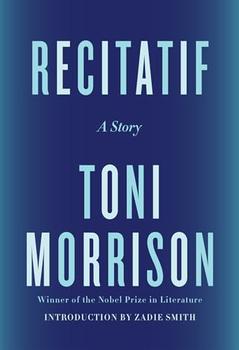
Recitatif: A Story
by Toni Morrison
A Brilliant Short Story That Is Also a Puzzle Game for Readers (4/18/2026)
This 1980 short story by Toni Morrison—the only one she ever wrote—is a kind of puzzle game for readers that will make each of us examine our deepest stereotypes about race.
This is the story of Twyla and Roberta, who are both eight years old, frightened, and lonely. Their mothers have taken them (or in the girls' parlance, dumped them) to the St. Bonaventure shelter for what amounts to four months. They arrive the same day, and unlike all the others there, they are not orphans; their mothers are still alive. Twyla and Roberta become roommates, and because they are shunned by the others, they become fast friends. The story continues far into the future when the girls meet again by chance four times as adults—the first time passing rudely like strangers and the rest of the times like the best friends they were all those years earlier.
This is the puzzle for readers: One of the girls is White. And the other is Black. But Morrison never tells us which is which, and so many of the "hints" she provides could go either way. She explicitly intended to remove all racial codes from the narrative.
The introduction by Zadie Smith is longer than the short story, but do take the time to read it. Because it appears before the story, I read it first, but I wish now that I had read it later. It is filled with much wisdom and smart analysis, but it also sets up the story a bit too well, a bit too thoroughly. Translation: There are some spoilers.
Smith says that Morrison called "Recitatif" an experiment, and the subject of that experiment is us—the readers. Both girls seem to be White and then Black and then White again. It all depends on your personal perception. Smith wisely asserts that a reader's attempts to figure it out says more about the reader than the character.
This is interesting: In the footnotes, Smith cites literary critic Elizabeth Abel, who claims that most White readers see Twyla as White, while most Black readers see Twyla as Black. Well, which is it? You get to decide.
Smith asserts, and I heartily agree, that "Recitatif" is a perfect short story—in the same league as Shirley Jackson's "The Lottery"—and something that should be read by everyone.

Brawler: Stories
by Lauren Groff
Vivid Characters, Sharp Plot Points, and Writing that Sings: Excellent Collection of Nine Short Stories (4/16/2026)
Lauren Groff is one of my favorite authors of all time. Her 2015 novel "Fates and Furies" is still on my top 10 list of favorite books, and since I added it in 2016, I have read more than 1,000 books that could have surpassed it, but none did.
And this collection of nine short stories, despite the somewhat odd title and cover design, is spectacular. Each story is a portrayal of good and evil—often in the same person. Some of the stories made me smile, many of them gave me the shivers, and all of them were a joy to read. Groff has a special kind of insight into the human condition and how we treat each other—for better or worse.
The stories cover the gamut from time (the 1950s to the present day), character ages (teens to seniors), and locations (New England to Florida to California to New York,)
My favorites (and it was difficult to choose!):
• "What's the Time, Mr. Wolf?": Chip is a young boy when the story opens and a grown man at the end. He is part of a large, wealthy, and prestigious New England family. Their expectations for him are quite high, but he is largely ignored by everyone except his older sister. With no one paying particular attention to him, he descends into partying and booze, but always manages the gentleman's C. Eventually, it catches up with him, and his stint in "rehab" is to be shipped off to the desolate family manse in the wilds of New Hampshire—all alone.
• "Birdie": Three high school friends who have long since lost touch with each other, gather for a weekend at the hospital bedside of Birdie, the fourth member of the group. Birdie is dying of cancer. They all have secrets and regrets, but the focus of this story is on Nichole, who makes a stunning confession of something that happened one summer long ago.
• "The Wind": This is a heartbreaking and somewhat terrifying story of a mother and her three children trying to escape the husband/father, employed as a police officer, who is abusing them. It's a testament to mother love.
• "To Sunland": After their parents have both died, Joanie determines to take her mentally-challenged brother, Buddy, to an institution in Florida before she leaves for college in Maine. This is the story of their bus trip south.
With vivid characters, sharp plot points, and writing that simply sings, this is a captivating and remarkable collection of short stories, and exactly what I would have expected from the inimitable Lauren Groff.
Cleopatra: A Life
by Stacy Schiff
A Real History Book That Reads as Such, but It's a Fascinating Tale of Sex, Power, and Death (4/13/2026)
There are no primary sources. Everything we know about Cleopatra, who died a generation before Christ was born, is the stuff of legend, gossip, and mythology. So what is a serious biographer to do?
Relying heavily on the Greek biographer and philosopher Plutarch, who wrote 100-plus years after Cleopatra's death, as well as the Roman historian Lucius Cassius Dio, who wrote some 200 years after the queen's death, Pulitzer Prize-winning author Stacy Schiff has valiantly separated the legend of Cleopatra from her history to offer what is likely the most accurate historical account we will ever have.
Tip: Get William Shakespeare and Elizabeth Taylor out of your brain!
Cleopatra is arguably among the most famous and the most powerful women to have ever lived, ruling Egypt for 22 years. To get to the throne, she had her four siblings summarily murdered—and she was married in succession to two of her brothers. She fell in love with Julius Caesar, with whom she had a son, and after his murder at the hands of his most trusted advisors, she fell in love with Mark Antony. This storied romance resulted in three children and the eventual demise of Egypt as it became a Roman province. The two lovers died by suicide.
Some insist she ruled by her sexual prowess and feminine wiles, but the story is more complicated. Cleopatra was brilliant—smart, savvy, and politically shrewd. She was also extremely wealthy and arguably far more powerful than most (all?) of the male heads of state in her time. Indeed, much of her life really was dramatic and spectacular, and far later in the future it lent itself to the stage and movies. But there was more to it than that, and this is where Schiff's research and writing skills particularly shine.
This is a real history book and reads as such, so some parts of it are a bit dense. But the story of Cleopatra's life is fascinating, and Schiff is a master at not reducing her to the sum of her sex life, as has so often been done before. Cleopatra accomplished so much more as Egypt's proficient ruler than her erotic personal life seems to allow in all the retellings.
It's an intriguing tale of sex, power, and death.
Advice: Do read the footnotes! They aren't bibliographic citations, but rather extra pieces of the story that range from insightful to hilarious to salacious.
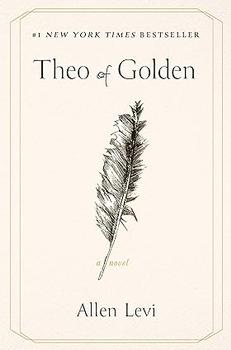
Theo of Golden
by Allen Levi
Literary Comfort Food for the Soul: Simple Story, Simple Plot, Powerful Message (4/9/2026)
Oh. This. Book. When the world around you is falling apart, this is the book you should read. It is literary comfort food for the soul.
You will smile. You might even laugh. And you will likely tear up. And eventually you will finish it, gently close it, and sigh.
Beautifully written by Allen Levi, this is the story of Theo (just Theo), a wealthy 86-year-old gentleman who was born and raised in Portugal and has lived all over the world. And now for mysterious reasons, he has arrived on a sunny spring morning in the small Georgia town of Golden where he gently and compassionately touches the hearts and souls of many of the residents. After renting a third-floor walk-up apartment on top of the Ponder Building, which is owned by one Mr. James Ponder whom Theo employs as a kind of business manager for secretive reasons that will eventually be revealed.
Theo frequents the local coffee shop, called The Chalice, and sees on its walls 92 hand-drawn portraits of Golden residents. The portraits are intricate works of art by a local artist named Asher Glisson and each one is for sale. Theo has an idea! He will buy them one-by-one and present them to the person depicted in portrait. He writes each person a beautiful handwritten letter on exquisite stationery, requesting a meeting on a bench facing the river along the town's promenade. Although most are skeptical and even alarmed by this request from a total stranger—is this a scam?—they show up and are astounded by the gift and the conversation with Theo. So many of them reveal their deepest secrets and desires to this gracious old man. Lives are changed when Theo touches them.
As much as this is obviously a story of the joy of giving, it is just as much a story of faces. Looking at faces—really looking, not just a passing glance—is how we humans truly get to know one another. As one character says in the book, "God gave us faces so we can see each other better."
While it can be a bit sappy at times, this is a simple story with a simple plot and a powerful message of love and compassion.
Bonus: This book has the BEST dedication, sure to make you smile.

Strangers: A Memoir of Marriage
by Belle Burden
Reading More Like a Novel Than a Memoir, This Is an Intimate Look at Failed Marriage (4/6/2026)
The demise of a marriage is almost always a tragedy. And the disintegration of the marriage of author Belle Burden and her pseudonymously-named husband in this tell-all, bare-all, confess-all book is tragic. But it also reads like a well-written celebrity gossip column with all the inside scoop.
While the book is a gripping page-turner, it also takes some deep breaths and maybe a few eyerolls before we readers can take it all seriously. You see, Belle and her ex-husband were/are uber-rich. Belle is an aristocratic heiress (the Vanderbilt family) with a trust fund and a Harvard law degree. And she's the poor one in the union! The Husband makes millions as a hedge fund trader, they own a posh New York City apartment, and a house on Martha's Vineyard with access to a private club and private beaches. The three children attend expensive private schools. It's all a bit much for the average Joe to behold. But once I got past the glittering riches, I found their love story to be enchanting, while how it all ended is heartbreaking.
They truly were in love. Married 20 years, Belle, The Husband, and two of their three children fled from New York City to their beach house on Martha's Vineyard, Massachusetts in March 2020 when the Covid pandemic first hit. (Their son was staying with a friend whose parents—and those parents must now have a sure ticket to heaven—hosted a bunch of teenagers for months in their home.)
Soon after arriving on Martha's Vineyard, Belle received an ominous text message from an unknown number. The man writing the text informed her that his wife and her husband were having an affair, and his wife had just tried to kill herself. When Belle confronted The Husband, he confessed all and instead of saying it meant nothing, he left her. Just. Like. That. What's more, he refused to talk about it. He simply said, "I feel like a switch has flipped. I'm done." And he was. He not only didn't want anything to do with Belle, but also wanted nothing to do with their three children.
The book is then the details of what happened, who did what to whom, who said what to whom, and trying to figure out the biggest question of all—WHY?
Instead of being sordid, it's sympathetic. Instead of being hateful, it's haunting. Instead of being insipid, it's insightful.
Reading more like a novel than a memoir, the book is an intimate look behind the locked doors of a failed marriage and a life that is reborn and reinvented—albeit with the help of a lot of money in the bank.
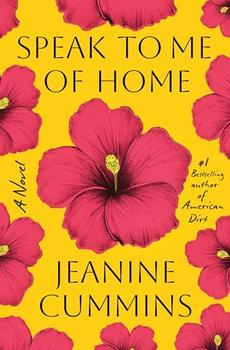
Speak to Me of Home: A Novel
by Jeanine Cummins
Three-Generation Family Epic: A Poignant and Perceptive Story of Mothers and Daughters (3/31/2026)
This three-generational family epic is a poignant and perceptive story of mothers and daughters—the love and affection, as well as the anger and antagonism. It is a story that begins in Puerto Rico, continues to St. Louis and New York, and ends in our hearts.
Written by Jeanine Cummins, the novel takes place from the 1950s to 2023, bouncing—often jarringly—from decade to decade and character to character. It is the opposite of a linear, chronological tale, and we readers really need to sit up and pay attention or risk getting lost.
The novel opens in 2023 in Palisades, New York when Ruth, the widowed mother of two, finds out that her daughter Daisy, who has moved to San Juan instead of going to college, was gravely injured during a hurricane. Ruth would do anything to be there with her daughter, but all the flights have been canceled. The story then abruptly backs up to 1968 in San Juan on Ruth's parents' wedding day, a wedding with an inauspicious beginning as Peter Brennan's Irish-American family wants nothing to do with his marrying Puerto Rican Rafaela Acuña y Daubón. The novel backs up again to Rafaela's storied childhood in San Juan, the precious daughter of wealthy and devoted parents who lose everything just as she is about to finish high school.
Rafaela and Ruth eventually get to Daisy's bedside in San Juan, the place where their family story began and they consider all the choices and decisions throughout the years that got them to where they are now. The latter part of the book quickly becomes much like a soap opera—granted, it's a page-turner—but it's still a bit over the top and histrionic in emotion and pulls on the heartstrings.
At the center of this novel, is the question of identity—not only ethnic identity but also identity within a family. Who are we? Where do we truly belong? It's also a love story—romantic love and family love.
My qualm with the book is the format. Jumping around in time and character is a common tool for writers, but it takes great expertise on the part of the author or it can be confusing and disorienting for readers. Proper segues are vitally important, and Cummins doesn't do that, so it feels like a lot of hard stops from chapter to chapter.
That said, this is a compelling and thoughtful book with a story that is told with candor and compassion.
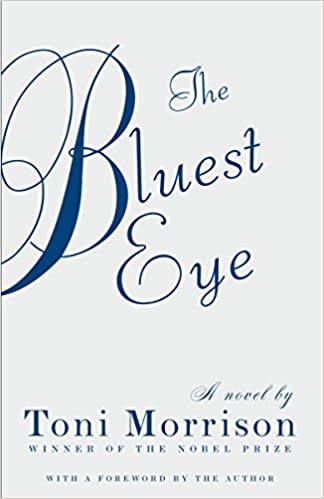
The Bluest Eye
by Toni Morrison
This Frequently Banned Book Should Be Required Reading for All of Us (3/28/2026)
Reason No. 1 I Read This Book: From February 18, 2026 through February 18, 2027, Ohio is celebrating the life, literature, and legacy of Toni Morrison, a native of Lorain, Ohio and the first African American woman to win the Nobel Prize in Literature. I recently moved back to Ohio, so I want to join in this celebration and plan to read several of Morrison's books this year, starting with this one.
Reason No. 2 I Read This Book: I read banned books. And it's hard to come up with a title that has been challenged more frequently over a longer period of time than "The Bluest Eye."
Published in 1970, this debut novel from author Toni Morrison is an emotional punch in the heart as it shows how racism is insidiously internalized by young Black girls and then poisons the rest of their lives. It's bold and brazen. It's searing and seductive. It's tender and tough. And I was spellbound from page one.
This is the story of three Black girls in 1940 and 1941 in Lorain, Ohio. Claudia, who is nine, narrates the story. Her sister Frieda is 10, but seems years old and wiser. And their friend Pecola Breedlove, who is 11, is the primary character, the one who thinks of herself as being so ugly that she also feels hideous inside. She believes that having blue eyes will make her beautiful, and she prays to God every day that her wish will be granted. While Claudia and Frieda are poor, they are truly loved and cherished by their parents. Pecola, who lives in a family filled with violence and abject poverty, is severely abused as she is raped and impregnated by her father, Cholly.
The ending, which is a literary feat unto itself, is heartbreaking as Pecola, who just a little girl, descends into madness as the adults around her so severely betrayed and harmed her.
This piercing, brilliant novel takes readers into the legacy of slavery and the very heart of racism. The writing is hauntingly lyrical and emotionally devastating—and should be required reading for all of us.

Women of a Promiscuous Nature
by Donna Everhart
Prepare to Be Shocked: Intense, Superb Page-Turner of a Horrifying Piece of History (3/24/2026)
This novel is historical fiction. It is based on fact. And that is exactly what makes the story so hard to read. It is appalling. And its roots, its grounding, are all true. Prepare to be horrified.
That said, it's vitally important that we read books like this that expose what can happen when unfair, detrimental, and discriminating laws are randomly enacted and enforced. In this case, it was the Chamberlain-Kahn Act, otherwise known as the American Plan, that was enacted in 1918 and continued into the 1950s and legally permitted military, police, and health officers to arrest any woman suspected of prostitution.
Mind you, a young woman could be accused of prostitution just because she chose to live alone, chose to eat dinner in a restaurant by herself, or was pretty or unmarried. Husbands who were bored or angry with their wives could turn them in. There were no standards. There was no due process through the legal system. Once arrested, the woman was forced to undergo invasive testing for venereal disease and then sent to jail or to a detention center or workcamp so she could be "rehabilitated."
Set in 1941 in Kinston, North Carolina, this novel by Donna Everhart focuses on a small group of women who have been arrested for prostitution and sent to the State Industrial Farm Colony for Women. Beautiful Ruth with her long, silky black hair has graduated from high school and is living her dream of having her own apartment and a job in the local diner. While walking to work one morning, she is grabbed off the street by the sheriff and driven against her will to the Colony. Stella is smart but a social outcast. She is only 15, but her father has been visiting her bedroom at night for years. Now Stella is pregnant so her enraged mother, who assumes Stella has a no-good boyfriend, sends her off to the Colony to have her "tumor" removed.
The medical treatment received by these women is horrific. Ruth has only ever kissed one boy, but it's determined she has syphilis and is treated repeatedly with arsenic and mercury shots, the standard treatment in this time. The side effects include hair loss, nausea, and loose teeth. Stella is sterilized without her knowledge or permission.
Living in the Colony under the strict rules of the superintendent, Mrs. Dorothy Baker, some 45 women are subjected to a life that resembles a prison. How they survive and what happens to them as they are repeatedly abused and eventually fight back is the basis of this intense and superb page-turner novel that left me stunned, horrified, and angry.

The Caretaker: A Novel
by Ron Rash
This Is a Book to Be Treasured: Twisty Plot, Extraordinary Characters, and Brilliant Writing (3/20/2026)
WHO is the author of this book? Hmmm…never heard of him until now. In the first few pages of this novel, I was totally smitten. So I looked up this "unknown" author and found out the following: Ron Rash has written 20 books, three of which have been on the New York Times bestseller list, and he has won 20 literary awards.
Well, I got schooled, and happily so, since I intend to read a lot more Ron Rash books.
Taking place in 1951, this is a historical novel, love story, and coming of age book—all in one. Jacob Hampton is the only child of the leading citizens of Blowing Rock, North Carolina, Daniel and Cora Hampton. They own the sawmill and the general store. They consistently helped townspeople during the Great Depression, and no one has forgotten their compassion in that difficult time. But Jacob is trying to break free of their many constraints on him. He dropped out of college with the intention of working at the sawmill, and when he came home, he met Naomi Clarke, a 16-year-old from a farm near Pulaski, Tennessee, who was trying to earn some much-needed money by working as a maid at the town's most elegant hotel. Naomi has lived a hardscrabble existence, losing her mother at a young age and forced by her father to drop out of school after the third grade to work on the family farm.
It's love at first sight for Jacob and Naomi, who elope when his parents both refuse to give their blessing and with many cruel words disinherit him. Their marriage is a scandal in this small Appalachian town. And soon enough, Uncle Sam comes calling, sending Jacob to fight in the Korean War. He asks his best buddy, Blackburn Gant, a man whose face was horribly disfigured by polio, to look after Naomi while he is in the Army, knowing Naomi is spurned by most of the townspeople. By the time Jacob ships out, Naomi is pregnant with their baby.
What happens to Jacob in Korea and what happens to those left in Blowing Rock is the gist of this page-turner of a book. How far are we willing to go—even to tell the most horrific lies and mastermind the most evil of deeds—to seemingly save those we love? When will the truth be revealed?
While the twisty plot is very compelling, it is the characters who transform this story from what could have been a quick-to-forget novel to rise to the level of literature.
Best of all, the writing is brilliant. This is a book to be treasured.

The Doorman: A Novel
by Chris Pavone
A Captivating Thriller Packed with Surprises and Simmering Tension (3/17/2026)
This is a slow-building suspenseful thriller that soon threatens to boil over in a pressure-cooker plot that will keep you up way past your bedtime.
Written by Chris Pavone, this is the story of the Bohemia, a posh apartment building on New York City's Upper West Side that is so exclusive and private that it doesn't even have a street address on the outside of the building. We follow the stories of the doorman and the residents in two apartments, and those stories are filled with lust and love, sex and violence, intrigue and murder.
The background of the plot that soon takes centerstage is ripped from today's headlines: In separate incidents days apart, White police officers have brutally murdered two Black men, setting the city on edge. Protesters, including hordes of angry MAGA supporters in pickup trucks flying Confederate flags, are gathering in multiple places in New York City. It's a powder keg that is ready to explode.
This isn't your typical thriller. It's also a story about the political state of our big U.S. cities with all our prejudices and fury about racial and economic disparities on full display.
The characters around which the novel revolves are:
• The head doorman is Chicky Diaz, a middle-aged man who has recently lost his beloved wife to cancer and owes lots of money to loan sharks, his landlord, and his credit card companies. He's never done this before, but the circumstances are dire. Chicky is packing a gun while on the job as the Bohemia doorman.
• Emily Merriweather Longworth and Whitaker Hamilton Longword live in the penthouse. Whit's obscene wealth, built through nefarious means, is almost as enormous as his ego. He has developed some weird sexual proclivities, but that is only one of Emily's problems. She hates her husband, but she knows she can't leave him with that iron-clad, unbreakable prenup she signed. Meanwhile, in addition to regularly volunteering in a Harlem food pantry, she is having an affair that could cost her everything—including her life or her lover's.
• Jennifer and Julian Sonnenberg live on the second floor in a modest apartment. She is a high-powered attorney, while he owns an art gallery with his best friend, Ellington, a gay Black man. While he's dealing with a potential lawsuit that could bankrupt his business, Julian has also received some somber and frightening news from his doctor.
The ending is an action-packed page-turner that is, at first, surprising and then shocking…and then disturbing once it all sinks in.
Written in a lively, narrative style with a big and bold multilayered plot and chapter-ending cliffhangers, this is a captivating novel packed with surprises and simmering tension.
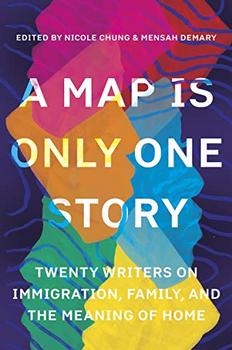
A Map Is Only One Story: Twenty Writers on Immigration, Family, and the Meaning of Home
by Nicole Chung, Mensah Demary
How It Feels to Be a Stranger in a Strange Land: A Personal View of Immigration (3/12/2026)
This collection of 20 essays is about one thing: point of view. As in, someone else's point of view—not your own. It's a way of seeing life with other eyes.
The title is taken from a line in one of the essays that is titled "A Map of Lost Things" by Jamila Osman, who writes, "A map is only one story. It is not the most important story. The most important story is the one a people tell about themselves."
While some of the essays sparkle and others are a bit of a dud, overall they tell such a fascinating story of what it is like to be a stranger in a strange land and try to assimilate without losing some central piece of their identity. The home countries range from Somalia to Syria, from India to Iran, from the Philippines to Peru.
My favorites include:
• "Carefree White Girls, Careful Brown Girls," by Cinelle Barnes: On the Isle of Palms off Charleston, South Carolina, K.L. teaches Cinelle how to surf. They are both mothers, and they both love the ocean. But the similarities end there. K.L., blonde and beautiful, worked for years running drugs in her beach bag. She was never stopped. Cinelle was adopted at age 16 and moved from the Philippines to the United States, but for eight years she was undocumented—and oh so very, very careful to always do everything right. She was frequently stopped.
• "Undocumented Lovers in America," by Krystal A. Sital: Krystal's Irish-American boyfriend (and especially his snobby mother) don't understand what it's like to be undocumented, but when she meets Juan at a pizzeria where they both work, everything changes for her. The sex is as hot as the restaurant kitchen, but since they are both harboring deep secrets, there is no trust or future for them.
• "The Dress," by Soraya Membreno: She went to a top college, but when she graduated, Soraya, who was from Nicaragua and did not attend a posh New England boarding school as did so many of her classmates, was unaware of the custom of wearing a white dress to the commencement ceremony. Her dress was white with red polka dots. Years later, she is still embarrassed.
• "Dead-Guy Shirts and Motel Kids," by Niina Pollari: As a child, the author moved from Finland to Florida with her parents and sister and lived for a few weeks in a motel where she and her sister befriended the two daughters of the owners. This story is about how she found her style—fashion and personality—over the years.
This collection gives readers a very personal view of what it's like to be an immigrant—especially undocumented—in the United States in today's precarious times.

The Correspondent: A Novel
by Virginia Evans
A Ten-Star Book in a Five-Star World: Intelligent, Captivating, and Ingeniously Plotted (3/5/2026)
This is a ten-star book in a five-star world.
Epistolary novels are an interesting genre and the results can be hit or miss. This one is a big, fat hit in all connotations of the word. It is intelligent, captivating, and ingeniously plotted, especially since it's all done through letters written and received.
Written by Virginia Evans, this is the story of Sybil Van Antwerp, who at the start of the book is 73 years old. She lives alone in Arnold, Maryland, five miles north of Annapolis, in an old house that backs up to the scenic Severn River. Sybil is a letter-writer extraordinaire and always has been. She writes letters—the kind that are written on paper and sent in an envelope with a stamp—but will happily dash off an email when warranted. She writes letters to everyone, even her next-door neighbor. She writes to friends, family, and the occasional book author, including Ann Patchett, Joan Didion, Kazuo Ishiguro, Diana Gabaldon, and Larry McMurtry. She also writes to newspaper editors, lawmakers, teachers, and diplomats. She even writes regularly to a child who is the troubled son of a dear friend. And she writes to someone else—a lot—but never sends those letters.
Ominously, an anonymous person is writing threatening letters to her, blaming her for something she did many years ago in her career as a clerk to a judge. It is obvious this person not only knows where she lives, but also has visited and staked out the house and yard. In addition, she is struggling with her relationship with her daughter, Fiona, something that is close to estrangement and heartbreaking for them both.
Sybil is aging, and many of the emotional crises in her life are coming to a head now, including the death of her ex-husband, her ongoing grief of losing her son Gilbert when he was eight years old, her horrifying and frightening diagnosis that she is losing her eyesight, and startling discoveries from a DNA test kit. Sybil, who is a bit of a curmudgeon, is also learning how to be a kinder, more compassionate soul as she ages.
After the first few letters, I found it almost impossible to stop reading. It was that compelling!
And the ending? Oh, what a gut-punch it is.
A fun fact: Sybil's email address is a throwback: @aol.com. Since I spent most of my career as a writer/editor for AOL, it was fun seeing that email address again.
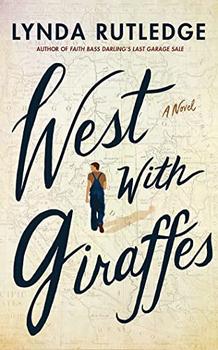
West with Giraffes: A Novel
by Lynda Rutledge
A Book to Be Cherished: Heartwarming and Delightful (3/4/2026)
Oh, what a delightful, escapist read that takes us on a most unlikely cross-country journey that had me laughing and crying—occasionally at the same time.
Beautifully written by Lynda Rutledge, this is a made-up story based on true facts. It's 1938 at the height of the Great Depression and 17-year-old Woodrow Wilson Nickel—that is, Woody Nickel—is orphaned in the dust bowl that hit Texas. With a little loose change in his pocket and a lot of guts, he travels to New York City where he has a third cousin who can give him a job. When a hurricane hits New York and kills the cousin, Woody is once again at loose ends. And then he sees an incredible sight in the harbor: two giraffes who were on a ship from Africa and managed to survive the hurricane at sea.
Through some tricks, gumption, and a bit of luck, Woody attaches himself to the giraffes, called Boy and Girl, and their caretaker Riley Jones, whom Woody calls Old Man, as they embark on the cross-country drive along the Lee Highway to the San Diego Zoo, the giraffes' new home. Following them whether they like it or not is Augusta Red, a gorgeous redhead with her own sad story, who is shooting photos for a spread in Life magazine.
The trio encounters obstacles, adventure, and nefarious plots, and through it all, as Woody and Red slowly have the courage to reveal their darkest secrets, Woody learns to love and trust for the first time in his short life.
One of the most beautiful and touching parts of this novel is the effect the giraffes have on the humans around them—be it Old Man, Woody, and Red or the many people who spot them on this most incredible journey as they tootle on down the road with two giraffes sticking their heads out of a trailer. Old Man has a perfect way of describing the giraffes: "towering creatures of God's pure Eden."
With bold and vibrant characters, a plot filled with twists and turns, a touching love story, and an ending that had me reading with a huge smile on my face, this is a heartwarming book to be cherished and one I'll remember for a long time.
Bonus: You'll learn a lot about giraffes!

The Man In The High Castle
by Philip K. Dick
A Dark, Weary Novel That Left Me More Bored Than Entranced (2/25/2026)
I read this under duress. (Well, sort of.) I read it because it was the selection of the month for a BookBrowse community of readers of which I am a part. We are choosing books listed in "1,000 Books to Read Before You Die," by James Mustich. And as with all book clubs, we occasionally read books that we would never otherwise read—and that's a good thing!
This one in particular is not my preferred genre. Written by Philip K. Dick, it is billed as science fiction, but it's more political fiction or speculative fiction. And it's a bit bizarre for my tastes.
It's 1962. This novel imagines a world, especially in what used to be the United States, in which Nazi Germany and Imperial Japan won World War II and then split up the USA with the western part going to Japan and the eastern going to Germany. It takes place primarily in San Franciso. The Japanese are in charge. They make the most money, live in the grandest homes, and have the best jobs, while the white U.S. citizens serve them. Still, the Germans lurk in the background, and they pose a dire threat to the world, still attempting to massacre anyone who is not Aryan.
The characters include a man who sells (mostly) counterfeit American collectibles, two men who start a jewelry-making business (and one of them is a Jew who is trying to hide his identity), a Japanese trade minister, a duplicitous German who is trying to pass messages to the Japanese, a Nazi Gestapo member who is on a murderous mission, and a woman who (along with nearly everyone else in the book) is reading a banned and subversive novel that imagines an Allied victory in World War II and what the world would have been like. Meanwhile, there is a mysterious figure—the man in the high castle. He is Hawthorne Abendsen, the author of that banned book, "The Grasshopper Lies Heavy," and he is in grave danger.
Through it all, the characters each struggle in their own ways with discerning their identity in this new world, as well as trying to wrest the most power each can in a society when almost all of them are powerless. They are all seekers as they wrestle with the past, while trying to glimpse the future and figure out their place in it.
This is a highly philosophical novel, examining such questions as reality vs. perception and truth vs. deceit with much of it wrapped around Eastern philosophy, especially the I Ching.
This book, which won the esteemed Hugo Award for Best Novel in 1963, is considered a science fiction classic in American literature. I give Philip K. Dick credit for his imagination, which is why I am giving it four stars, but I found it to be a dark, weary novel that left me more bored than entranced.

The River Is Waiting: A Novel
by Wally Lamb
It's a Hard Book to Really Enjoy Because the Protagonist Is So Unlikeable (2/21/2026)
This is a tough book. It's a good story, albeit incredibly sad, and at times it's actually gripping, but the trouble is simple: The protagonist is not particularly likeable—at least for me. And not liking the main character means it's hard to become fully invested in the novel.
Written by Wally Lamb, this is the story of a middle-class American family living in Connecticut. The mom, Emily, is a third grade teacher. The dad, Corby, is a commercial artist. They have two-year-old twins, Niko and Maisie. About a year ago, Corby was laid off from his job, something that sent him into a downward spiral of alcohol and drugs and eventually addiction. Unable to find work of any kind, he is the stay-at-home dad, caring for Niko and Maisie. One morning he is taking the twins to his mother-in-law's home so she can babysit. Ostensibly, he is going on a job interview, but in reality, he plans to get wasted. He's already halfway there, having doctored his morning coffee with rum and taken two Ativan as well. And then something horribly, dreadfully tragic happens…and life for this family forever changes. Because of Corby's grave mistake, he is sentenced to three years in prison.
The bulk of the novel is about his time in prison, a brutal and unforgiving place for which he is totally unprepared. And while the routines and terrors of daily prison life haunt Corby, he is also plagued with the tremendous guilt he feels for what he did and his never ending self-pity and deep-seated anger.
The title of the book refers to a river that runs near the prison—close enough to be heard but distant enough so it is not visible within the prison walls. The symbolism of the river, of course, is freedom and new life, something that eludes Corby now but hopefully will await him on his release. He is just as terrified of that future as he is about the day-to-day horrors of prison life.
Throughout the book, there are running themes of redemption, forgiveness, and hope…the stuff of life for everyone, but things that are so vital to happiness and a future for those who are behind bars. Corby needs to first forgive himself in order to find redemption and hope, but he is tormented by wondering if Emily will ever forgive him. In addition, the book is packed—to the point of being almost too much—with other themes: addiction, mental health, good vs. evil, abuse of power, and grief.
The ending holds a bit of a surprise…almost a shocker that is tragically and tenderly written.
Still…it's a long book made all the longer because so much of it feels interminable. Most of all, the book isn't as good as it could be because Corby is so unlikeable.

We Do Not Part: A Novel
by Han Kang
Powerful and Profound, but Also Haunting and Harrowing (2/17/2026)
"I feel as if I've opened the door to a dream within a dream and stepped inside," says the main character, Kyungha, near the end of this profound, disturbing, and harrowing novel by Han Kang, who won the Nobel Prize for Literature in 2024, the first Asian woman and the first South Korean to receive this honor. This sentence in the book perfectly describes my feeling as a reader of this book: I opened the door to a dream within a dream. And it was a bit fevered as well.
It's a cold winter morning in Seoul when Kyungha receives an urgent and cryptic message from her dear friend Inseon to come immediately. But Inseon lives on Jeju Island. Kyungha soon realizes that Inseon is in Seoul in a hospital, and the situation is dire. Inseon asks Kyungha to travel to Jeju Island immediately to save the life of her pet bird, who has already been without food or water for several days. The journey—by air, bus, and foot—is treacherous due to a massive snowstorm that makes travel nearly impossible. Barely alive, Kyungha finally arrives at Inseon's remote home on the island. What she finds there is a dead bird and in her fevered state she experiences that horrifying dream within a dream…or is it all real?
The haunting subtext of the novel—the dream that is really a nightmare of the worst kind—is a recounting in quite (gory) detail of the 1948 massacre of 30,000 civilians on Jeju Island by anti-communist troops. The innocent civilians—from infants to the elderly—were forced out of their homes and summarily shot; their bodies were shoved into the ocean or hidden in a cobalt mine or buried in the ground under what later became a runway at the Jeju Island airport. This novel tells about those atrocities from the point of view of one family and all they suffered and then kept secret for decades. It is very difficult and grueling reading, but a vital part of hidden history. And as horrific as it is, this is a story that needs to be told.
But most of all, this is a novel about human endurance, the power of a deep, abiding friendship, and a salute to the inner meaning of our fragile and precarious lives. Filled with imagery and symbolism, this is a book that begins with horror but ends with hope.
When I first started this book, I fully intended to read it quickly. It's not that long, after all. But I soon realized that this is a book best read in small parts—a little each day. It's just too intense for more than that. It's the stuff of nightmares, if you're not careful about the time of day you read it. But don't let that scare you off. This is such an important and vital book to the literary canon. It tells the story of things others would like us to not remember or never know happened.

Atmosphere: A Love Story
by Taylor Jenkins Reid
Smart, Literary ChickLit at Its Finest: A Gripping Page-Turner and a Tender, Passionate Love Story (2/7/2026)
All the hype, all the many inclusions on the "best books" lists, all the gushing reviews—both professional and reader—are true. This book by Taylor Jenkins Reid has it all: It's a gripping page-turner plot and a tender and passionate love story.
It's the 1980s in Houston, Texas at the dawn of NASA's space shuttle era. Written by Taylor Jenkins Reid, this is the story of Joan Goodwin, a brilliant but underappreciated associate astrophysics professor at Rice University. At the urging of her sister, she applies to be an astronaut. Much to her surprise and delight, she is accepted, becoming part of a team of newbie astronauts, who all work hard, train hard, and sometimes party hard. And quite unexpectedly, Joan falls in love. She's barely dated before, but this is different. Very different. Joan falls in love with fellow astronaut Vanessa Ford. While the two are practically walking on air, they can never (ever!) let their love affair become public knowledge—even amongst their closest friends and family—or they will lose their chance to fly on the space shuttle.
Joan finds out she is slated to fly on a mission in November 1984, and Vanessa is chosen for a December 1984 mission. But the unthinkable happens on Vanessa's mission. Lives will be lost. Only one astronaut remains unscathed. Will that one be able to fly the shuttle back to Earth bearing the others—some dead, some nearly dead?
Reid has structured the novel perfectly to keep us readers turning those pages far into the night. The December 1984 space shuttle accident takes place in the first chapter, and the story of what happens next is woven throughout the novel. The bulk of the book, though, is what went on before then. It's brilliant and thrilling plot pacing!
This smart, literary ChickLit at its finest.
Bonus: Even if you've never taken an interest in space exploration before, this novel is sure to pique something. It is packed with solid information and fascinating details about NASA, the space program, the space shuttle's early history, and what it takes to be an astronaut—especially a female astronaut in a male-dominated enterprise.
Aside to Taylor Jenkins Reid: PLEASE write a sequel!!!

Isola: A Novel
by Allegra Goodman
A Must-Read Book! A Gripping, Unflinching Tale That Is Haunting and Gritty (2/2/2026)
Oh, this book is horrifying. Not because it's a horror story or a terrifying thriller, but rather because the premise of the story is grounded in one human being's horrifying, reprehensible treatment of another. It is evil personified. And we readers cannot even comfort ourselves with the thought that it is total fiction because it's based on a true story.
Horrifying though it may be, this is a must-read book!
It is 1531 in Périgord, France. Marguerite de La Rocque is orphaned at age three, and her great wealth is legally placed into the hands of her guardian, Jean-François de la Rocque de Roberval, who was her father's cousin. This duplicitous and devious man barely provided enough financial resources for Marguerite to live with her beloved nursemaid Damienne, while he proceeded to spend and then lose her vast fortune.
When Marguerite is 20, Roberval sold the estate in which she and Damienne were living and forced her to accompany him on his ship that was setting sail to New France, a vast territory in North America, including parts of Canada, where he was determined he would make his fortune. While on board the ship, the mercurial Roberval decides that Marguerite has betrayed him by having an affair with his secretary, Auguste Dupré. So he brutally punishes the couple, along with Damienne who will never leave her mistress, by abandoning them on an uninhabited island in the Gulf of St. Lawrence, off Newfoundland. Of course, he assumes the trio will die miserable, long drawn-out deaths when the brutal snowy and icy winter comes—if they live that long.
Beautifully written by Allegra Goodman with vivid characters and a jaw-dropping plot, this is a remarkable tale of one woman's resilience, perseverance, courage, and stamina in the most appalling of circumstances. It is an historical fiction page-turner, a gripping, unflinching tale that is haunting and gritty.
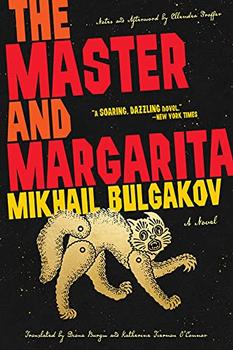
The Master and Margarita
by Mikhail Bulgakov
Highly Imaginative! Humorous, Thought-Provoking, and Frightening—Sometimes All at Once (1/31/2026)
This is one of the most imaginative books I have ever read. It's also humorous, thought-provoking, and frightening—sometimes all at once. It is a satire and an allegory embedded with ideas of good and evil, courage and cowardice, as well as the power that art has to not only greatly impact, but also change a society.
Most of all, it's a really, really good story.
But do get ready for a bizarre roller coaster ride of characters, including an assortment of distinctive Russian citizens; Satan and his entourage of a huge black cat and a naked woman, among others; and Pontius Pilate, Jesus, Judas, and Levi Matvei (Matthew). Don't roll your eyes at this list. It's brilliant and it works magnificently. (See Piece of Advice No. 1 below.)
Written by Mikhail Bulgakov, this is actually a novel within a novel. The character known only as the Master has written a novel about Jesus's last days but told through the point of view of Pontius Pilate, and this novel, which has been shunned by the critics much to the Master's chagrin, is interwoven into "The Master and Margarita." (In 1930s Russia in which the novel is set, it was forbidden to practice religion, and those where were open about their Christian beliefs faced grave risks, including imprisonment, forced labor, and death.)
The main story begins in Moscow on the Wednesday before Easter Sunday when two Russian gentleman—Ivan Nikolayevich Ponyryov, a poet, and Mikhail Alexandrovich Berlioz, the chairman of a prestigious literary society—are sitting on a park bench enjoying the unusually warm spring weather. Their peaceful reverie is interrupted by an unexpected and mysterious guest named Professor Woland, who predicts the violent beheading death of Berlioz. Hours later, this is exactly what happens, sending Ivan into a deep state of insanity. Woland, we readers soon realize, is the devil. Satan himself.
Woland and his bizarre and evil entourage then proceed to wreak havoc on Moscow in progressively more bizarre and highly entertaining ways. Meanwhile, the master is falling into a depression over the state of his Pontius Pilate novel, and his illicit lover—the married Margarita—is determined to make this right for him, and with the devil's help she does just that.
As Ellendea Proffer Teasley writes in the commentary, "What happens when an entire culture is forced to deny belief in God—but meets up with the devil in the flesh?"
The portrayal of life in Stalinist Russia in the 1930s is so revealing and daring that the novel, written over a 12-year period from 1928 to 1940, could not be published until 1966-1967 when it was issued serially in a deeply censored version in a Soviet magazine. The full version of the novel as Mikhail Bulgakov wrote it was finally published in 1973. Bulgakov died in 1940 when he was still editing the book; he knew it wouldn't be published until long after his death as it was so subversive and would easily have gotten him arrested.
A Piece of Advice No. 1: Go to Wikipedia and print a list of the characters to have by your side as you are reading the book. As is typical of Russian novels, there are a lot of characters, and it can be tricky keeping in mind who is who. Do beware that this list is so descriptive there are plot spoilers in it. Still, I found it indispensable.
A Piece of Advice No. 2: There are multiple versions/translations of this novel. The one I read was translated into English by Diana Burgin and Katherine Tiernan O’Connor with a commentary and afterword by Ellendea Proffer Teasley. The commentary is extensive and extremely helpful. Organized by chapter, it offers important clues and explanations of the text—what is happening and why. Bookmark it and read it along with the novel.
Fun Trivia Fact: In the movie "A Man Called Otto" (based on the Fredrik Backman book "A Man Called Ove"), Otto meets Sonya, the woman who will become his beloved wife, by retrieving a book she dropped on a train platform and then jumping onto the train to return it to her. The book? "The Master and Margarita."
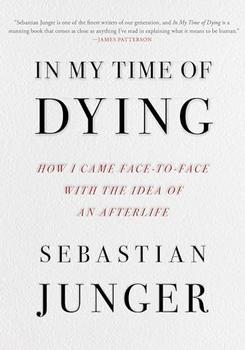
In My Time of Dying: How I Came Face to Face with the Idea of an Afterlife
by Sebastian Junger
Is There an Afterlife? An Atheist Has a Near-Death Experience and Tries to Explain Life's Greatest Mystery (1/28/2026)
Author Sebastian Junger is an adrenaline junkie. He is seemingly fearless, willingly seeking out and embracing danger. He surfed all by himself in the middle of winter off the coast of New England with no one else in sight. For some 10 years, he covered as a journalist the war in Afghanistan so he could write about the experience of infantry combat—up close and personal. He has traveled to treacherous places most people would never go.
Junger has courted death his whole life and laughed in its face. So at age 58 when he suffered a ruptured aneurysm in his pancreatic artery while he was at home in a deeply isolated area of Massachusetts, he was so close to dying he had a "near-death experience." Junger, an atheist who is the son of an atheist, had to rethink his lifelong beliefs about an afterlife.
It was June 2020 when this happened, and because of the COVID pandemic, Junger and his wife and two very young daughters, had previously escaped to their country house where the landline doesn't work if it rains too much and there is no reliable cell phone service. Just getting an ambulance was an act of heroism and fortitude on his wife's part. Then once the ambulance arrived, it was another hour to the hospital. Because the physicians at first couldn't isolate the source of his massive internal bleeding, most of the medical personnel thought he would die. And he almost did. He says he could feel himself slipping out of his body, and his long-dead father visited him, saying, "It's okay. You don't have to fight it. I'll take care of you. You can come with me."
This relatively short book has two chapters titled "What" and "If." In the first chapter, Junger intersperses the story of his medical trauma with the daring and risky adventures of his life. In the second chapter, he recounts prodigious research into near-death experiences as well as all the scientific evidence he can muster about an afterlife using only rational, cogent, and logical—never religious—arguments.
Is there an afterlife or is it just the brain biologically shutting down in a glorious way? That is the unanswerable question that Junger tackles with deep honesty, reverence, and good humor. And his conclusion—is there life after death?—is a stunning, breathtaking, and mind-bending supposition.









 Power Reviewer

