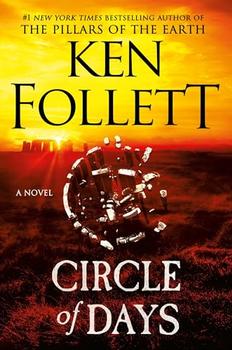
Circle of Days
by Ken Follett
Has Ken Follett Jumped the Shark with This Latest Novel? (1/25/2026)
Has Ken Follett jumped the shark on these historical fiction epics he so expertly writes?
His newest novel is about the origins of Stonehenge on England's Salisbury Plain. While it's fascinating, he had to have just made up most of it out of his head since so little is verifiably known about Stonehenge, the construction of which began in 3100 BCE.
Bottom line: It's just not as riveting as his previous books, especially when compared with the Kingsbridge five-novel series that begins with "The Pillars of the Earth." This is a long book at 700 pages, and the actual construction of Stonehenge—moving the first monolithic stone—begins about 75 percent into the story.
Until then, two things happen:
1. Follett populates the novel with people stories of those who lived on and shared this land with each other, including the herders of animals who lived on the Great Plain and the farmers and the woodlanders who lived nearby. Each group has the same type of characters: the smart thinkers, the bullies, and the creative ones. There is a lot infighting in each group and violent battles between the groups. It's the good guys vs. the bad guys over and over and over again. And the bad guys never change.
2. The details of the engineering required to construct Stonehenge is a major part of the novel. (Unless you're an engineer, this can become a bit of a slog.)
The three groups of people—herders, farmers, and woodlanders—come together for several festive days for rites at the Monument to welcome the new seasons, especially the summer solstice, which is their new year. It is a time for honoring the sun god, trading goods, and enjoying a bit of revelry, which involves some extraordinary sexual practices.
Follett creates an interesting and plausible vision of why Stonehenge was needed. A group of priestesses live on the site they call the Monument, which is constructed just like what we know as Stonehenge but out of wood. It is their job to count the days of the year using the Monument as their guide. When the Monument is set on fire (see above: bullies and battles) and is essentially destroyed, the long-held dream of constructing it out of stone is finally begun, a process we know from archaeologists took more than 1,500 years.
While parts of the book are fascinating, too much of it is stilted, convoluted, and tedious. The characters seem one-dimensional, since their life experiences do not result in change or growth. And worst of all, the dialogue is often wooden and monotonous.
That said, there is enough of an interesting story to it that I am giving it four stars. Maybe I went into it expecting too much.

On Call: A Doctor's Journey in Public Service
by Anthony Fauci M.D.
A Fascinating and Highly Readable Account of a Great Physician's Life in Medicine and Public Service (1/19/2026)
As much as this is a memoir of Dr. Anthony Fauci's life, it is even more so a memoir of infectious diseases over the past 50 years.
Fauci, who became the calm and reasoned medical face of COVID—in a time that was otherwise chaotic, confusing, and terrifying—has far more on his curriculum vitae than COVID. He was just as influential in solving the mysteries of HIV/AIDS, SARS, anthrax, West Nile virus, Ebola, Zika, and any number of worldwide influenza outbreaks, and while these horrible infectious diseases are an integral part of this book, the most interesting section is on COVID.
This is a fascinating and highly readable account of not only this great physician's life in medicine, but also his personal life. Read this book, and you'll meet a Dr. Fauci you never knew. He is a man devoted to public service.
In addition to his commendable clinical skills as an infectious disease physician, Fauci has two other qualities that most likely accounted for his rapid rise within the National Institutes of Health where he became director of the National Institute of Allergy and Infectious Diseases (NIAID): First, he is able to explain in understandable layman's terms even the most complex medical issues. Second, he is courageous enough to speak truth to power—namely every president since Ronald Reagan—all while deftly skirting politics. He won the utmost and undying respect of every administration—Republican and Democrat alike—until Donald J. Trump.
The stories of his experiences of working with Trump, which included Fauci publicly contradicting Trump when the president mangled or outright lied about COVID, and then after Trump left office in 2021 and MAGA devotees repeatedly threatening him and his family are harrowing and horrific. He was the victim of an ugly smear campaign ignited by bizarre and egregious conspiracy theories, including being publicly accused by a U.S. senator that Fauci was personally responsible for the virus that caused COVID.
From his baseball days in the sandlots of Brooklyn to his marathon medals as an adult, from his Catholic elementary school to his medical school and residency, we learn so much about what shaped the man Fauci became. He even digresses to tell his "meet cute" story about his beloved wife, Christine Grady. The book isn't all about medical charts and White House briefings.
My takeaway: We as a nation have been so fortunate to have someone as skilled and truthful as Dr. Fauci looking after us all these decades. I salute you, sir, and thank you for your public service to the United States of America.
Bonus: The story of U2's Bono coming to dinner at Dr. Fauci's Washington, D.C. house is alone worth the price of the book. Bono wanted to discuss with Fauci ideas for HIV/AIDS treatment, prevention, and care in sub-Saharan Africa. Fauci didn't tell his three daughters (then ages 16, 13, and 10) Bono was having dinner with them until the superstar arrived knocking at the door. The girls' reaction is laugh-out-loud funny.
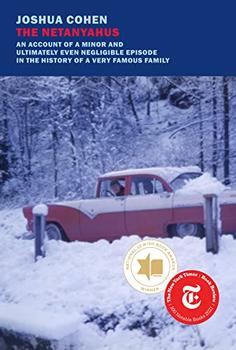
The Netanyahus: An Account of a Minor and Ultimately Even Negligible Episode in the History of a Very Famous Family
by Joshua Cohen
A Bit Pretentious, but Laugh-Out-Loud Funny in Parts (1/13/2026)
Maybe I just don't get it? That was my initial thought (repeated a lot in my head) when I was reading this short Pulitzer Prize-winning (2022) book by Joshua Cohen.
But then—about one-third of the way through—it came together for me, and (I think) I got it. Or, at least, I started to get it.
Despite the title, this is not really about that famous (infamous?) Israeli family. It's really about a man named Ruben Blum, a professor of history at the bucolic Corbin College, a small liberal arts college in not-quite upstate New York. When Blum is hired on the faculty in the late 1950s, he is the only Jewish professor in the college. And not only that, the Blums—wife Edith, who is a librarian at the college and daughter Judith, a senior at the local high school—are the only Jewish family in town.
It's the very snowy and cold winter of 1959-1960. For various reasons, the Corbin College history department is forced, almost against its will, to hire a new professor, and the man applying for the job is Benzion Netanyahu. Because both men are Jewish, Rube is asked to serve on the hiring committee. During his extensive research of the candidate, Rube discovers some questionable and troubling facts about the man's curriculum vitae.
But the story isn't about Netanyahu's interview (until suddenly it is). It's about Rube, Edith, and Judy and their assimilation into this WASP town where Edith is bored and disconsolate, while Judy is angry at the move and feeling intense parental pressure to achieve and succeed. But when the Netanyahus show up—yes, the entire family, including the three sons (one of whom is Benjamin)—the book takes a humorous turn—as in laugh out loud funny—including a bit of dark comedy. Benzion, an obscure Israeli academic, feels stranded in the United States with no job, a half-finished history book on a topic no one understands or believes is true, a furious wife, and three wild young sons.
The book is a bit pretentious, quite long-winded, and overly verbose at times, making it sometimes feel like a slog. And then it shifts seemingly without warning to become a more compelling and interesting story. And sometimes a funny story. While some of it feels like a family sitcom gone terribly wrong, the novel is also a serious portrayal of modern Jewish history and the establishment of the state of Israel.
And end note: As bizarre and unlikely the premise, it turns out that it's based on a real event when Benzion Netanyahu applied for a job at Yale interviewing with renowned literary critic and humanities professor Harold Bloom. Do take the time when you are finished with the novel to read the "Credits and Extra Credit" for elucidation on how the novel came to be.

My Friends: A Novel
by Fredrik Backman
A Heartwarming Tale of Love, Loss, and Hope, but It's Also Melodramatic and Maudlin—a Bit Over the Top (1/10/2026)
This is a story about friendship—the lifelong, abiding friendship that begins in childhood and never ends.
This is a story about art—the kind that speaks to your soul and awakens feelings and passions you never before felt.
This is a story about grief—the kind that squeezes your heart with a dark, dark shadow and won't let go.
Written by Fredrik Backman, this is the story of four childhood friends who form a special bond the summer when they are 14 years old. Each of them has a special gift, and each of them lives with fear and some kind of abuse at home. But the four save each other that summer, and together they try to save one of their own—the one they call "the artist." It is that summer that the artist painted a picture of the sea with his three friends sitting on a pier that launched his stellar career.
The novel begins 25 years after that fateful summer, introducing to the mix an 18-year-old orphan named Louisa. She has always been drawn to the painting the artist created that summer, carrying a postcard of it with her always. A bizarre chance encounter with someone she thought was a penniless homeless man will forever change her life and link her with the four friends as she takes possession of the painting that is now worth a fortune.
While the book is good, it does not reach the level of excellence. In addition to some implausible coincidences that even artistic license is stretching a bit far, Backman drags out the story far too long. His writing style is unique, and it gets old fast when the story slows down as much as it does. While it is a sweet and heartwarming tale of love, loss, and hope, it is also melodramatic and maudlin—a bit over the top.
That said, there are many comforting and wise words about grief and grieving that will likely console anyone who has ever lost someone close…and haven't we all?
In addition, the dedication is superb: To anyone who is young and wants to create something. Do it.
Just a thought: The cover art is weird, almost creepy. It's a shame the publisher didn't try to create the painting that is the centerpiece of the novel.
A Visit from the Goon Squad
by Jennifer Egan
Literary Fiction at Its Finest: An Extraordinary, Highly Imaginative, and Sophisticated Novel (1/8/2026)
About a year ago, I realized that all the Pulitzer Prize-winning books I have read are without exception excellent. So even though I was wary about this one—a goon squad?—I trusted that Pulitzer Prize gold medal (it won in 2011) and dove in. I am so glad I did!
Written by Jennifer Egan, this is a compelling, character-driven book with no discernible plot. But don't worry about that! I couldn't stop reading once I started. And that weird goon squad? Well, that is a brilliant metaphor for the inevitable process of aging—of growing old whether you like it or not, whether you fight it or give in and age gracefully.
The novel is structured around more than a dozen characters, who experience the ravages of time, some of whom handle it better than others. Each chapter focuses on one of those characters, bouncing back and forth in time from the 1970s to the 2000s, and in Egan's expert hands this is smooth, effortless, and orderly. In other words, it works brilliantly and isn't the least bit jarring.
The characters, each of whom is richly and deeply depicted, are either directly or loosely connected to one another. Some of them include:
• Sasha, a young woman who constantly steals things for the sheer thrill of it and works as an assistant to record producer Bennie Salazar. She has a checkered, difficult past.
• Bennie, the aforementioned record producer, is going through a midlife crisis, knowing his best days professionally and personally are well behind him.
• Dolly, the single mother of Lulu, is a public relations executive, who is trying to make a comeback. She chooses to do so taking on a general of an unnamed country that is a genocidal dictator. (Think Qaddafi.)
• Kitty Jackson, a beautiful actress.
• Lou Kline, a 1970s-era record producer, who marries three women, has six children, and keeps chasing younger and younger women until the inevitable happens.
Each chapter is told from the point of view of that one character in his or her voice. And each chapter creates a wider and wider circle with Sasha and Bennie at the center, as the characters' relationships to each other shift and develop as the novel progresses. Reading this book is like watching a skipping stone on a lake.
Have you ever heard of "Chekov's gun"? The Russian playwright Anton Chekov once said that if you place a loaded rifle on the set in Act I, it had better be fired by Act III. With that in mind, so many seemingly minor details or asides in the early chapters of this novel turn into full-fledged chapters later. Nothing is mentioned that isn't fully fleshed out later.
Highly imaginative and brilliantly observed, this extraordinary and sophisticated novel is literary fiction at its finest.
Below Stairs: The Classic Kitchen Maid's Memoir That Inspired
Upstairs, Downstairs and
Downton Abbey
by Margaret Powell
An Eye-Opening Memoir About What REALLY Happened in Those Big English Estate Homes (12/29/2025)
If you watched "Downton Abbey," then you may think you know what went on in those massive English estate homes in the early 1900s, but this book by Margaret Powell will no doubt be an eye-opener. Powell went into domestic service at age 15 as a kitchen maid—the lowest in the hierarchy of servants—and the stories she has to tell run the gamut from fascinating to frightening.
Powell was born in Hove, England, the second child in a family of seven children. There was lots of love and laughter but little money and food, so at age 13 she left school and started working. At 14 she got a job in a hotel laundry room, and a year later entered domestic service. Although quite shy, Powell had a feisty personality. She was appalled at the differences between "Them" (the family that lived above stairs) and the domestic servants that lived below stairs, and she often cheekily said exactly how she felt.
Of her own volition, she changed jobs frequently, hoping to learn enough about cooking so that she could become a cook, a feat she managed quite successfully.
The book was originally published in 1968 and became a bestseller, catapulting the author to a bit of celebrity before her death in 1984. That said, this is not great writing. Instead, it is written as if Margaret Powell made you, the reader, a cuppa and the two of you are sitting at a worn kitchen table while she recounts her years in service. The style is quite conversational and filled with colloquialisms of her time, as well as some sordid revelations about her employers.
If nothing else, the stories of cooking with a finicky range, few kitchen tools and only an icebox and no refrigerator, as well as cleaning with salt and vinegar, will certainly make you appreciate our own modern conveniences.

33 Place Brugmann
by Alice Austen
An Exceptional and Profound Historical Novel (12/20/2025)
It's 1939 in Brussels, Belgium. Number 33 Place Brugmann is a lovely and stately Beaux Arts apartment building in which a variety of tenants live in a loosely-knit community of friends—from happy families to grieving widowers to bitter spinsters. And then World War II encroaches and changes everything about their well-ordered lives.
Some of the tenants are Jewish. Some are not. Each person—from child to adult—must decide what he or she will do to help—or not—when the time comes. Because the time is coming.
Each chapter is told in the first-person voice from the point of view of one of the residents, but the core of the novel is focused on Charlotte Sauvin, an art student, and her father Francois Sauvin, an architect. Charlotte's mother died in childbirth, and while Francois has never remarried, two women in the apartment building step up as surrogate mothers to Charlotte. This talented artistic girl is completely colorblind, existing in a world of gray tones.
Other residents include:
• The Raphaël family, the parents Leo and Sophia and the teenage children Julian and Esther. Leo is dealer and collector of fine art, and as a Jew he knows he must quickly decide how best to save his family and the precious works of art hanging on his apartment walls. Julian and Charlotte have been best friends and almost inseparable since they were very young children. Julian, who is a mathematics genius, is in love with Charlotte, but does she feel the same way? One day the family disappears. All their belongings remain in the apartment except for the art, which is missing.
• Masha Balyayeva, who lives in a maid's room on the top floor, is a talented seamstress. She transforms Sophia Raphaël's wardrobe, and becomes a surrogate mother and beloved confidante to Charlotte.
• Agathe Hobert is a bitter and meanspirited spinster, who rarely smiles and thrives on gossip.
• Dirk Debaerre's parents die when he is a young man. (No spoilers here as to their causes of death.) Dirk has lived in the building since he was a child, and the tenants all know him but don't trust him. He has a tough exterior and a big secret he is hiding—one that could lead to his death.
• Colonel Warlemont is a grieving widower who finds a new purpose during the war.
And then someone new moves into the building, and most suspect he is a Nazi.
This is a novel about love, friendship, and redemption, as well as the courage each person must find when it's least expected. The question they all face is whether to submit to the Nazis or risk their lives to fight them and save their friends. Who can be trusted?
With vivid characters, excellent writing, and an engaging and imaginative plot, this is an exceptional and profound historical novel. The ending is sad—very, very sad—but there is a measure of hope.
Mr. Timothy
by Louis Bayard
A Literary Thriller at Its Finest and a Perfect Book for December (12/15/2025)
This. Is. Brilliant! Author Louis Bayard has done what few authors can do: He has perfectly mimicked the style of another—in this case, Charles Dickens. This is so difficult. We each—even if all you write are work emails—have our own style. To put that aside and write as if you were someone else is a feat worthy of only the best writers. And Louis Bayard is one of the best.
He has creatively imagined the future of Tiny Tim, a beloved character in Charles Dickens's "A Christmas Carol." In this novel, Tiny Tim is grown up. His iron brace and crutch are gone, and he only has limp, albeit a noticeable one. Remember how Ebenezer Scrooge had an epiphany about kindness, compassion, and generosity? Well, in Bayard's tale he adopted the Cratchit kids, insisting they call him Uncle Ebenezer, which they soon shortened to Uncle Neezer and then Uncle N. Let's just say that Tim is not in need of money.
It's December 1860 in murky, foggy London, the height of Advent. We find Tim, now known as Mr. Timothy, living in a whore house. It's not what you think. He needs a place to live, and the madam needs someone to teach her how to read. A deal is struck. Besides, Mr. Timothy has little interest in ladies. All of this is an attempt to extricate himself from Uncle N's money.
On a shivering cold night by the river, Mr. Timothy discovers the body of a little girl about 10 years old, who has been branded on the upper arm with the letter "G" and a pair of eyes. And then he finds another. He is haunted by this. Soon enough he encounters two urchins about the same age: Colin and Philomela. Colin is a mastermind at small jobs that earn small coins, but soon enough he gains Mr. Timothy's full trust. Philomela, who speaks Italian and little English, also bears the mysterious and frightening brand. Why? Who gave it to her?
Mr. Timothy is determined to find out who did this to her and what these malevolent people want with her—but it may kill him before he is able to save her. What he does discern is evil and criminal—and will make all good readers shudder in despair and agony.
Just like the great author whom Bayard is emulating, he portrays in all its meanness and wickedness the callous and appalling exploitation of children in British society in the mid-19th century. And just like a Charles Dickens' novel, this one starts out very slowly…but stick with it because the reward is a page-turner you won't soon forget.
This is a literary thriller at its finest and is the perfect book for December.
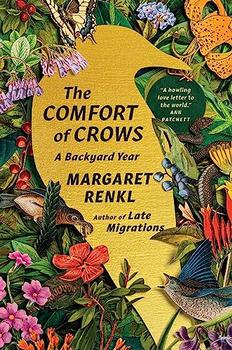
The Comfort of Crows: A Backyard Year
by Margaret Renkl
A Delightful and Magical Book to Savor One Week at a Time for an Entire Year (12/13/2025)
Wait…WHAT?!? Crows are a comfort? Read this book, and if you're a nature novice as I apparently am, you will realize why crows are indeed a comfort. And you'll never look at them the same way again.
But crows are only a small part of this lovely book. This is an account of a backyard year in Nashville, Tennessee.
Written by Margaret Renkl, this collection of essays is something to cherish. It was given to me as a gift by my daughter-in-law. Read one short chapter a week for 52 weeks, ideally beginning with first week of astronomical winter and continuing throughout the year. Billed as a "literary devotional," this is a study of the seasons as they progress through the year, week by week—the plants, flowers, trees, animals, birds, and insects. It's also filled with life advice disguised as gardening advice. Very clever.
The first chapter is titled "Wherever You Are, Stop What You're Doing," and that is pretty much the point of the entire book. By deeply looking at one part of nature from bunnies to bees, you can learn so much about the world around us. The message each week is pretty simple in its varied way: Pay attention. That's it. Just pay attention to the flora and fauna around you—even in your suburban environment.
The book is filled—one for each week—with gorgeous illustrations created by the author's brother, Billy Renkl, that are complex enough that I had to take a few minutes to study them both before and after I read the chapter. Each illustration holds a clue as to what will follow. First, I tried to figure out what was coming; later, I looked to see in the picture what I had just read.
Just a note: I'm a devoted Kindle reader, but unless you have a Kindle Colorsoft (or some other color e-reader), do buy the hardcover book. The illustrations are breathtaking. My gift from my daughter-in-law was the hardcover book, but I also bought it for the Colorsoft, and the illustrations are just as breathtaking!
This is a delightful and almost magical book to savor one week at a time for an entire year. Set aside one day of the week to read each short chapter…and then simply enjoy!
A Trick of the Light: Armand Gamache Series #7
by Louise Penny
A Literary Murder Mystery: Complex Plot, Perfect Pacing, and Words of Wisdom for Living a Good Life (12/8/2025)
Ah, lovely and tranquil Three Pines, a Canadian village so small that it isn't on any map, has had its loveliness and tranquility shattered once again when a dead body is found in Peter and Clara Morrow's garden. And the corpse is not a stranger. She is Lillian Dyson, Clara's best friend growing up before the two became bitterly and irrevocably estranged decades ago.
Written by Louise Penny, this is the seventh of 20 (and counting) Chief Inspecter Gamache mystery novels. And, yes, you MUST read them in order because each volume contains references to the previous books—what are essentially big time spoilers.
The book opens at Clara Morrow's much-anticipated solo art show—a vernissage—at the prestigious Musée in Montreal. Everyone in the Canadian art world who matters is there, as well as many of the Morrows' good friends. Most, but not all, are invited back to Three Pines for a celebratory reception there. And all is well until the next morning when Peter and Bistro owner Olivier Brulé encounter the body in the peaceful garden.
Calling Chief Inspector Gamache! What he and his team find are secrets and lies, and they must unravel them to find the truth behind this coldblooded murder.
This is not a spoiler, even though Chief Inspector Gamache says this near the end of the book to summarize what happened. Instead, it is poetic and says so much about the writing: "This murder is about contrasts," said Gamache, his voice low, soft. "About sober and drunk. About appearance and reality. About change for the better, or for the worse. The play of light and dark."
As all the books that preceded it, this is a literary murder mystery. The plot is grounded in references to both the creative and often lonely world of artists and the competitive and often cut-throat world of art dealers. In between the storyline of the murder investigation, you'll learn a lot, too!
Every Louise Penny book is a delight to read. The plots are complex enough that most readers won't figure it out too early, the pacing is perfect, and her words of wisdom about living a good life are sagacious and spot-on. She carefully examines the psychology and emotions of all her characters, which serves to bare their souls in such a way that we readers fully understand their motives and actions.
Just a culinary note: As with all her books, Louise Penny writes descriptively about the food her characters eat. So delicious! This time we encounter blueberry pancakes, eggs Benedict, warm croissants, grilled garlic shrimp with mango salad, and so much more. Try not to read this when you're really hungry.
Married Love: And Other Stories
by Tessa Hadley
A Literary Delight: Smart Observations, Sophisticated Plots, and Lyrical Prose (12/6/2025)
From a 17-year-old girl who shocks her parents when she tells them she is marrying a man old enough to be her grandfather to a wealthy family gathering in the country for a birthday celebration during which a secret rendezvous takes place that will change all their lives, this book of a dozen short stories by British writer Tessa Hadley is a literary delight.
Some are emotionally searing, others are quietly insightful, and still others are charmingly quirky. All are brilliant observations on human nature, especially family life, among rich and poor, young and old, men and women. Almost all of them take place in the United Kingdom between the 1950s and the 2000s, although one is set in 1920.
Another thing they have in common is sex. A line in the story "She's the One" sums it up for the entire collection: "There was like a hum of sex in the air all the time."
But here is something some readers may not appreciate: Virtually all the stories end in such a way that forces the reader to imagine what happens next. The endings are rarely clear cut and final. As in, when you turn the page, you'll expect it to continue—but it doesn't.
Some of my favorites in addition to the two mentioned in the first sentence of this review:
• "The Trojan Prince": A 17-year-old boy who is struggling to figure out his life after school, tries to woo a wealthy a cousin, but things don't turn out the way he planned.
• "A Mouthful of Cut Glass": Neil and Sheila are college sweethearts, who come from very different backgrounds. Now it's time to meet each other's parents, and when they make the overnight visits, their relationship changes.
• "She's the One:" Ally is 22. Her younger brother died by suicide, and the family is an emotional wreck. Thinking she should stay at home now, she gets a job as an administrative assistant at a creative writing center. There she meets Hilda, a woman who is older than her mother, but the two strike up an unlikely friendship. And then Hilda tells her a disturbing story about her childhood.
• "Post Production": Borrowing a bit from "Hamlet" (by Tessa Hadley's own admission), this is the story of two brothers. Albert is a brilliant and revered film director. His younger brother Ben is his assistant. Albert dies. His widow, Lynne, and stepson, Tom, are devastated, relying on Ben for emotional support. But Tom becomes jealous of Ben, especially when he sees Ben has designs on his mother.
Smart observations, sophisticated plots, and lyrical prose combine to make this a remarkable collection of short stories.

The Overstory: A Novel
by Richard Powers
A Book Unlike Any Other I Have Read: Original and Imaginative (11/24/2025)
I thought this book would be a challenge to read. And it was. But not for the reasons I anticipated. I thought would be big, bulky, and dense. After all, it did with the Pulitzer Prize in Fiction in 2019. And it is big. And little bulky. And somewhat dense. But the challenge I encountered was closing the book so I could deal with real life.
Wow! Just that…wow! This is a book unlike any other I have read.
First, there are stories. So many stories. Gripping, compelling, and captivating stories. Stories I wanted to keep reading to find out more…find out how they continued…and eventually how they ended.
And then there are facts. So many facts. This is one of those novels that is really nonfiction at its core, but it's disguised in the stories so you don't realize at the time how many facts you're learning.
Masterfully and creatively written by Richard Powers, this is the story of trees. Don't let that dissuade you. This is one of the best books you'll ever read. A plot description is far too difficult to write. Instead, we have characters—nine of them—and their stories that define this book. Some of their stories intertwine, as tree roots do deep within the ground, and some only glance upon each other, barely touching, as tree branches do.
The characters:
• Nicholas Hoel: The descendant of men who loved chestnut trees, Nicholas is the last in the line on the family farm in Iowa. And when I say last, I mean it…the last one. He is a talented artist.
• Mimi Ma: The daughter of a Chinese immigrant, Mimi becomes an engineer, but all her genius and business acumen is for naught when a stand of pine trees she loves is destroyed and her life changes forever.
• Adam Appich: A brilliant graduate student, Adam is researching his dissertation in social psychology when his field work encounters a glitch: He crosses over the line.
• Ray Brickman and Dorothy Cazaly: He loves Dorothy. She is fiercely (fiercely!!) independent. But their lives are forever changed with a tragic development.
• Douglas Pavlicek: A Vietnam veteran whose life was quite literally saved by a tree, he becomes incensed when the city is summarily cutting down pine trees for future development.
• Neelay Mehta: This boy genius creates a video game that makes him one of the wealthiest men in the world, but a childhood accident has left him paralyzed. The trees talk to him.
• Patricia Westerford: Hard of hearing, a little odd, but brilliant, she is changing the world with her discovery that trees communicate with each other.
• Olivia Vandergriff: After a near-death experience as a senior in college, Olivia turns into a different person. She hears voices from the trees telling her what to do—and she does it.
This is a novel about trees and their interconnectedness to each other and us. It's impossible to read this book and not look at trees differently. It's impossible to read this multifaceted, original, and imaginative book and not want to immediately plant a tree. Trees are a miracle.
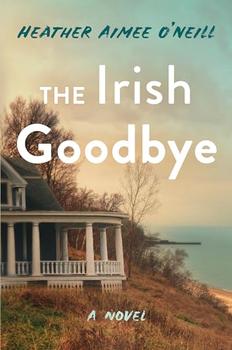
The Irish Goodbye: A Novel
by Heather Aimee O'Neill
A Brilliantly Paced Page-Turner with a Big Heart (11/22/2025)
Imagine this: An old, large, but slightly dilapidated beach house, nicknamed The Folly, located on the wealthy East End of Long Island. The people inside, as we peer through the windows, seem picture-perfect: Aging mother and father still very much in love, their three grown daughters, and four grandchildren. They are gathering as a big Irish family for Thanksgiving.
But wait! Just scratch the surface and what is revealed is far from perfect. It is tragic. It is spiteful. It is lonely. It is heartbreaking.
Written by Heather Aimee O'Neill, this is the story of the Ryan family. Robert and Nora have been married for decades and have four children: Topher, Cait, Alice, and Maggie. In August 1990 as teenagers, Topher and Cait were involved with their friends, Luke and Daniel Larkin, in a boating accident that left 14-year-old Daniel dead. Whose fault was it? Topher took the blame, and with that everything about his life changed, plunging him into a downward spiral.
Fast forward 25 years to Thanksgiving 2015. Topher has been dead for several years, dying by suicide. The family is still reeling, still trying to come to terms with what happened and why—but they barely talk about it to one another. In addition to their grief, each feels responsible for Topher's death.
The three sisters bring problems and much personal drama to the Thanksgiving festivities:
• Cait, who lives in London, is divorcing her husband, Bram, with whom she has five-year-old twins, Poppy and Augustus. After losing her prestigious job as an attorney for a top law firm, she has flown home for the weekend to reevaluate her life. Cait is wealthy. Very wealthy. She has hired caterers to cook the entire Thanksgiving dinner, including a raw oyster bar and signature cocktails. Meanwhile, Cait secretly has eyes on Luke Larkin, something that will horrify her mother and sisters as the Ryans and the Larkins had a huge falling out after Daniel's untimely death.
• Alice is married to Kyle, the principal of St. Mary's School; they have two sons, teenagers Finn and James. All is not well. Because she is the only daughter nearby, Alice is solely responsible for caring for her parents, something that feels more onerous and burdensome by the day. She also has a secret—and a solution—that could rip apart her marriage.
• Maggie is a star teacher at an upscale boarding school where she recently met Isabel, a playwright, and Maggie is deeply in love. She brings Isabel home for Thanksgiving to introduce her to her family, knowing her conservative Irish Catholic mother will be horrified. Ever since Maggie came out, she has felt lonely and isolated for who she is. Meanwhile, she, too, has a secret she is desperate to keep from Isabel, knowing it could tear them apart.
Each member of the family tries to act as if everything is fine, but it's not. Eventually the tensions, lies, and secrets come tumbling out. More than anything, this is a novel about grief and the reckoning it takes on our lives when we try to bury those emotions deep inside. This is how a family comes to terms with the worst kind of tragedy.
The book is a brilliantly paced page-turner with a big heart.
Just remember that no matter how picture-perfect a house may look on the outside, it is the people inside who tell the true story.
Trigger Warning: Topher's suicide is central to much that happens in this novel. It is a pivotal part of the plot and is mentioned or alluded to frequently.

The River Knows Your Name: A Novel
by Kelly Mustian
A Multilayered Story Filled with Long Held Family Secrets, Betrayal, and Redemption (11/18/2025)
While this is a really good novel, the narrative is uneven. There are a lot of pages in which the plot is being slowly—very slowly—unspooled, but once it hits the final third of the book, the pace picks up considerably. Just know that going in.
Written by Kelly Mustian, this is a novel told in two timelines, taking place from Clay Mountain, North Carolina to Natchez, Mississippi and several lonely, backwater spots in between.
Storyline No. 1: It's 1971 and at age 42 and in between jobs, Nell Brown is determined to uncover the mysteries and unanswered questions about her birth and her sister Evie's even more enigmatic early childhood. Nell's mother Hazel refuses to offer any information and is offended when Nell asks questions. Nell has no idea who her father is, and neither of them know about Evie's parents. Nell vaguely remembers a dark, rainy night when Evie not yet two years old was brought to their house by a man in a truck, and soon after Hazel fled the area with the two little girls. One day as children, they find a "cradle roll" tucked into a copy of "Jane Eyre" that lists two strangers as Evie's parents. Where had Evie come from?
Storyline No. 1: It's the early 1930s during the Great Depression. Soon after Becca Chambers loses the only woman she has ever known as her mother, a woman who cared for her since she was six years old, Becca is also widowed. After Ben's untimely death, Becca is left having to support their baby girl, Evie. Her evil, meddling mother-in-law causes Becca to flee far away with Evie. Even so, the unthinkable happens to Evie after the greatest betrayal imaginable, destroying Becca's life.
When the two stories finally merge after quite a few twists and turns, the novel becomes a page-turner that is impossible to put down. But you have to be patient until you get to this point. Tighter writing and better editing would have fixed the early issues.
Engaging and tender, this multilayered story that is filled with secrets just waiting to be revealed is one that celebrates the love of mothers, the desolation of betrayal, and the exaltation of redemption.

Letter Perfect: The Marvelous History of Our Alphabet From A to Z
by David Sacks
This Book Isn't for Everyone, but I Found It Fascinating: Lots of Fun Facts About Each of the 26 Letters (11/16/2025)
Talk about getting into the weeds! If you're passionate about words, then you're probably interested in letters, and if you're interested in letters, then you may also be interested in their history. This book isn't for everyone, but I found it fascinating.
Prodigiously researched and written by David Sacks, this is the detailed and comprehensive—okay, meticulous—history of each of our 26 letters. Read this book to find out the origin of each letter and how each one got its shape and sound. And then there are the specific fun facts to know and tell: Why is X the unknown? Where did the Irish rock band U2 get its name? Which two letters were the last to be included in the alphabet? (Spoiler alert: The answer is J and V.)
Each chapter is a little biography of the letter, and Sacks offers each letter's chief significance for modern readers—such as A meaning quality and B always being second best. Our alphabet is one of those spectacularly successful inventions. Says Sacks, "Judged on longevity and extent of modern daily use, it compares with the wheel." Why? Like the wheel it transformed the ancient world, it is still with us, and it has never been superseded.
Most importantly, the alphabet gave power to all the people, allowing them to learn how to read and write—and that is still true today.
Our alphabet has a long and storied history beginning in Egypt around 2000 BCE, but even greater credit goes to the Phoenicians in 1000 BCE where about 19 of our letters can be traced directly to Phoenician counterparts. We also have to give thanks to the Greeks, the Etruscans, and the Romans. And in 1066 when the medieval French Normans invaded and conquered England, they brought French vocabulary and spelling rules to England, too.
Some fun facts (read the book for many more!):
• The word "alphabet" combines the first two Greek letters' names: alpha and beta.
• All our original letters began as pictures. A was pictured as an ox. The A's legs were horns pointing upward some 3,000 years ago. A is regarded as the most primitive word sound and is typically the first sound said by a baby.
• Among the 26 letters, S ranks about eighth in frequency of use in printed English, but it is No. 1 as an initial letter. That is, more of our words start with the letter S than any other.
• Fully one third of all English words begin with one of three letters: S, C, or P.
• O is the only letter whose name creates its shape on the speaker's lips.
• The letter with the most calming effect is L. Think of the feeling inspired by "lull," "lullaby," "lollipop," and "la-la-land."
• The letter T is the second most-often-used letter in print after E. But the "T" section of a dictionary isn't especially thick because T occurs more often at the middle or end of words than as the first letter.
Do take time to smile at the chapter titles—one for each letter. They are quite amusing! Some include: "C of Troubles," "F is For—Forget It," "T Party," and "Living with Your X."
While the book is heavy on history—sometimes very, very heavy and even a bit cumbersome—author David Sacks treats the subject with humor. My eyes might glaze over at times, but then I am suddenly laughing out loud.

Buckeye: A Novel
by Patrick Ryan
It's the Great American Novel: Keen Insight, Superb Pacing, and Captivating Read (11/9/2025)
It was just a kiss. A kiss on VE day in May 1945 when World War II ended in Europe. A kiss in the basement of a hardware store in Bonhomie, Ohio because that is where the only radio was located. And that one kiss between Cal and Margaret—each unhappily married to other people—changed everything.
It was just a kiss.
Written by Patrick Ryan, this book was published with a lot of hype, and it turns out that hype is true. This is a really, really good book. It is the story of two couples—Cal and Becky and Felix and Margaret. With that one kiss and more that followed, the lives of these families became forever intertwined.
Margaret Anderson is an orphan. Her mother left her in a basket on the steps of an orphanage in a small Ohio town, and she was never adopted, although she did live with various, often frightening foster families. When she turns 18, she moves to the big city of Columbus and discovers the joy of sex. Upon meeting handsome, muscular Felix Salt, she realizes he is different. He's a gentleman. After just a few months, he proposes in the middle of the Lazarus department store. Margaret doesn't love him, but she sees a future with him so she agrees to marry him. Meanwhile, Felix is harboring dark secrets of his own that he hopes Margaret will never discover. Felix is on the fast track with his employer, who moves them to the small town of Bonhomie, Ohio. They buy a house. They begin their lives. And then World War II interrupts everything. Felix comes home a very different kind of man.
Cal Jenkins, who was born with one leg two inches shorter than the other, marries the first girl he ever dates, but he and Becky are madly in love and ecstatic with one another. In short order, they have a son—a junior they nickname Skip. Becky has an unusual gift. She can commune with the dead. Cal works in his father-in-law's hardware store, and is miffed and embarrassed when no military branch will accept him. And on VE day, Margaret can tell there is some big news afoot, so she rushes into the hardware store, assuming it would have a radio.
It was just a kiss.
The novel follows these four people from the 1920s to the 1970s, as the bigger world around them changes and as their smaller worlds implode in a small Ohio town where secrets are difficult to keep. The news events—from World War II and the economic and baby booms that followed to the big societal changes of the 1960s and the Vietnam War—are juxtaposed against the characters' lives in ways that range from hilarious to hopeful and joyful to tragic.
The characters are vibrant, the plot engaging, and the writing accomplished. Keen insight and superb pacing make this a captivating read. This is a novel filled with love and passion and the indomitable human spirit where one can always long for forgiveness and hope.
This book is also a love letter to the Buckeye state—for all those who once lived in Ohio, live in Ohio now, or hope someday to make it home.
Quite simply, this just might be the Great American Novel. Read it!

Heart the Lover
by Lily King
A Brilliant Love Story That Doesn't Follow the Rules: It Will Wreck Your Heart and Stir Your Soul (11/6/2025)
This is a love story that doesn't follow the rules of a love story—as in, girl meets boy, girl and boy fall in love, girl and boy suffer a broken relationship, girl and boy reconcile…and live happily ever after. Instead, this is a love story that is raw, passionate, (very!) sexy, and impossible to stop reading.
But it breaks all the rules. It's brilliant!
Magnificently written by Lily King (who may just be my new favorite author), this is the story of college student Jordan, an English major and creative writer, who meets two young men her senior year who totally change her life: best friends and housemates Sam and Yash. In addition to encouraging her take herself, her studies, and her innate creativity more seriously than she has ever done before, Jordan first enjoys them both as dear friends but soon starts dating Sam. However, her real crush is for Yash and he for her. It's a weird love triangle with lots of hurt feelings. She and Yash get together after Sam drops her, and a passionate, intense, wildly delirious love affair begins. They graduate and grow up and begin their lives, loving and hurting each other in ways that will mark them always. The choices they make as young lovers, often on the spur of the moment and based on feverish emotions, will forever alter the course of their lives.
This short novel—just 188 pages—is an intelligent and captivating celebration of young love, unbridled passion, forgiveness, and redemption. It is filled with joy and tragedy. It will wreck your heart and stir your soul. And you won't want it to ever end.
But when it does end, there is a bit of a surprise, which you'll only understand if you have already read Lily King's "Writers and Lovers."

Twist: A Novel
by Colum McCann
A Literary Novel About Connection, Brokenness, and Repair, but It's Heavy, Dense, and Cumbersome (11/3/2025)
This is a literary novel about connection…brokenness…and repair on multiple levels. And while the symbolism and themes mostly work, in the end it just feels quite heavy and cumbersome.
Written by Colum McCann, this is the story of a down-on-his-luck Irish writer named Anthony Fennell. Unable to focus on his creative fiction, he decides to write a magazine article about the miles and miles and miles of relatively fragile undersea cables that connect our Internet. Yes the "cloud" is mostly in the ocean, and when those cables break, which happens due to natural disasters, such as underwater volcanoes and landslides, as well as accidental and rogue encounters with ships, someone has to fix it. The cables are far too deep for divers, so ships atop the sea must send down grappling hooks to do the work. It's difficult, treacherous, and demands highly skilled people. Fennell hops aboard a ship in South Africa that is heading out to repair three different breaks.
While Fennell narrates the book in the first person, the novel is really about John Conway, the mission specialist who is charge of finding and repairing the cable. He is young, handsome, and troubled. And he is not at all who he says he is.
This is a story about survival—physically and psychologically. Just like the cable at the bottom of the ocean that is ruptured, both Fennell and Conway's lives are ruptured with trauma and in need of repair. As Conway says at one point in the novel, "Everything gets fixed, and we all stay broken."
Still, the storyline can feel slow, although it is highlighted in parts with surprising dramatic tension…and then goes back to being slow. In addition, the writing is dense with a lot packed into a relatively short book.
The novel explores a profound topic about the human psyche, but ultimately it just gets weighed down.

The Secret Man: The Story of Watergate's Deep Throat
by Bob Woodward
A Piece of History That Reads Like a Spy Novel (10/28/2025)
The Watergate break-in on June 17, 1972 occurred eight days after I graduated from high school. That summer and the next two summers when I was home from college, our house was obsessed with the news developments. Well, mostly it was my father. If Dad was home, he was watching the news. I started paying attention. With each new and often confusing development, what happened became more horrifying—and terrifying.
This short and fascinating book is authored by Bob Woodward, who was half of The Washington Post team, along with Carl Bernstein, that is credited with bringing down a president. This is the tell-all book so many waited for. Although it was published in 2005 on the heels of a Vanity Fair magazine article in which Deep Throat—Mark Felt, the No. 2 man inside the FBI—revealed himself, it is still a riveting book for today's reader. While the identity of Deep Throat is important, the how, why, what, when, and where that drove the story is even more interesting.
Without Deep Throat, the inside government source who spilled the beans to Woodward in the underground parking garage in Rosslyn, Virginia during clandestine 2 a.m. meetings, Woodward may have remained on the lowly Washington Post police beat that he held in 1972 a lot longer instead of becoming an all-star reporter.
Who was Deep Throat? While quite a few speculated it was Mark Felt, no one knew for sure until that Vanity Fair article that was published on May 31, 2005 and the subsequent confirmation from Woodward and Bernstein, who kept the secret for 33 years.
In this book, Woodward details not only Deep Throat's identity, but also how it all worked—how they met each other in the first place, how they contacted each other, where the meetings took place, what was said, and the eventual falling out they had.
Some of the book's highlights:
• Find out the first time Bob Woodward and Mark Felt met in 1969 or 1970 (Woodward can't quite remember the date), how this serendipitous meeting occurred, and the surprising location. Had this chance introduction that led to an accidental friendship never occurred, there would not have been a Deep Throat.
• Learn why Mark Felt was deeply torn and even uncertain about being such a source to The Washington Post, both wanting to do it and not wanting to do it.
• Discover the extraordinary lengths Mark Felt took to protect his identity, lying to everyone he knew—even his family and closest friends.
• Find out how an apartment balcony flowerpot with a flag and a daily copy of The New York Times were critical components of the secret meetings between Mark Felt and Bob Woodward.
• Learn what Mark Felt would tell Bob Woodward and what he would not tell him—and why.
• Early on, the Nixon White House surprisingly correctly identified Mark Felt as Deep Throat but decided they couldn't out him for fear of what he would do next. The man simply knew too much and had access to absolutely everything inside the FBI.
This book is more than an unveiling of the source's identity as it reaches deeper to explore why a career professional at the pinnacle of success would risk so much. It's a piece of history that reads like a spy novel!
Bonus: "A Reporter's Assessment," which is the afterword by Carl Bernstein is fascinating reading. Don't skip it.
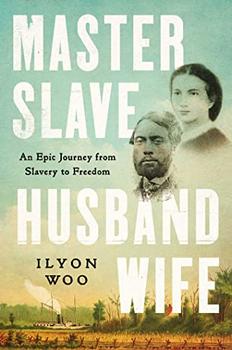
Master Slave Husband Wife: An Epic Journey from Slavery to Freedom
by Ilyon Woo
This History Book Reads Like a Thriller: It Is a Captivating and Compelling Story of True Courage and Faith (10/21/2025)
Extraordinary. Stupendous. Masterful. This is one of those history books that reads like a thriller that kept me on the edge of my seat even though I knew the outcome. To be able to write a page-turner history book says so much about the talents of author Ilyon Woo.
Beginning in December 1848, this is the true story of William and Ellen Craft, married slaves in Macon, Georgia, who in four days planned a most daring escape—something that belonged on the pages of a novel, not printed later as fact in newspapers. Ellen's skin color was so pale that she routinely passed for white. She was a small woman, while her husband was quite tall and dark-complected. The plan was masterful: Ellen, a talented seamstress, would dress as a wealthy young man in clothing she mostly made herself so it would fit. William, a skilled cabinetmaker, would be her trusted slave. She required his services because she feigned illness—her arm in a sling and her face partially covered with a scarf. She walked with a limp and leaned on William. The ruse was a trip to Philadelphia where physicians there might heal her. It took years, but the two had saved enough money for the trip, which required travel by train and ship, as well as walking. But it wasn't enough to look the part. For this bold plan to succeed, Ellen had to act and talk like a man—without ever slipping up.
William and Ellen Craft escaped slavery by hiding in plain sight.
How they pulled off this stunning feat while at so many times along their journey they could have been caught in this monstrous lie and returned to face horrific punishment, is what makes this such a thriller. And once they safely made it out of the South, they told their story. It was so extraordinary that it was picked up by newspapers, and that meant the folks back home in Macon found out what happened to these two missing slaves. The enslavers weren't happy about it and meant to get their property back. The thriller continues.
While this reads like a novel, author Ilyon Woo is quick to point out that every description, quotation, and line of dialogue comes from historic sources, including the Crafts' own written account of their quest for freedom. Find out the backstory of their enslavers, why the Crafts chose to escape when they did, and the small details that allowed them to pull it off, as well as the times when they almost failed. And even when the Crafts were safely in Boston, the Fugitive Slave Act of 1850 meant that anyone at any time could kidnap them and send them back to Macon. Danger stalked them at every turn; they were no longer safe anywhere in the United States. Best of all, find out about the life they created for themselves after they self-emancipated.
This exceptional book, the 2024 winner of the Pulitzer Prize in Biography, is truly an epic—a captivating and compelling story of true courage and an unshakable faith in God.









 Power Reviewer

