
-
Your next favorite book
is waiting.
Summary | Excerpt | Reading Guide | Reviews | Beyond the book | Read-Alikes | Genres & Themes | Author Bio

A Novel
by Caro Claire Burke Book Reviewed by:
Yesteryear, Caro Claire Burke's first novel, introduces readers to Natalie Heller Mills, a 32-year-old Instagram star who chronicles her life as a "tradwife"—a woman who embodies a conservative lifestyle harkening back to earlier times (see Beyond the Book). She constantly posts videos of herself involved in day-to-day activities on her ranch, Yesteryear, such as caring for her five children (with a sixth on the way), cooking meals from scratch, and feeding the livestock. Behind the wholesome façade she calls "Online Natalie," however, lives a smart businesswoman who carefully manages her public image. "Offline Natalie" is narcissistic and cynical, and she relies on off-camera conveniences and a staff of nannies and farmhands to make her life appear "perfect."
She awakens one day to a reality that is familiar yet … not. Her carefully designed house has become a ramshackle cabin with no heat, running water, or bathroom, and the four children in residence look somewhat like her offspring, yet they're strangers to her. She is forced to put into real-life practice the skills she demonstrated on Instagram while trying to return to the more comfortable lifestyle she knows and loves. The bulk of the first-person narrative bounces back and forth between these two periods of Natalie's life (current day and c. 1800), also covering her pre-fame years as she transforms herself from naïve college freshman to media star.
From the book's description, one might expect Yesteryear to be primarily historical fiction, and certainly facets of the earlier storyline do fit that genre. Burke's descriptions of acts such as baking a loaf of sourdough over an open fire and washing clothes in a tub in the yard serve to illustrate what life may have been like in nineteenth-century America. The more interesting plot line, though, is the one set in the twenty-first century. In addition to simply being a more entertaining story, much of it brilliantly satirizes current American cultural trends around things like social media influence and the regressive gender roles touted by political conservatives. Natalie freely admits, for example, that she deliberately baits a segment of her audience she calls The Angry Women:
"[N]early all these women had crappy jobs and snotty kids and loser husbands. Alternatively, they were single and whiny and depressed. Either way: these women wanted their content to be every bit as mindless and pleasurable as their lives were not. These women wanted—no, they needed—perfection from me. After all, the tighter the stitching, the more soothing it is to pick apart at the seams."
Natalie herself is an amazing creation, and Burke's depiction of her is remarkable. The author splendidly illustrates her evolution from true believer ("[T]he job of a woman is to be a mother, be a wife, and keep the household clean") to heartless social media mogul. Her progression is gradual and extraordinarily believable.
In spite of this realistic character arc—or perhaps because of it—readers come to like Natalie less as her story progresses. From the very start, it's apparent she feels a sense of superiority toward others, and her narcissism only gets worse as she gains fame. She becomes downright cruel to those around her (including her children), completely trampling on the feelings of everyone she interacts with. While some may come to respect Natalie for her determination, the unpleasantness of this heroine could present a challenge for those who prefer relatable protagonists.
I also found the sections set in the dilapidated cabin less compelling, but that could be because I was expecting a novel that revolved more around history or time travel. As I was reading, I questioned why the author wasn't more faithful to the period and why she didn't provide a more detailed picture of the era. By the book's end I better understood her choices, but it still left me feeling as if these chapters didn't quite hit their mark.
In addition, I was a bit disappointed that while the author took aim at the tradwife movement, she only briefly touched on other aspects of modern culture that could have been explored more fully, such as the role money and influence play in politics. Natalie's father-in-law, for example, is a wealthy US Senator running for President who's grooming his sons to continue his political legacy. There are a few brief sections where the author alludes to the character's manipulation of the political system and his MAGA-esque policies, but she doesn't really explore these themes—a missed opportunity, in my opinion.
Regardless, Yesteryear is an excellent debut, and Burke is an author to watch; I look forward to reading whatever's next for her. This page-turner should appeal to readers who enjoy satire about current social media trends. Book clubs will want to put this one on their list for discussion; its themes around gender roles and influencers in particular will provide many excellent talking points.
 This review
first ran in the March 25, 2026
issue of BookBrowse Recommends.
This review
first ran in the March 25, 2026
issue of BookBrowse Recommends.

If you liked Yesteryear, try these:

by Liann Zhang
Published 2026
In this razor-sharp, diabolical debut thriller, a young woman steps into her deceased twin's influencer life, only to discover dark secrets hidden behind her social media façade.

by Julia Langbein
Published 2026
From the acclaimed author of American Mermaid ("I loved it…and have never read anything like it"—Elizabeth Gilbert) comes a wise, funny, and wildly original examination of female desire and the price women pay for giving in to their appetites—starring an apparition of Monica Lewinsky.
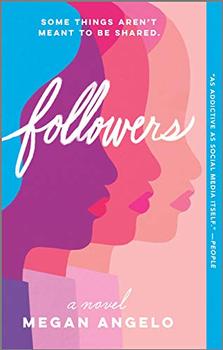
by Megan Angelo
Published 2020
An electrifying story of two ambitious friends, the dark choices they make and the profound moment that changes the meaning of privacy forever.
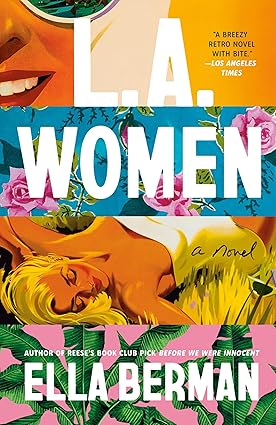
L.A. Women by Ella Berman
Two ambitious writers in 1960s LA face betrayal when one writes a novel based on the other's life.




Your guide toexceptional books
BookBrowse seeks out and recommends the best in contemporary fiction and nonfiction—books that not only engage and entertain but also deepen our understanding of ourselves and the world around us.

