
-
Your next favorite book
is waiting.
Summary | Excerpt | Reading Guide | Reviews | Beyond the book | Read-Alikes | Genres & Themes | Author Bio

A Novel
by Patrick Ryan Book Reviewed by:
Patrick Ryan's novel Buckeye begins in the small fictional town of Bonhomie, Ohio, on May 8th, 1945: V-E Day, the day that Germany surrendered to the Allies in World War II. Cal Jenkins is at work at his father-in-law's hardware store when a beautiful young woman dashes in, asking if he has a radio. He leads her to a workroom in the basement, where they hear the news that the war in Europe has ended and share a celebratory kiss—setting in motion events that will impact them, their spouses, and their children in the ensuing decades.
The novel then backs up to describe each of the protagonists' lives up to that point. We learn that Cal was born with a short leg, which has kept him out of the war, much to his shame. Becky, the woman he'll marry, has been able to communicate with the spirits of the dead since her childhood. Margaret, the beautiful woman in the hardware store, was abandoned at an orphanage as an infant, while her eventual husband, Felix, is a big-city boy, having grown up in Cleveland. The reader discovers how each couple met, and the challenges they've encountered in their separate marriages. When the four stories meet at the inflection point—the kiss—the narrative shifts focus to the war's aftermath and how it impacts the son each couple raises, before concluding in the post-Vietnam era.
Ryan brilliantly captures the atmosphere of a small town, particularly just before and after WWII. He describes Bonhomie with its "grid of nine streets" and neighborhoods segregated by ethnicity: "When people wanted an Irish neighborhood they could point to, they could always refer to the block with St. Catherine's and Good Shepherd School." There's a railway running through town, and "a rusted grain elevator still bearing the checkered Purina logo loomed like a monolith at the east end of Main Street." His depiction of Cal's residence could have been that of my grandparents' home in Northeast Ohio:
"The house on Taft Street had been purchased from a Sears catalogue in 1916 and delivered to its previous owner in pieces, but you wouldn't know that from looking at it. It was a solid, two-story house, plum-colored, with a gabled roof, white gingerbread trim, and wagon-wheel brackets framing the entryway. The backyard was fenced in and had a sycamore and a pair of white birches; the front was planted with hostas and had a young buckeye tree growing in the middle of the yard, just ten feet tall, its autumn leaves bright pumpkin-orange."
Beyond the vivid images he paints, Ryan's talent is in making his readers care about his characters' relatively mundane lives. Nothing truly extraordinary happens to any of them—or perhaps it's more accurate to say that the earth-shattering events they experience are common to many and, indeed, are largely expected (for example, it's not surprising that a character who smokes develops cancer). Through his flawed and conflicted characters, Ryan also explores complex themes such as the importance of family, the complexities of marriage and parenthood, sexuality and infidelity, forgiveness, friendship, and how PTSD impacts those returning from war and those around them.
That's not to say this is a book specifically about any of these subjects. Marital infidelity occurs, for example, but the book isn't the story of an affair, and by the time readers hit that chapter it's a surprise to no one. Ryan instead keeps attention focused on how the characters react to each figurative bump in the road, separately and together, and how each reaction reverberates across time. That's what makes the book so interesting. Does a spouse leave or stay upon learning of their partner's affair? What are the consequences of that decision? The emphasis isn't on a singular event, it's on how those affected respond.
Buckeye is a quiet book without a lot of action; the plot has little narrative arc, instead flowing seamlessly from one decade to the next. As such, some readers may find it slow. But others—perhaps those who, like I did, find themselves completely invested in each of the characters, or those who share my sense of nostalgia for small-town Ohio—will have trouble putting it down.
 This review was originally published in The BookBrowse Review in August 2025, and has been updated for the
December 2025 edition.
Click here to go to this issue.
This review was originally published in The BookBrowse Review in August 2025, and has been updated for the
December 2025 edition.
Click here to go to this issue.

If you liked Buckeye, try these:

by Ron Rash
Published 2024
Told against the backdrop of the Korean War as a small Appalachian town sends its sons to battle, The Caretaker by award-winning author Ron Rash ("One of the great American authors at work today" —The New York Times) is a breathtaking love story and a searing examination of the acts we seek to justify in the name of duty, family, honor, and ...
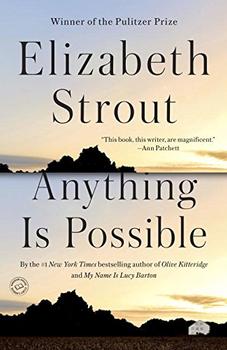
by Elizabeth Strout
Published 2018
An unforgettable cast of small-town characters copes with love and loss in this new work of fiction by #1 bestselling author and Pulitzer Prize winner Elizabeth Strout.
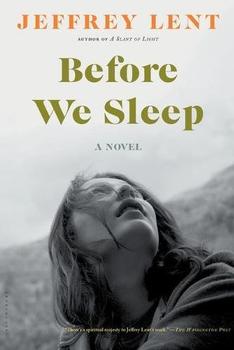
by Jeffrey Lent
Published 2017
The sweeping, intergenerational story of a Vermont family, from WWII to the dawning of the '60s - the most magisterial and moving novel of acclaimed author Jeffrey Lent's career.




Education is the period during which you are being instructed by somebody you do not know, about something you do ...
Click Here to find out who said this, as well as discovering other famous literary quotes!

Can you name the title?
Test your book knowledge with our daily trivia challenge!
Your guide toexceptional books
BookBrowse seeks out and recommends the best in contemporary fiction and nonfiction—books that not only engage and entertain but also deepen our understanding of ourselves and the world around us.
