
-
Your next favorite book
is waiting.
Summary | Excerpt | Reviews | Beyond the Book | Read-Alikes | Genres & Themes | Author Bio
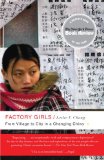
From Village to City in a Changing China
by Leslie T. Chang Book Reviewed by:
This article relates to Factory Girls

Factory Girls is an example of immersion journalism. Immersion
journalism involves more depth than traditional newspaper reporting, which is
limited by column space and time, and includes less of the reporter's own
thoughts and reactions to events. Classic examples include Truman Capote's
In Cold Blood (1966), Joan Didion's Slouching Towards Bethlehem (1968), and
George Orwell's Homage to Catalonia (1952). More recent examples include
Nickel & Dimed and
Self-Made Man.
The style is related to but different from New Journalism, which developed in the 1960s and 70s and
was first described by Tom Wolfe. New Journalism, which tends to be found
in magazines, not newspapers, uses dialogue, the first-person point of view,
scenes and everyday details about the subjects' lives, referred to as "status
detail".
Narrative journalism, literary journalism, and creative nonfiction are sometimes
used synonymously to refer to New Journalism, which uses features one might
expect from a novel, such as a good sense of pacing and creating interest in the
reader, while adhering to facts, reporting and accuracy.
According to writer Edward Humes, "Traditional journalism is about what's in the
public domain. It may be obscure, or forgotten, or kept hidden from view when it
shouldn't be secret, but the power of traditional journalism lies in the
fearless pursuit of the public's right to know. Immersion journalists, on the
other hand, have no particular right to go where they go."
Ethical questions arise because of the proximity journalists have with their subjects and the trust they gain as they follow their lives—some may view it as potentially intrusive, so each journalist must determine where to draw the boundary between revealing information in the interest of adding a personal touch to the story, and honoring their interview subject's privacy.
Interesting Links
Filed under Society and Politics
 This "beyond the book article" relates to Factory Girls. It originally ran in October 2008 and has been updated for the
August 2009 paperback edition.
Go to magazine.
This "beyond the book article" relates to Factory Girls. It originally ran in October 2008 and has been updated for the
August 2009 paperback edition.
Go to magazine.
Theo of Golden by Allen Levi
One spring morning, a stranger arrives in the small southern city of Golden. No one knows where he has come from…or why…






Your guide toexceptional books
BookBrowse seeks out and recommends the best in contemporary fiction and nonfiction—books that not only engage and entertain but also deepen our understanding of ourselves and the world around us.

