
-
Your next favorite book
is waiting.
Summary | Excerpt | Reviews | Beyond the Book | Readalikes | Genres & Themes | Author Bio
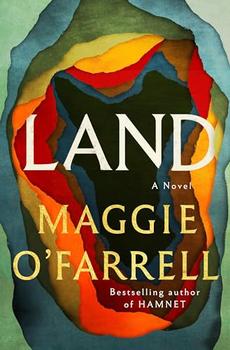
A Novel
by Maggie O'Farrell Book Reviewed by:
He twists away from the ruined cabin before it presses itself too firmly to his eye, inadvertently pulling his jacket from his son's grasp.
"What's that you're saying?" he snaps, aware that the boy persists in squeaking out some words.
"I said," his son falters, and it makes Tomás bristle because he can't abide timidity in his children, "will we be finished soon, Da? Because—"
"Finished?" Tomás thunders. "Finished? You want to know if we'll have finished this task soon? The revisions to the great map of the—"
"No, no, I meant only for today, Da, not—"
"—whole country? Will we have it finished today? Is it that you're asking me?"
Liam bites his lip. He worries away at the patch on his elbow. Tomás sees that the wet has spread over the boy's cap and jacket, turning the cloth dark. He sees that his bright hair is dulled by the rain to the dun of old envelopes. Water drips from the boy's eyelashes, his chin. A brief pang passes through Tomás but then he pushes back his shoulders: the soldiers are coming out to this place in a week; they will expect the new map sheet of this parish to be near completion. There is no opportunity for sentiment; no time must be lost.
"Away over there," he says, pointing, without looking at the boy, "to that copse."
The child lifts the surveying pole, which becomes tangled with his ankles, making him stumble, but he rights himself, and makes his halting way down the slope, towards the gathering of trees. Aspen, elder, Tomás is noting in his book, birch, oak—both ancient and new—and how odd it is that the place is absent from the last map.
"It's not on the map we have, so we'll need to locate the source of that stream before we do our surveying. Go on inside," he calls to his son's retreating back, "and tell me what you find."
Was it a mistake, he wonders, to bring the child along? But the boy must have a trade, must learn to work a job: Tomás will not have him cast out into the world without any prospects, so why not train him as his apprentice? The boy excels at mathematics and draughtsmanship, but Tomás senses resistance in the child, a part of him that yearns for something other. It is pure ingratitude, he has said to the boy's mother. He doesn't care for the work, doesn't put his back into it.
Ah, now, Tomás, she replied, he's young.
Ten isn't young, Tomás retorted, sure when I was ten—
Tomás had fallen silent, the words choked to a halt. He does not like to go down that vertiginous path, into those particular dark woods. It is Tomás's belief that it is always better to say too little than too much: many things are best left unsaid.
He slides his pencil back into his pocket. If his wife were here with him, on this drumlin (which is formed from eroded soil and loose shale gathered during the long journey of a once-mighty glacier, its power waning as it reached this exact spot, causing it to drop its gritty treasures, what a miracle, what a revelation), if she were stand¬ing here at his side, her shawl pulled over her hair to keep off the rain, he knows exactly what she would say. Be kinder to him, speak more gently, and he will listen to you. And she would be right, of course.
Tomás scuffs with a curled hand at his bristling chin. The problem is there is so much work to be done, so many field notes to take, so many mistakes to correct, so much history to preserve. He sees him¬self as that cursed man in the story—read to them once by a visitor—who was forced to push a boulder up a hill every day, only for it to roll back down each night. He can still recall the tale, the book with a red-leather binding, held in gloved fingers, as they all sat huddled together on their benches; he has been both intrigued and repelled by it ever since. He can imagine the grain of the boulder against his palms—it would be granite, he thinks, and he can feel the glistening flecks of mica pricking his palms as he struggles to find a shoulder-hold on the rock. He can imagine the exact tilt of the gradient, how much pressure he would have to exert against his back foot, pushing down with his calf muscles, straining, straining—
Excerpted from Land by Maggie O'Farrell. Copyright © 2026 by Maggie O'Farrell. Excerpted by permission of Knopf. All rights reserved. No part of this excerpt may be reproduced or reprinted without permission in writing from the publisher.
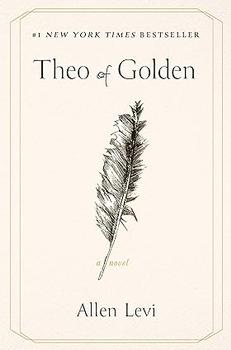
Theo of Golden by Allen Levi
One spring morning, a stranger arrives in the small southern city of Golden. No one knows where he has come from…or why…





Your guide toexceptional books
BookBrowse seeks out and recommends the best in contemporary fiction and nonfiction—books that not only engage and entertain but also deepen our understanding of ourselves and the world around us.


