
-
Your next favorite book
is waiting.
Summary | Excerpt | Reviews | Beyond the book | Read-Alikes | Genres & Themes | Author Bio
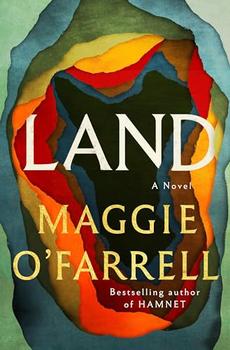
A Novel
by Maggie O'Farrell Book Reviewed by:
On a remote peninsula in 1865, Tomás and his son Liam are surveying the land, as a part of the British Ordnance Survey—an organized effort to map the whole of Ireland. The taciturn Tomás is a trained surveyor, having worked his way up from his entry-level position as a chainboy under the employ of British soldiers, or redcoats, who plucked him from a workhouse when he was a teenager. (How he ended up in the workhouse, he can't remember, but he knows he must have lost his family sometime during the Great Hunger.) Ten-year-old Liam has grown up in the shadow of the famine, which ended not long before he was born, but for Tomás, and for the Irish landscape that he is mapping, the Great Hunger has changed everything, leaving behind a countryside filled with broken families and empty houses.
"It is a necessary but unenviable part of his current task to distil into inked symbols and ordered lines what has taken place here since the first maps were drawn. [...] The redcoats turn their eyes from this task; they prefer never to acknowledge the crisis that befell the country, the losses and deprivations it has suffered. They do not wish to make such marks upon their maps, which might lead to certain admittances. Tomás has determined, however, that his maps will bear an account of what happened, what was lost, if it kills him."
When he wanders into a copse one day, leaving Liam on the hillside to wait for him, he emerges as a changed man. The once stoic Tomás is now behaving erratically, ranting and raving about things that don't make sense to Liam, embodying a mysticism at odds with the father he thought he knew. Most concerningly, Tomás has declared he has no intention of completing his work—he tries to throw away his maps, which Liam secretly rescues, terrified of the fate of his mother and sisters back home in Dublin if they don't get paid for this assignment. While Tomás starts work on a different series of maps, using the original Irish place names to label the rural landscape, Liam surreptitiously finishes the anglicized maps and turns them in to the redcoats. He is paid in return, but he knows this is just the start of a crisis for his family, if his father is unwilling or unable to perform his skilled labor. When Tomás, still in the throes of his madness, takes his family's savings and relocates them all from Dublin to a rundown cottage back on the remote peninsula, each must navigate their new life in a country still traumatized by loss and deprivation.
In Land, veteran author Maggie O'Farrell's tenth novel, she shows her prowess at crafting a rich, complex story about colonization and resilience—and Tomás's epiphany in the copse is the novel's crux, as he gazes upon the natural beauty of a sacred space and fully understands, for the first time, the paradox of being asked to record his country's history for its colonizer.
"Tomás knew that if he were to survey this copse, to record it upon the map, within weeks, perhaps even days, the viscount would send up a party of men to fell all these trees for timber, to divert the water for use in the manor house, and that would be that. This woodland, which had been here since the beginning of time, would be gone, claimed, erased. [...] The choice, he saw, was his. His life's work was to map but he did not want to be the one to condemn this place."
The descriptions of Tomás's copse, as well as the rural countryside, are beautifully and delicately rendered by O'Farrell, who ties the concept of cultural identity into the land that we inhabit. In a country occupied by colonizers, what does it mean to be Irish? To O'Farrell, and to Tomás, a connection to the land proves an essential link to one's personhood, one that is too deep and ancient to be stripped away by maps and governments.
But O'Farrell is equally as interested in people as she is in the landscape—Land is a tender, slow-burning portrait of family life, whose characters feel like they come alive on the page. As Liam pushes against his father's newfound, worrisome mysticism by finding Catholicism and joining the priesthood, he and his sisters, the rebellious Enda and the loyal Rose, as well as his brother, Eugene, who never speaks but has an intuitive connection with the natural world, all forge different paths. They find themselves in different corners of the world—but over and over again, each feels inexorably drawn back to the land that raised them.
 This review
first ran in the June 24, 2026
issue of BookBrowse Recommends.
This review
first ran in the June 24, 2026
issue of BookBrowse Recommends.

If you liked Land, try these:

by Allegra Goodman
Published 2025
A young woman and her lover are marooned on an island in this breathtaking saga, an epic story of love, faith, and defiance from the bestselling author of Sam.

by Mona Susan Power
Published 2024
The long-awaited, profoundly moving, and unforgettable new novel from PEN Award–winning Native American author Mona Susan Power, spanning three generations of Yanktonai Dakota women from the 19th century to the present day.

by Claire Keegan
Published 2022
The landmark new novel from award-winning author Claire Keegan.
Theo of Golden by Allen Levi
One spring morning, a stranger arrives in the small southern city of Golden. No one knows where he has come from…or why…




Your guide toexceptional books
BookBrowse seeks out and recommends the best in contemporary fiction and nonfiction—books that not only engage and entertain but also deepen our understanding of ourselves and the world around us.

