
-
Your next favorite book
is waiting.
Summary | Excerpt | Reviews | Beyond the Book | Readalikes | Genres & Themes | Author Bio

Margaret C. Anderson, Book Bans, and the Fight to Modernize Literature
by Adam Morgan Book Reviewed by:
The Red Scare made Americans paranoid that anyone they passed on the street could be a bomb-wielding anarchist, and Comstock and Sumner's book-banning campaigns stoked fear that reading modern fiction and poetry could turn young women into disease-ridden lesbians and prostitutes. US Senator (and former South Carolina governor) Coleman Livingston Blease said in 1930 that he was ready to "see the democratic and republican form of government forever destroyed if necessary to protect the virtue of the womanhood of America." As a result of this moral panic, the decades between World War I and World War II were some of the most tightly controlled years in the history of law and literature—and Margaret's criminal trial for publishing Ulysses would be a crucial turning point in the battle between censorship and free expression.
Inside the Washington Square Bookshop that winter afternoon, Margaret felt sorry for Sumner. "I was embarrassed by the antipathy with which everyone in the bookshop regarded him. He was probably hurt by it," she wrote. She recognized Sumner's charm, and as they spoke he attempted to prove his bona fides—that he was a reader and admirer of fiction. But when he quoted Victor Hugo and others she considered "second-rate minds," Margaret realized that she had stumbled upon "the perfect enemy" for her trial on February 21, 1921.
This trial would make Ulysses the most influential literary work of the twentieth century. It would change the very definition of what a book could be. But Margaret's fate would be far stranger, and mostly forgotten. Her story is a tale of three cities—Chicago, New York, and Paris—at the height of their cultural renaissances; of provoking the FBI into compiling a dossier the agency still refuses to make public; of mercurial love affairs with some of the most glamorous and intelligent women in the world; of frequent ecstasies and rare brushes with self-harm. She shared meals with Gertrude Stein, Ernest Hemingway,
F. Scott Fitzgerald, James Joyce, Marcel Duchamp, Frank Lloyd Wright, Man Ray, and Pablo Picasso. She lived in abandoned castles and a dead lighthouse in the ancient forests of France; under the thirteenth-century monastery roof of a cult; and in the circle of a world-renowned mystic. She held secret meetings in a Left Bank apartment with like-minded women whose writings, like Joyce's Ulysses, would be both censored and responsible for changing literature—and the way we talk about it—for the next one hundred years.
To purchase a copy of A Danger to the Minds of Young Girls by Adam Morgan please see the publisher's site here.

Excerpted from A Danger to the Minds of Young Girls by Adam Morgan. Copyright © 2025 by Adam Morgan. Excerpted by permission of One Signal. All rights reserved. No part of this excerpt may be reproduced or reprinted without permission in writing from the publisher.
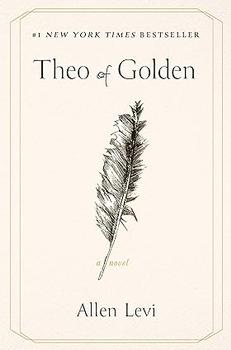
Theo of Golden by Allen Levi
One spring morning, a stranger arrives in the small southern city of Golden. No one knows where he has come from…or why…

Your guide toexceptional books
BookBrowse seeks out and recommends the best in contemporary fiction and nonfiction—books that not only engage and entertain but also deepen our understanding of ourselves and the world around us.

