
-
Your next favorite book
is waiting.
Summary | Excerpt | Reviews | Beyond the Book | Readalikes | Genres & Themes | Author Bio

Margaret C. Anderson, Book Bans, and the Fight to Modernize Literature
by Adam Morgan Book Reviewed by:
Preface
Winter 1921
The Photo
On a cold afternoon in the heart of Greenwich Village, Margaret C. Anderson bumped into the man who wanted to put her in prison.
The streets of New York were lined with snowdrifts stained black by soot, smog, and Model T motor oil. Downtown, the terracotta-clad Woolworth Building was the tallest in the world while the Jazz Age simmered in speakeasies like The Back of Ratner's. Uptown, Langston Hughes was a freshman at Columbia University, publishing poems in the school paper. Across the city, neighborhoods were consumed by the first Red Scare following a presumed anarchist bombing on Wall Street the previous year that had claimed the lives of thirty people.
Margaret braced herself against the chill in the one suit she owned, eggshell blue, worn daily with a georgette blouse that she washed every other night by hand. Walking down Eighth Street, she began editing Greenwich Village in her mind: flower boxes for every window, granite cobblestones instead of brick for the pavement, red maples and golden ginkgos to replace the oaks. "I always edit everything," she wrote. "... I edit people's clothes. I edit people's tones of voice, their laughter, their words. It is this incessant, unavoidable observation, this need to distinguish and impose, that has made me an editor."
But she couldn't edit the man coming her way in a dark three-piece suit: John Saxton Sumner, secretary of the New York Society for the Suppression of Vice. Margaret recognized him at once. At forty-four years old, he was already the most notorious censor in America. Like his NYSSV predecessor, Anthony Comstock, Sumner had ordered the burning or helped to bring about the suppression of thousands of books and other publications deemed obscene by the standards of the Young Men's Christian Association—including Theodore Dreiser's The Genius, a semiautobiographical study of male and female libido, and Margaret Sanger's sixteen-page pamphlet "Family Limitation," which explained six different contraceptive methods.
On October 4, 1920, Sumner had had Anderson arrested and charged with a felony that could send her to prison for up to five years. Her crime? Publishing a "filthy, indecent, and disgusting" work of fiction in her literary magazine, The Little Review, and distributing copies through the Post Office Department (later replaced by the US Postal Service). For the last two years, Margaret had been serializing an experimental novel that would shake the foundations of literature and demolish the cultural status quo on both sides of the Atlantic: James Joyce's Ulysses.
In the winter of 1921, when she crossed paths with Sumner on Eighth Street, Margaret's trial was only a few weeks away. For Sumner, the publication and distribution of Ulysses was a clear violation of the Comstock Act of 1873, which made it illegal to mail any "obscene, lewd, or lascivious" materials "from any post office or by any letter carrier."
When their argument turned into a shouting match, Margaret suggested that they continue the conversation in the Washington Square Bookshop, just a few floors beneath her apartment at 27 West Eighth Street. When he began his investigation, Sumner thought Margaret was a beautiful but misguided bohemian; by now, he knew what she truly was—a politically radical lesbian who wrote some of the earliest defenses of homosexuality and birth control in the United States.
Inside the bookshop, Sumner told Margaret that Ulysses was so obscene that it was "wholly conceivable that the reading of the [novel] by a young woman could be very harmful."
"Mr. Sumner, that is an ineptitude," Margaret said. "There is no thinking in that kind of remark."
The censorship of American books, magazines, and other literature dates from the Puritan government of the Massachusetts Bay Colony and the first book ban in United States history: Thomas Morton's New English Canaan in 1637, which criticized the colony's violence against Native Americans. By the turn of the twentieth century, book censorship had become a battlefield in America's first modern culture war. On one side, Margaret and the experimental writers she published wanted to break free from the limitations that had constrained art and create something new. On the other side, government officials and their proxies wanted to destroy any printed material they believed could corrupt the minds of young people: writings about sex, homosexuality, and birth control.

Excerpted from A Danger to the Minds of Young Girls by Adam Morgan. Copyright © 2025 by Adam Morgan. Excerpted by permission of One Signal. All rights reserved. No part of this excerpt may be reproduced or reprinted without permission in writing from the publisher.
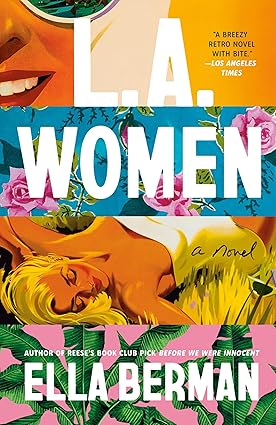
L.A. Women by Ella Berman
Two ambitious writers in 1960s LA face betrayal when one writes a novel based on the other's life.

Your guide toexceptional books
BookBrowse seeks out and recommends the best in contemporary fiction and nonfiction—books that not only engage and entertain but also deepen our understanding of ourselves and the world around us.

