
-
Your next favorite book
is waiting.
Summary | Excerpt | Reviews | Beyond the book | Read-Alikes | Genres & Themes | Author Bio
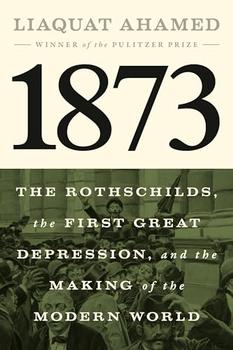
The Rothschilds, the First Great Depression, and the Making of the Modern World
by Liaquat Ahamed Book Reviewed by:
From the author of the Pulitzer Prize–winning Lords of Finance, a magnificent and timely reckoning with the first truly global financial calamity and the famous banking family at the center of the whirlwind.
Over the course of the 1850s and 1860s, during the first era of globalization, the world experienced an unprecedented economic boom. Fueling this expansion was an explosion in the global bond market, at the hub of which stood one family—the Rothschilds, arguably the wealthiest banking family in history. While the giant sums of capital provided through the bond market built the railroads, the century's most transformative investments, the money raised also unleashed a frenzy of speculation, massive overinvestment, and wasteful borrowing by governments.
With excessive euphoria leading to disappointed expectations, in the early 1870s the bubble burst. Stock markets from Vienna to New York crashed, and dozens of railroads and many governments defaulted. Financial officials responded by blundering into a precipitous remaking of the global currency system—exacerbating the ensuing economic collapse and setting the stage for decades of a punitive deflation that sparked waves of anti-globalist populism. As Liaquat Ahamed shows us in this enthralling history, the crisis of 1873 was, among other things, a death blow to Reconstruction in the United States and the proximate cause of the Ottoman Empire's slow death spiral. Ironically, though the Rothschilds had presciently kept a low profile during the bubble, when the deluge came, they were viciously scapegoated as part of a wider hatred directed at "Jewish finance," a strain of antisemitism that would come to full evil flower during the twentieth century.
1873 is a bird's-eye reckoning with the full dimension of the crisis, from its buildup to its long aftermath. The Rothschilds and a cast of other witnesses give us the human perspective. And we have a brilliant financial historian's grasp of the larger forces at play, resulting in a global narrative with thrilling explanatory power.
1.
In Bonds We Trust
As the 1860s ended, the world's economy had never appeared in better shape. Few events were more emblematic of its health than the successful completion, within a few months of one an-other, of three monumental and iconic infrastructure projects that promised to remake global commerce.
On May 10, 1869, several hundred luminaries and railroad workers gathered on the windswept plateau of Utah's Promontory Summit, north of the Great Salt Lake. They were there to witness the linking of the Central Pacific and Union Pacific Railroads, marked by the ceremonial driving of an eighteen karat gold spike into the tracks. The moment signaled the realization of the first transcontinental railroad across the United States, collapsing the New York–San Francisco journey from six months to a mere six days. It had taken seven years to build at an estimated cost of $70 million.
Scarcely six months later, in November 1869, a more extravagant ceremony unfolded halfway around the ...
Liaquat Ahamed's new nonfiction book 1873 is a compelling exploration of the mid-1800s United States and Europe through the lens of financial markets and monetary policy. Ahamed's story of 1873—the year of the market crash that led to what he calls "the first Great Depression"—is really two stories. The first is the economic boom that led up to the crash, which was fueled by a huge increase in the bond market and the stock market. The second story is the aftermath of persistent, punishing deflation. 1873 is full of so many compelling historical episodes and fascinating, colorful characters—the intermarrying and interbreeding Rothschilds, whose cautious attitude and deep pockets allowed them to weather all of these financial storms; the American bankers Jay Gould and Jay Cooke, who manipulated markets to get rich and screw over the American public; Karl Marx, who gets a brief, cameo-like write-up halfway through the book; and a cast of other bit players with various proximities to power and impacts on history. These sections are all individually interesting, although it can be easy to lose sight of the overarching narrative or argument of the book when you're in one of them—it's not always clear how a certain actor fits into the timeline...continued
Full Review
 (1035 words)
(Reviewed by Chloe Pfeiffer).
 Martin Wolf, author of The Crisis of Democratic Capitalism
Liaquat Ahamed has a unique ability to bring financial and monetary history to life. In this superb book, he weaves together the people, forces, and events that led to the global financial crisis of 1873 and then shaped its dire long-term consequences. Not least, he shows how a huge boom-and-bust cycle combined with the decision to make gold the sole monetary anchor, to create a first global 'great depression.' Rana Foroohar, author of Homecoming and Don't Be Evil
Pendulum shifts in the political economy happen slowly—and then all at once. In this fantastically readable history, Liaquat Ahamed shows us how frothy real estate markets, a burgeoning middle class, failing autocrats, a dodgy bond market, and other seemingly disparate forces eventually came together to produce the first global financial crisis of the modern era. It's a book that has all too much to tell us about our own time period; indeed, it provides both a warning and a roadmap for what might come next.
Martin Wolf, author of The Crisis of Democratic Capitalism
Liaquat Ahamed has a unique ability to bring financial and monetary history to life. In this superb book, he weaves together the people, forces, and events that led to the global financial crisis of 1873 and then shaped its dire long-term consequences. Not least, he shows how a huge boom-and-bust cycle combined with the decision to make gold the sole monetary anchor, to create a first global 'great depression.' Rana Foroohar, author of Homecoming and Don't Be Evil
Pendulum shifts in the political economy happen slowly—and then all at once. In this fantastically readable history, Liaquat Ahamed shows us how frothy real estate markets, a burgeoning middle class, failing autocrats, a dodgy bond market, and other seemingly disparate forces eventually came together to produce the first global financial crisis of the modern era. It's a book that has all too much to tell us about our own time period; indeed, it provides both a warning and a roadmap for what might come next.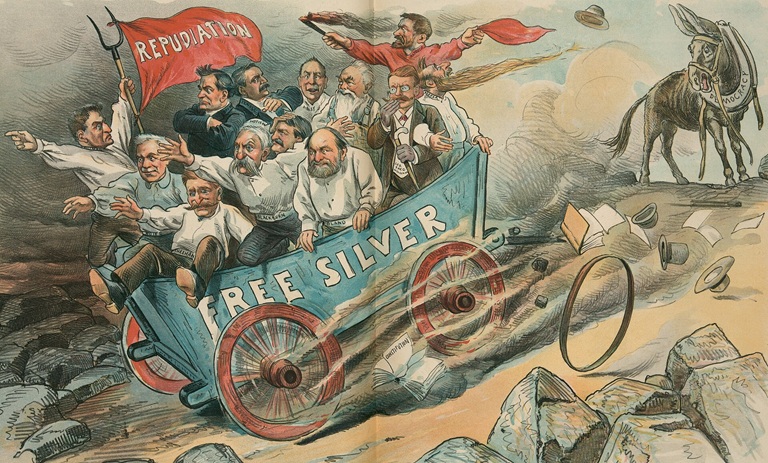 In his book of economic history 1873, Liaquat Ahamed connects much of the modern world to the events of 1873, which saw a stock market crash after years of frenzied speculation and, in the aftermath, the first international financial crisis. What made the crisis so impactful was not simply the bursting of the bubble but the Western monetary policy response to it. In these years, Europe and the United States moved away from a bimetallist system, in which their currency and liquidity were based on their reserves of gold and silver, to the gold standard, so that silver reserves no longer had any bearing on the country's money supply. (Some countries, like Britain, were already on the gold standard.)
The demonetization of silver exacerbated ...
If you liked 1873, try these:
by Matthew Desmond
Published 2024
The Pulitzer Prize–winning, bestselling author of Evicted reimagines the debate on poverty, making a new and bracing argument about why it persists in America: because the rest of us benefit from it.
by Hernan Diaz
Published 2023
An unparalleled novel about money, power, intimacy, and perception.
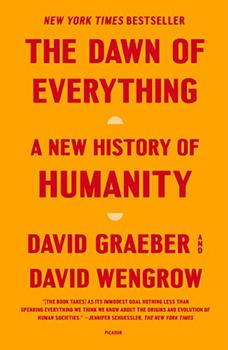
by David Graeber, David Wengrow
Published 2023
A dramatically new understanding of human history, challenging our most fundamental assumptions about social evolution―from the development of agriculture and cities to the origins of the state, democracy, and inequality―and revealing new possibilities for human emancipation.
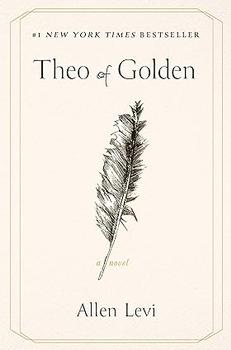
Theo of Golden by Allen Levi
One spring morning, a stranger arrives in the small southern city of Golden. No one knows where he has come from…or why…






