-
Your next favorite book
is waiting.
Summary | Excerpt | Reviews | Beyond the book | Read-Alikes | Genres & Themes | Author Bio

A Novel
by Cristina Rivera Garza Book Reviewed by:
In 1934, a young José Revueltas traveled to Tamaulipas to support the cotton workers' strike in Estación Camarón, which became the basis of his landmark novel Human Mourning.
In her own groundbreaking novel, Autobiography of Cotton, Cristina Rivera Garza recounts her grandparents' journey from mining towns to those same cotton fields as it intersects with Revueltas's life in a vivid and evocative history of cotton cultivation along the Mexico-US border.
Through archival research and personal narrative, Rivera Garza chronicles the way cotton transformed the borderlands by reconstructing the cotton workers' strike and reveals how cycles of deprivation and ecocide persist across generations. Deeply personal and politically acute, Rivera Garza crafts a new kind of border novel that tells how a brittle land radically altered her grandparents' lives and the territories they helped develop. An intimate fictionalization, Autobiography of Cotton reveals a rich social history of agricultural colonization, labor activism, environmental degradation, and cross-border migration.
I
ESTACIÓN CAMARÓN
[A wild wind; wind from the north]
The sound of hooves beating on the sandy ground comes first. Then the breathing, strained and short-winded. Panting. A snort. The white ground splits to allow the emergence of twisted acacias, with their rounded crowns and roots embedded deeply in the earth, and the thorny branches of mesquites, from which hang long, narrow pods and, now that it's almost spring, these yellow flowers. The galloping doesn't stop. Horseshoes dodge the spherical barrel cacti, whose burnished spiny tips appear here and there along the road. The white flowers of the anacahuita. The roadrunners. The worm lizards. Hadn't he been told this was a desert? There's no time to stop and look. From above, the light of an intransigent sun falls on the creosote bush, the coyotillo, the cat's claw. And the wind, raising the pinkish, gray, and cinnamon-colored dust of the plain, collides with the prickly pads of the nopal that ascend step by step, toward the ...
Interspersed with her grandparents' stories is that of Rivera Garza herself, as she attempts to trace her family's poorly documented history through land that has been torn apart by violence caused by the War on Drugs. She is often frustrated by the ways in which that history has been erased—records are missing or incorrect, José María's Indigenous heritage is left out of all records once he leaves his hometown, and even the entire settlement of Estación Camarón has been essentially wiped off the map. Despite the challenges she encounters and the many questions that can't be answered, she develops a closer connection to her ancestors through the journey. The book is an intimate exploration of how hardship echoes down through generations. The author shows how, time and again, her family has been forced to leave their home to survive. As she learns more of their history, she realizes that whichever direction she crosses the border, it is always a return to the home of the people she came from...continued
Full Review
 (905 words)
(Reviewed by Katharine Blatchford).
 Francisco Cantú, author of The Line Becomes a River
Autobiography of Cotton reclaims and reconstructs long-forgotten histories in long-dismissed corners of our continent, revealing the political and ancestral mythologies perpetually refracted and distilled by the Mexico-US borderlands. Cristina Rivera Garza has become an oracle of the in-between, confirming, with each new book, her status as one of North America's greatest living writers. Vanessa Angélica Villarreal, author of Magical/Realism
In the vast field between history, memory, and erasure, a sea of white gold: the cotton trade in postrevolutionary northern Mexico, and the tangled narrative roots of political, ecological, and epistemic violence beneath. Cristina Rivera Garza―mythmaker, archivist, historiographer, etymologist, and philosopher―brings down the veil between parallel countries and parallel histories and reveals the blood-soaked blossom between them: Gossypium hirsutum, crop and capital, thirsty driver of the economies, borders, bodies, and timelines that split along this continent's rivers. Autobiography of Cotton is a triumph of the critical and speculative imagination.
Francisco Cantú, author of The Line Becomes a River
Autobiography of Cotton reclaims and reconstructs long-forgotten histories in long-dismissed corners of our continent, revealing the political and ancestral mythologies perpetually refracted and distilled by the Mexico-US borderlands. Cristina Rivera Garza has become an oracle of the in-between, confirming, with each new book, her status as one of North America's greatest living writers. Vanessa Angélica Villarreal, author of Magical/Realism
In the vast field between history, memory, and erasure, a sea of white gold: the cotton trade in postrevolutionary northern Mexico, and the tangled narrative roots of political, ecological, and epistemic violence beneath. Cristina Rivera Garza―mythmaker, archivist, historiographer, etymologist, and philosopher―brings down the veil between parallel countries and parallel histories and reveals the blood-soaked blossom between them: Gossypium hirsutum, crop and capital, thirsty driver of the economies, borders, bodies, and timelines that split along this continent's rivers. Autobiography of Cotton is a triumph of the critical and speculative imagination..jpg
"José Revueltas") In Autobiography of Cotton, Cristina Rivera Garza first introduces readers to her grandparents at the point where their lives intersected with that of José Revueltas, an influential Mexican writer and political activist. Though she doesn't know if they ever spoke to him, in 1934 they were among the cotton workers at Estación Camarón whose strike he supported. His part in their lives was brief, but it highlights the ways in which their personal struggles are connected to wider systems of power.
In Autobiography of Cotton, Cristina Rivera Garza first introduces readers to her grandparents at the point where their lives intersected with that of José Revueltas, an influential Mexican writer and political activist. Though she doesn't know if they ever spoke to him, in 1934 they were among the cotton workers at Estación Camarón whose strike he supported. His part in their lives was brief, but it highlights the ways in which their personal struggles are connected to wider systems of power.
Revueltas was born in 1914 in the Mexican state of Durango and grew up in Mexico City. He came from a very creative family—his siblings included a composer, a painter, and an actress, all of whom made their own significant ...
If you liked Autobiography of Cotton, try these:

by John Manuel Arias
Published 2024
A lush and lyrical debut novel about a Costa Rican family wrestling with a deadly secret, from rising literary star John Manuel Arias
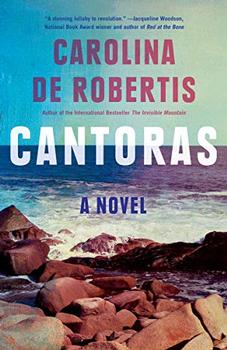
by Caro De Robertis
Published 2020
From the highly acclaimed, award-winning author of The Gods of Tango, a revolutionary new novel about five wildly different women who, in the midst of the Uruguayan dictatorship, find one another as lovers, friends, and ultimately, family.
by Vanessa Manko
Published 2015
Through the unforgettable character of Austin Voronkov, Manko explores the little-known period in American history of the Palmer Raids and the far-reaching implications of exile and loss.
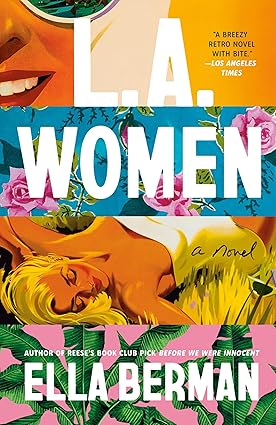
L.A. Women by Ella Berman
Two ambitious writers in 1960s LA face betrayal when one writes a novel based on the other's life.