
-
Your next favorite book
is waiting.
Summary | Excerpt | Reviews | Beyond the book | Read-Alikes | Genres & Themes | Author Bio

A Novel
by Cristina Rivera Garza Book Reviewed by:
Autobiography of Cotton starts in March of 1934 with the arrival of José Revueltas, an organizer for the Mexican Communist Party, to Estación Camarón in northern Mexico, to help local cotton workers with their strike. Among them are José María Rivera Doñez and his third wife Petra Peña Martinez, who were Cristina Rivera Garza's paternal grandparents. Though Revueltas is inspired by the people he finds there, he is arrested and the strike ultimately fails. It becomes one of many times Rivera Garza's ancestors were forced to leave their homes and start over, but this one was immortalized in a way most were not—through the classic novel Revueltas was inspired to write by his time with the workers (see Beyond the Book).
Autobiography of Cotton then backtracks to trace how José María and Petra reached Estación Camarón. It starts long before the couple met, when José María fell in love with his first wife, María Asunción. We follow them through their early days as a couple, including the death by pneumonia of their first child, and their decision to leave the town where Asunción grew up, to her final illness and death. The story continues with José María's experiences as a soldier, and his relationship with his second wife, Regina, before Petra is reintroduced. Only then do we see the choice they are faced with after the strike fails—to continue as poorly paid and badly treated farm laborers, to return to the dangerous mining work José María had done previously, or to gamble on a government offer of land to farmers willing to colonize the wilderness on the Mexico-United States border.
When she has finished telling her paternal grandparents' story, Rivera Garza switches to her maternal side. Both Cristino Garza Peña and Emilia Berma Arizpe immigrated to Texas as children. After their marriage in 1933, they decide to return to Mexico to be farm laborers. When a drought leaves them destitute, they accept a grant of land on which to grow cotton. Over the course of their lives together they struggle with social and ecological disasters, having to start over more than once.
Interspersed with her grandparents' stories is that of Rivera Garza herself, as she attempts to trace her family's poorly documented history through land that has been torn apart by violence caused by the War on Drugs. She is often frustrated by the ways in which that history has been erased—records are missing or incorrect, José María's Indigenous heritage is left out of all records once he leaves his hometown, and even the entire settlement of Estación Camarón has been essentially wiped off the map. Despite the challenges she encounters and the many questions that can't be answered, she develops a closer connection to her ancestors through the journey.
The book is an intimate exploration of how hardship echoes down through generations. The author shows how, time and again, her family has been forced to leave their home to survive. As she learns more of their history, she realizes that whichever direction she crosses the border, it is always a return to the home of the people she came from.
As much a part of the book as her family's story is the knowledge that has not been passed down to her, either deliberately or through chance. As the author makes clear, part of the reason for her search is the fact that her family didn't talk about their history as cotton workers. She says, "It was as if they were protecting us from that knowledge, that memory; or, now that I come to think of it, as if they had been protecting that knowledge and that memory from us all." More personal questions also go unanswered, such as the details in her paternal grandparents' marriage records that call into question whether Petra consented to the wedding or was forced into it.
One of the book's greatest strengths is Rivera Garza's beautiful prose, translated by Christina MacSweeney. It is full of both philosophical musing and sensory description:
"While the present is gradually erased, watermelons are still huge and sweet in a past that goes back to the farm but refuses to walk around the edges of cities. There, again, are the hands that held the freshly cut watermelon from the vegetable patch, only to dash it to the ground. The explosion of color, and juice, and seeds. Broken into many pieces, exposing its sweet, red insides, the watermelon was summer."
While I find it very effective, I think the structure and tone of the book will put some readers off. Rather than follow a single narrative to completion, it gives an overview of the lives of all the author's grandparents, only going in depth for brief moments of their lives. Despite being a fictionalization, there are asides about history and sociology that read more like a nonfiction book.
Autobiography of Cotton is an eloquent depiction of the joys, tribulations, and loves of people who are often overlooked by the governments on both sides of the border, which have been more interested in the extraction of resources than the human cost. It explores the cycle of disasters caused by this "terracide," as well as the resiliency of those who, like the author's family, are caught up in it. Rivera Garza invites readers to join her as she teases out what is left of her family's voices, and learns to accept the silence where there's nothing to find.
 This review
first ran in the March 11, 2026
issue of BookBrowse Recommends.
This review
first ran in the March 11, 2026
issue of BookBrowse Recommends.

If you liked Autobiography of Cotton, try these:

by John Manuel Arias
Published 2024
A lush and lyrical debut novel about a Costa Rican family wrestling with a deadly secret, from rising literary star John Manuel Arias
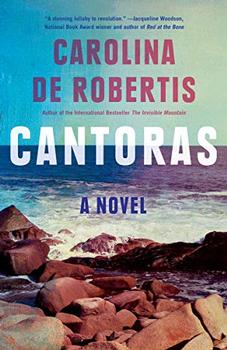
by Caro De Robertis
Published 2020
From the highly acclaimed, award-winning author of The Gods of Tango, a revolutionary new novel about five wildly different women who, in the midst of the Uruguayan dictatorship, find one another as lovers, friends, and ultimately, family.
by Vanessa Manko
Published 2015
Through the unforgettable character of Austin Voronkov, Manko explores the little-known period in American history of the Palmer Raids and the far-reaching implications of exile and loss.
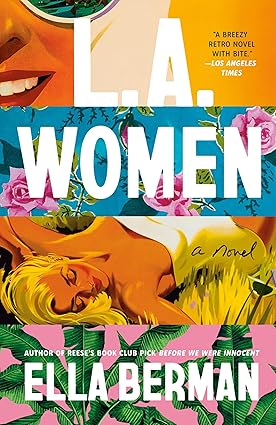
L.A. Women by Ella Berman
Two ambitious writers in 1960s LA face betrayal when one writes a novel based on the other's life.


Your guide toexceptional books
BookBrowse seeks out and recommends the best in contemporary fiction and nonfiction—books that not only engage and entertain but also deepen our understanding of ourselves and the world around us.

