
-
Your next favorite book
is waiting.
Summary | Excerpt | Reviews | Beyond the Book | Read-Alikes | Genres & Themes | Author Bio

A Novel
by Cristina Rivera Garza Book Reviewed by:
This article relates to Autobiography of Cotton

.jpg
"José Revueltas") In Autobiography of Cotton, Cristina Rivera Garza first introduces readers to her grandparents at the point where their lives intersected with that of José Revueltas, an influential Mexican writer and political activist. Though she doesn't know if they ever spoke to him, in 1934 they were among the cotton workers at Estación Camarón whose strike he supported. His part in their lives was brief, but it highlights the ways in which their personal struggles are connected to wider systems of power.
In Autobiography of Cotton, Cristina Rivera Garza first introduces readers to her grandparents at the point where their lives intersected with that of José Revueltas, an influential Mexican writer and political activist. Though she doesn't know if they ever spoke to him, in 1934 they were among the cotton workers at Estación Camarón whose strike he supported. His part in their lives was brief, but it highlights the ways in which their personal struggles are connected to wider systems of power.
Revueltas was born in 1914 in the Mexican state of Durango and grew up in Mexico City. He came from a very creative family—his siblings included a composer, a painter, and an actress, all of whom made their own significant contributions to the Mexican art world. At age sixteen, he joined the Mexican Communist Party, and at just nineteen he was sent to help organize the cotton farmworkers at Estación Camarón, as described in Rivera Garza's novel. The strike failed, and a severe drought followed by disastrous flooding led to the ultimate abandonment of the cotton fields.
This strike also had significant consequences for Revueltas, though they were different from those faced by the agricultural workers. In the aftermath, he and several of his fellow activists were arrested for spreading communist propaganda. They were imprisoned for nine months in Islas Marías, an island penal colony infamous for hard labor and disease. This harrowing experience inspired his first two novels: 1941's Los muros de agua (The Walls of Water), and 1943's El luto humano (Human Mourning, or The Stone Knife). The first deals with the lives of prisoners in the penal colony. The second revolves around the plights of four families from the area around Estación Camarón, including both strike leaders and breakers, who have already weathered the labor conflict and drought before being forced to flee the flood.
In 1943 Revueltas was expelled from the Communist Party due to conflicts with leadership, but he remained politically active. He also continued to write prolifically, producing screenplays for noir films, influential essays, short stories, and more novels. Throughout his life, Revuelta's literary work continued to be heavily influenced by his political activism. In 1949 he published Los días terrenales (Earthly Days), a novel set within the Communist Party of Mexico City, which was removed from circulation at the author's request after a very poor reception from fellow Marxists. The book was not available for over a decade, and was not translated into English until 2021.
Revueltas also taught film classes, and in 1968 he was involved in a nascent student movement marred by the Tlatelolco massacre, where soldiers fired into a crowd of thousands of gathered students who were demonstrating against state repression. The Mexican government at the time moved to cover up the incident, stating that the students had fired first and only four people were killed. It is still unclear what the actual death toll was, but forty deaths are documented and the true number may be much higher. In addition to the deaths, many protesters were detained, including Revueltas. This time he was imprisoned at the Palacio de Lecumberri. Like his earlier incarceration, this experience led him to write, and he published his most famous work, El apando (The Hole), the following year.
Revueltas died in 1976 at the age of sixty-one. In 2021, the Islas Marías prison complex that inspired his first novel was renamed the Muros de Agua José Revueltas Environmental and Cultural Education Center, which offers tours focused on both the area's tumultuous history and current ecological conservation efforts.
José Revueltas, courtesy of New Directions Publishing
Filed under Books and Authors
 This article relates to Autobiography of Cotton.
It first ran in the March 11, 2026
issue of BookBrowse Recommends.
This article relates to Autobiography of Cotton.
It first ran in the March 11, 2026
issue of BookBrowse Recommends.
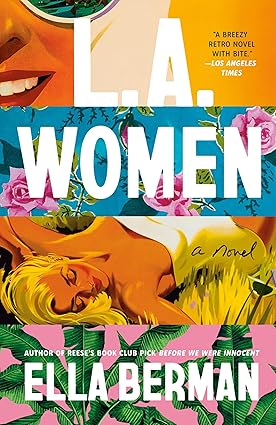
L.A. Women by Ella Berman
Two ambitious writers in 1960s LA face betrayal when one writes a novel based on the other's life.






Your guide toexceptional books
BookBrowse seeks out and recommends the best in contemporary fiction and nonfiction—books that not only engage and entertain but also deepen our understanding of ourselves and the world around us.

