
-
Your next favorite book
is waiting.

 Book Reviewed by:
Moored in a coastal fishing town so far north that the highways only run south, the unnamed narrator of The Seas is a misfit.
She's often the subject of cruel local gossip. Her father, a sailor, walked into the ocean eleven years earlier and never returned, leaving his wife and daughter to keep a forlorn vigil. Surrounded by water and beckoned by the sea, she clings to what her father once told her: that she is a mermaid.
True to myth, she finds herself in hard love with a land-bound man, an Iraq War veteran thirteen years her senior. The mesmerizing, fevered coming-of-age tale that follows will land her in jail. Her otherworldly escape will become the stuff of legend.
With the inventive brilliance and psychological insight that have earned her international acclaim, Samantha Hunt pulls readers into an undertow of impossible love and intoxication, blurring the lines between reality and fairy tale, hope and delusion, sanity and madness.
Set against a bucolic, alcoholic coastal town in the Pacific Northwest, The Seas' unnamed narrator is a young woman living with her mother and grandfather. She is in love with a local man named Jude, an older Gulf War veteran with PTSD. It's been 11 years since her father's disappearance, a probable drowning. Given the omnipresent ocean and her father's vanishing at sea, among other factors, the main character's identity becomes entwined with the water, to the extent that she comes to believe she's a mermaid. Anyone who's ever gotten lost in love will find themselves in good company here, as will anyone who feels like an outsider and knows a goth-tinged mermaid would understand. Really, it's a perfect companion for wallowing. Just because The Seas isn't plot-forward doesn't mean it isn't immaculately crafted. Rather, the author is obsessive about all the tiny details that comprise the book. The narrator's observations interlock to form a world where all of these things matter. She gives an exacting inventory of her life, how her mother used to keep spent light bulbs under the kitchen sink but now keeps coffee cans there instead. In this detailed accounting of minutiae, the pathos stands out even more...continued
Full Review
 (735 words)
(Reviewed by Erin Lyndal Martin).
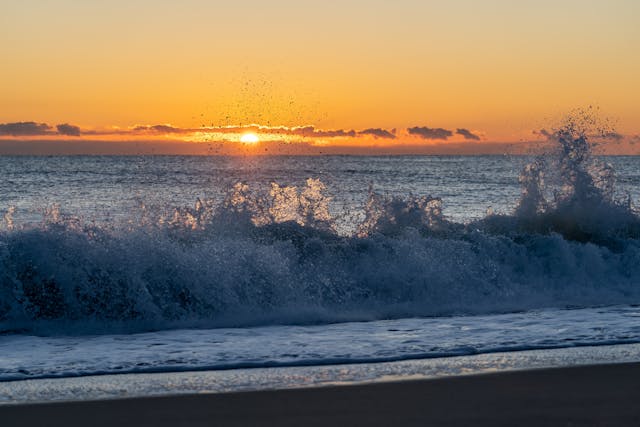 "That is how a small northern town in America works. It enlists one beautiful thing like the ocean or the mountains or the snow to keep people stuck and stagnant and staring out to sea forever. I watch the blue in the mirror. It is so beautiful that it is hard to look away," muses the unnamed speaker of Samantha Hunt's The Seas. It's not an idle statement so much as it is a summary of the novel, which relies on seaside isolation to mimic the speaker's own stagnation.
The ocean's omnipresence stands in for the speaker's inability to achieve escape velocity. While it's never stated what specific, concrete obstacles keep her from moving away from where she is living, it's clearly not an option for her. The book opens with the revelation ...
If you liked The Seas, try these:

by Marissa Higgins
Published 2026
From the author of A Good Happy Girl, a lesbian screwball comedy following two exes who turn to online dating after their dramatic split—only to end up seeing the same woman.

by Marie-Helene Bertino
Published 2025
A wise, tender novel about a woman who doesn't feel at home on Earth, by the acclaimed author of Parakeet.
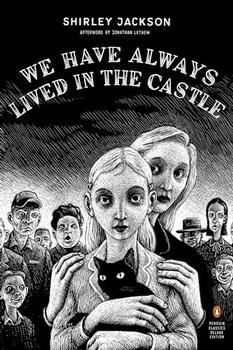
We Have Always Lived in the Castle
by Shirley Jackson
Published 1962
Shirley Jackson's beloved gothic tale of a peculiar girl named Merricat and her family's dark secret.

L.A. Women by Ella Berman
Two ambitious writers in 1960s LA face betrayal when one writes a novel based on the other's life.






