
-
Your next favorite book
is waiting.
Summary | Excerpt | Reading Guide | Reviews | Beyond the book | Read-Alikes | Genres & Themes | Author Bio

 Book Reviewed by:
Set against a bucolic, alcoholic coastal town in the Pacific Northwest, The Seas' unnamed narrator is a young woman living with her mother and grandfather. She is in love with a local man named Jude, an older Gulf War veteran with PTSD. It's been 11 years since her father's disappearance, a probable drowning. Given the omnipresent ocean and her father's vanishing at sea, among other factors, the main character's identity becomes entwined with the water, to the extent that she comes to believe she's a mermaid. Rather than lingering in bathtubs or singing haunting songs, her sirenic ways consist of feeling and acting like a displaced outsider. And no wonder: her city feels inescapable, so there is no other place for her to go. She lives so far north that the roads only go south, a cartographical image of isolation.
While plot advancement and dramatic tension are not centered, a micro-focus on language persists throughout. Just as the speaker's grandfather is writing and typesetting a dictionary, the author carefully considers every word. Her turns of phrase are often surprising and always inventive: "A rogue wave would stick out like this: Imagine you are reading a book and have arrived at a certain page, but imagine that when you arrived at that page instead of being five inches wide it is one hundred and ninety-eight feet wide. So wide that when you turn the page it crushes you." Through the dictionary subplot, we see language differently, sometimes literally, as when the narrator trips and falls on a typesetting case full of metal letters. Another nice linguistic touch is that the main character is a chambermaid at a tourist hotel called The Seas, where each room is named after a famous hurricane.
Anyone who's ever gotten lost in love will find themselves in good company here, as will anyone who feels like an outsider and knows a goth-tinged mermaid would understand. Really, it's a perfect companion for wallowing. Just because The Seas isn't plot-forward doesn't mean it isn't immaculately crafted. Rather, the author is obsessive about all the tiny details that comprise the book. The narrator's observations interlock to form a world where all of these things matter. She gives an exacting inventory of her life, how her mother used to keep spent light bulbs under the kitchen sink but now keeps coffee cans there instead. In this detailed accounting of minutiae, the pathos stands out even more.
Most of that pathos centers around Jude, and I'm never sure whether or not he deserves it. I have compassion for him, traumatized by the war and in the throes of alcoholism. The narrator, over a decade his junior, is smitten in ways that are seemingly meant to be uncomfortable. In one scene, she pretends she's giving birth to him. They aren't physically intimate and he tells her about other women he is having sex with, both good methods to avoid leading her on. Yet, he's always bringing her little gifts and letting her sit on his lap. And there are moments in which he protects her as a lover would, like when he beats up a guy who harasses her at a gas station.
While the narrator is clearly delusional, she is reliable in the sense that she is conveying her personal truths. In her mind, she is a mermaid, her love for Jude is affecting her vision, and King Neptune speaks to her in the surf. Some of these delusions clearly link to life events that affected her, like her father's probable drowning, and her surroundings. If she fled to a big city, would she retain her certainty that she's a mermaid? Would Jude's role in her life diminish? Or would it change nothing at all? As someone from a small town myself, I was especially interested in those questions. I was also eager to see how the author would handle them while staying true to her character. Thankfully, she crafted an excellent climax, and it felt organic even as it surprised me.
It's been sixteen years since I first read The Seas. Being older and hopefully wiser, I'm more able to see the dysfunction in the narrator's relationship with Jude. Yet, I'm still transported back to those wrenching, all-consuming feelings of love for someone who doesn't return them. And of course, I feel the stagnation that those feelings can cause, even when surrounded by the constant flux of the tide.
 This review
first ran in the November 5, 2025
issue of BookBrowse Recommends.
This review
first ran in the November 5, 2025
issue of BookBrowse Recommends.

If you liked The Seas, try these:

by Marissa Higgins
Published 2026
From the author of A Good Happy Girl, a lesbian screwball comedy following two exes who turn to online dating after their dramatic split—only to end up seeing the same woman.

by Marie-Helene Bertino
Published 2025
A wise, tender novel about a woman who doesn't feel at home on Earth, by the acclaimed author of Parakeet.
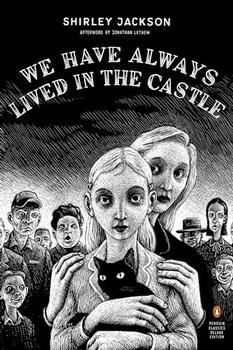
We Have Always Lived in the Castle
by Shirley Jackson
Published 1962
Shirley Jackson's beloved gothic tale of a peculiar girl named Merricat and her family's dark secret.

L.A. Women by Ella Berman
Two ambitious writers in 1960s LA face betrayal when one writes a novel based on the other's life.






Your guide toexceptional books
BookBrowse seeks out and recommends the best in contemporary fiction and nonfiction—books that not only engage and entertain but also deepen our understanding of ourselves and the world around us.

