-
Your next favorite book
is waiting.
Summary | Excerpt | Reviews | Beyond the book | Read-Alikes | Genres & Themes | Author Bio

A Novel
by Jessica Francis Kane Book Reviewed by:
The story acclaimed English author Penelope Fitzgerald never wrote, of her real-life journey to Mexico with her son in search of a much-needed inheritance, by Jessica Francis Kane, bestselling author of Rules for Visiting.
Winter 1952. Penelope Fitzgerald's husband is a struggling alcoholic, their literary journal is on the brink, and she is pregnant with their third child. When she receives a letter from two elderly sisters named Delaney, distant relations with a silver mine, who dangle the possibility of an inheritance, she recognizes it as a creative and practical lifeline.
Jessica Francis Kane's brilliantly imagined Fonseca fictionalizes Penelope's real and momentous trip to northern Mexico in pursuit of this legacy. She leaves her two-year-old, Tina, with relatives and sails for New York with her six-year-old, Valpy, in tow. From there, mother and son take a bus all the way to ... Fonseca.
But when they arrive, nothing goes to plan. There are others vying for the Delaney money, and for three months, from Day of the Dead to Candlemas, Penelope must navigate a quixotic household and guide her impressionable son. More and more people frequent the house: an ambitious American couple, various local entrepreneurs and artists (including Edward Hopper and his wife, Jo), and finally a handsome stranger who claims he is a Delaney.
With heart, humor, and a deep understanding of her subject that has characterized the range of her work her whole career, Kane (whose work "could have been written by Jane Austen's great great-great-granddaughter" —Oprah Daily) has written much more than an homage: Fonseca is an enthralling world of its own as well as a stunning fictionalization of a season in Fitzgerald's life.
Day of the Dead
In 1952 November 2 fell on a Sunday, and that afternoon a mother and son stood in front of the Delaney house in Fonseca, Mexico, poised to knock. They had traveled a long way, were quite stunned, mainly from the last leg of their journey through the American South, and now it was late afternoon the day after the day they were supposed to have arrived. The season was warm, and in the square behind them people were wearing calaveras and the air smelled of smoke and marigolds. In the distance and also quite nearby they heard the pop and spray of fireworks. A band was playing in the square, the music brassy and bright, punctuated by shouts. It was all very disconcerting, and even though he didn't know who or what was behind the door, the boy wanted to go inside. In all his six years, he had never entered a house that did not have someone making or about to make tea. But his mother would not knock.
"This isn't a holiday," Valpy said, turning to sit down on the front step. A ...
Kane's novel opens with mother and son arriving at the Delaney mansion in Fonseca, Mexico. They are met by the taciturn housekeeper, Chela, who seems surprised by Valpy's young age and even more surprised to see Penelope on the doorstep with him, as though Valpy might somehow have managed to travel to Mexico on his own. This first strange misunderstanding sets the scene for many others to come, and the novel is awash in various forms of cultural miscommunication, interpersonal misinterpretation, and purposeful misdirection. The old house itself is brimming with hidden histories, family mysteries, and hauntings both real and imagined. Fascinating characters populate the Delaney household, including the staff, the elderly sisters-in-law, Doña Elena and Doña Anita, and the tight group of supplicants that surround them...continued
Full Review
 (904 words)
(Reviewed by Danielle McClellan).
 Ann Napolitano, #1 New York Times bestselling author of Hello Beautiful
Fonseca is a beautifully written novel about a woman searching for her own story during a precarious moment in her life. Read this book for the mystery, for the joy of encountering the complicated marriage of the artists Jo and Edward Hopper, for the love stories of the main character Penelope: with a handsome stranger, her charming, alcoholic husband, her children, and with herself. This is the novel Penelope Fitzgerald was unable, or unwilling, to write during her own lifetime, and it chimes with quiet, perfect notes. I loved it. Lynn Steger Strong, author of Want
Miraculously, wrenching and charming, imaginative and true, Jessica Francis Kane's Fonseca brings the indomitable Penelope Fitzgerald, and this entrancing world of Fonseca, to life. We watch riveted as Fitzgerald grasps at and grabs for the freedom, the art, that so many of us yearn toward, continue doggedly to search for, even as circumstance, family, the dredges and seductions of life continue to get in our way.
Ann Napolitano, #1 New York Times bestselling author of Hello Beautiful
Fonseca is a beautifully written novel about a woman searching for her own story during a precarious moment in her life. Read this book for the mystery, for the joy of encountering the complicated marriage of the artists Jo and Edward Hopper, for the love stories of the main character Penelope: with a handsome stranger, her charming, alcoholic husband, her children, and with herself. This is the novel Penelope Fitzgerald was unable, or unwilling, to write during her own lifetime, and it chimes with quiet, perfect notes. I loved it. Lynn Steger Strong, author of Want
Miraculously, wrenching and charming, imaginative and true, Jessica Francis Kane's Fonseca brings the indomitable Penelope Fitzgerald, and this entrancing world of Fonseca, to life. We watch riveted as Fitzgerald grasps at and grabs for the freedom, the art, that so many of us yearn toward, continue doggedly to search for, even as circumstance, family, the dredges and seductions of life continue to get in our way.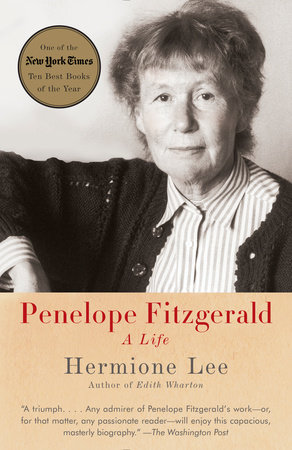 The British writer Penelope Fitzgerald is famously known for having published her first novel at the age of sixty and then winning the prestigious Booker Prize for her third novel two years later. In fact, becoming a writer was always Fitzgerald's plan, but life led her down an unexpected path marred with painful, sometimes tragic turns. Only in her sixties would Fitzgerald have the time and freedom to find sure footing as a fiction writer, and her growth as an artist was ultimately fortified by her earlier experiences in a life that she never could have anticipated.
As Hermione Lee's excellent biography, Penelope Fitzgerald: A Life, reports, Penelope Mary Knox was born in 1916 into a large, close-knit creative family which she ...
If you liked Fonseca, try these:

by Nell Stevens
Published 2026
In a grand English country house in 1899, an aspiring art forger must unravel whether the man claiming to be her long-lost cousin is an impostor.

by Tan Twan Eng
Published 2024
From the bestselling author of The Garden of Evening Mists, a spellbinding novel about love and betrayal, colonialism and revolution, storytelling and redemption.
by Rachel Cusk
Published 2022
From the author of the Outline trilogy, a fable of human destiny and decline, enacted in a closed system of intimate, fractured relationships.
L.A. Women by Ella Berman
Two ambitious writers in 1960s LA face betrayal when one writes a novel based on the other's life.