
-
Your next favorite book
is waiting.
Summary | Excerpt | Reviews | Beyond the Book | Read-Alikes | Genres & Themes | Author Bio

A Novel
by Jessica Francis Kane Book Reviewed by:
This article relates to Fonseca

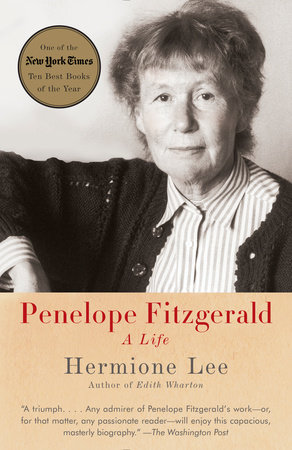 The British writer Penelope Fitzgerald is famously known for having published her first novel at the age of sixty and then winning the prestigious Booker Prize for her third novel two years later. In fact, becoming a writer was always Fitzgerald's plan, but life led her down an unexpected path marred with painful, sometimes tragic turns. Only in her sixties would Fitzgerald have the time and freedom to find sure footing as a fiction writer, and her growth as an artist was ultimately fortified by her earlier experiences in a life that she never could have anticipated.
As Hermione Lee's excellent biography, Penelope Fitzgerald: A Life, reports, Penelope Mary Knox was born in 1916 into a large, close-knit creative family which she described as "distinguished by alarming honesty, caustic wit, shyness, moral rigour, willpower, oddness and powerful banked-down feelings." Like generations of Knoxes before her, she went to college at Oxford, where she found great success and popularity, graduating with top marks and named Woman of the Year by her class. She had no question about her next steps: "I have been reading steadily for seventeen years. I want to start writing." It was 1938, and life so far suggested easy inevitability.
Then came 1939 and the Second World War. Like others her age, Penelope turned her attention to the war effort, taking a job first at the Ministry of Food and then at the BBC in 1940. That year, she met Desmond Fitzgerald, "one of the great charmers of all time" who was a trainee barrister and a lieutenant in the Irish Guards. The two married in 1942, but were soon parted when the Irish Guards were dispatched to North Africa, then Italy. Desmond returned home two years later with an Iron Cross, but he was "profoundly changed."
With Desmond, Penelope created a family—Valpy in 1947, followed by Tina in 1950 and Maria in 1953—as she pursued her literary ambitions. In 1950, the family settled into Chestnut Lodge, an elegant house in Hampstead, where according to friends they lived a messy, bohemian life. Desmond and Penelope became co-editors of the literary journal World Review, which included a story by the young writer JD Salinger in its inaugural issue. Penelope worked hard, tending to the journal while continuing to write scripts for the BBC and short reviews for the satirical magazine Punch. They earned little and lived beyond their means, and Desmond's drinking began to spiral.
In 1952, the journal folded. Early in 1959, everything once again came to a head, and the family's possessions were put out on the pavement and sold by auctioneers. In 1960, Penelope took work as a teacher at a drama school and moved her family back to London and onto an old wooden barge that they named Grace. The boat was chilly and damp, and the family lived off fried potatoes, fried eggs, and toast. Then, a few years later, Grace sank, taking most of the family's possessions down with her. The family lived for four months in a homeless shelter, then temporary housing, and then finally a council flat, where they would live for the next eleven years.
Penelope started her literary career at 58 and published two biographies. She wrote her first novel, The Golden Child (1977), a murder mystery, to entertain Desmond during his final illness. He died in August 1976. Her early novels draw on biographical details: her second novel, The Bookshop (1978), is based on her days working at a bookstore in Suffolk; Offshore (1979), which won the Booker Prize, is a fictionalized retelling of the family's life on the barge; Human Voices (1980) relies upon her BBC experiences during wartime; and At Freddie's (1982) takes place at a Drama School. At this point, Fitzgerald decided that she was finished with stories from her past and she moved on to write a series of well-received literary historical novels. She died in 2000.
In her biography, Lee quotes Fitzgerald as saying that her writing "focused on the courage of those who are born to be defeated, the weaknesses of the strong, and the tragedy of misunderstandings and missed opportunities which I have done my best to treat as comedy, for otherwise how can we manage to bear it?"
Filed under Books and Authors
 This article relates to Fonseca.
It first ran in the August 27, 2025
issue of BookBrowse Recommends.
This article relates to Fonseca.
It first ran in the August 27, 2025
issue of BookBrowse Recommends.
L.A. Women by Ella Berman
Two ambitious writers in 1960s LA face betrayal when one writes a novel based on the other's life.

Your guide toexceptional books
BookBrowse seeks out and recommends the best in contemporary fiction and nonfiction—books that not only engage and entertain but also deepen our understanding of ourselves and the world around us.

