
-
Your next favorite book
is waiting.
Summary | Excerpt | Reviews | Beyond the book | Read-Alikes | Genres & Themes | Author Bio

A Novel
by Jessica Francis Kane Book Reviewed by:
In late 1952, the writer Penelope Fitzgerald and her husband Desmond faced severe financial troubles, and the literary magazine they co-edited, World Review, was failing. In addition, Desmond's alcoholism was increasingly spinning out of control and Penelope was three months pregnant with their third child. When Penelope received a surprising invitation to Mexico from distant family connections, two elderly women named Delaney, who hinted that her five-year-old son, Valpy, might inherit their silver-mine fortune, she saw a possible Hail Mary solution to the family's financial problems. She immediately arranged care for her two-year-old daughter, Tina, left Desmond in charge of the upcoming journal issue, and travelled with Valpy by ship from Southampton, England, to New York, then on by bus to Mexico.
In an essay for the London Review of Books written almost thirty years later, Fitzgerald described only the bare bones of their ultimately disastrous three-month stay at the Delaney mansion in the Mexican town she fittingly calls Fonseca (a Spanish name derived from fonte seca, meaning "dry well"). On the night that they arrived, she discovered that the Delaney women were well on their way to "drinking themselves steadily to death," and were already surrounded by others competing for the fortune, all of whom "wanted to get rid of me and my son as soon as possible." Soon, more "pretenders" showed up, including a mysterious man claiming to be a close relation of the ladies. Many odd events occurred, including an accidental death, for which she and Valpy were somehow blamed. Finally, she reports, "we left on the long-distance bus without a legacy, but knowing what it was to be hated." As much as she would have liked to have written about her time in Mexico, she realized that the entire experience already felt like fiction, and that she would not be able to write it in a way that could possibly sound believable. "I knew that I hadn't the capacity to relate the wide-spreading complications of the Mexican legacy, however well I remembered them," but, she added, "I am sorry to let it go."
In her new novel, Fonseca, Jessica Francis Kane has taken up the gauntlet and reimagined the Mexico story that Fitzgerald was never able to write. This is no mean feat. Fitzgerald left behind sparse breadcrumbs: she rarely spoke to friends or family of her time in Mexico and there were few surviving letters, notes, or accounts of the trip. Perhaps this has ultimately worked in Kane's favor; unobstructed by the complications of the true story, she has had the freedom to create a fully cohesive fictional narrative. Kane observes in the acknowledgments that she and Fitzgerald share an interest in the relationship between history, biography, and fiction, and this novel is a beautiful blend of research and imagination.
Kane's novel opens with mother and son arriving at the Delaney mansion in Fonseca, Mexico. They are met by the taciturn housekeeper, Chela, who seems surprised by Valpy's young age and even more surprised to see Penelope on the doorstep with him, as though Valpy might somehow have managed to travel to Mexico on his own. This first strange misunderstanding sets the scene for many others to come, and the novel is awash in various forms of cultural miscommunication, interpersonal misinterpretation, and purposeful misdirection. The old house itself is brimming with hidden histories, family mysteries, and hauntings both real and imagined.
Fascinating characters populate the Delaney household, including the staff, the elderly sisters-in-law, Doña Elena and Doña Anita, and the tight group of supplicants that surround them, competing with and undermining one another, and all nurturing plans for important projects that would be possible only with a chunk of the Delaney legacy (a fleet of book mobiles, a national bird museum, a hospital wing, church repairs, a garden club and azalea society, and a silver guild, amongst others). The artist Edward Hopper and his wife Jo are also staying in the village, and Jo becomes the only friend that Penelope makes during her stay (a plot point based on Kane's research: she discovered that the Hoppers were indeed based in the same area when Fitzgerald was in Mexico). Kane also, to great effect, interweaves portions of letters that she received from the real Valpy and his sister Tina, who provide the few memories that they each have of the time.
In this story of an ultimately fruitless excursion, Kane expertly conjures a narrative vision all her own, even as she remains ever faithful to her source. Her fictional retelling fleshes out details of the Mexican sojourn that Fitzgerald only hints at in her essay: the arrival of a mysterious stranger claiming to be a lost Delaney relative; the accidental death and why Penelope and Valpy might have been blamed for it; and the challenges at home in England that might have led Fitzgerald to take on such a wildly improbable undertaking. Echoes of Fitzgerald can even be found in the novel's style, in its spare sentences and understated observations. After leaving Mexico, the character Penelope reflects that "Fonseca wasn't a place.…If anything it was an idea, or a time. It was a dry well. It was certainly the end of a dream and the beginning of a long wait." Here, Kane has tapped into a deep vein that runs through all of Penelope Fitzgerald's work: what her biographer Hermione Lee calls "the power and value of failure in the world."
 This review
first ran in the August 27, 2025
issue of BookBrowse Recommends.
This review
first ran in the August 27, 2025
issue of BookBrowse Recommends.

If you liked Fonseca, try these:

by Nell Stevens
Published 2026
In a grand English country house in 1899, an aspiring art forger must unravel whether the man claiming to be her long-lost cousin is an impostor.

by Tan Twan Eng
Published 2024
From the bestselling author of The Garden of Evening Mists, a spellbinding novel about love and betrayal, colonialism and revolution, storytelling and redemption.
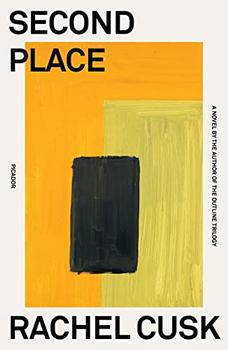
by Rachel Cusk
Published 2022
From the author of the Outline trilogy, a fable of human destiny and decline, enacted in a closed system of intimate, fractured relationships.
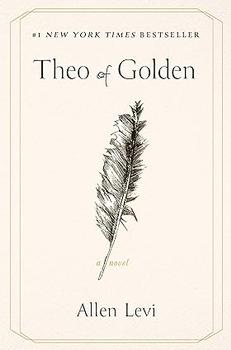
Theo of Golden by Allen Levi
One spring morning, a stranger arrives in the small southern city of Golden. No one knows where he has come from…or why…




Your guide toexceptional books
BookBrowse seeks out and recommends the best in contemporary fiction and nonfiction—books that not only engage and entertain but also deepen our understanding of ourselves and the world around us.

