
-
Your next favorite book
is waiting.
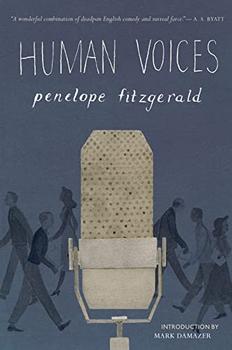
by Penelope Fitzgerald
When British listeners tuned in to the BBC's Nine O'Clock News in the middle of 1940, they had no idea what human dramas—and follies—were unfolding behind the scenes.
Targeted by enemy bombers, the BBC had turned its concert hall into a dormitory for both sexes, and personal chaos rivaled the political. Amidst the bombs and broadcasts two program directors fight for power while their younger female assistants fall prey to affairs, abandonment, and unrequited love. Reading this intimate glimpse behind the scenes of the BBC in its heyday, "one is left with the sensation," William Boyd wrote in London Magazine, "that this is what it was really like."
" Awards are one thing, talent's another, and Fitzgerald has it in spades. Warm and wry, her writing is as economical as it is perfect. It's always a pleasure to see a new book under her name." —The Washington Post
This information about Human Voices was first featured
in "The BookBrowse Review" - BookBrowse's membership magazine, and in our weekly "Publishing This Week" newsletter. Publication information is for the USA, and (unless stated otherwise) represents the first print edition. The reviews are necessarily limited to those that were available to us ahead of publication. If you are the publisher or author and feel that they do not properly reflect the range of media opinion now available, send us a message with the mainstream reviews that you would like to see added.
Any "Author Information" displayed below reflects the author's biography at the time this particular book was published.
Penelope Fitzgerald wrote many books small in size but enormous in popular and critical acclaim over the past two decades. Over 300,000 copies of her novels are in print, and profiles of her life appeared in both The New Yorker and The New York Times Magazine. In 1979, her novel Offshore won Britain's Booker Prize, and in 1998 she won the National Book Critics Circle Prize for The Blue Flower. Though Fitzgerald embarked on her literary career when she was in her 60's, her career was praised as "the best argument ... for a publishing debut made late in life" (New York Times Book Review). She told the New York Times Magazine, "In all that time, I could have written books and I didn't. I think you can write at any time of your life." Dinitia Smith, in her New York Times Obituary of May 3, 2000, quoted Penelope Fitzgerald from 1998 as saying, "I have remained true to my deepest convictions, I mean to the courage of those who are born to be defeated, the weaknesses of the strong, and the tragedy of misunderstandings and missed opportunities, which I have done my best to treat as comedy, for otherwise how can we manage to bear it?"

If you liked Human Voices, try these:

by Charlotte Runcie
Published 2026
A theater critic at the Edinburgh Festival Fringe writes a vicious one-star review of a struggling actress he has a one-night stand with in this sharply funny, feminist tinderbox.
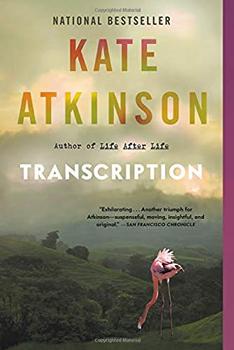
by Kate Atkinson
Published 2019
A dramatic story of WWII espionage, betrayal, and loyalty, by the #1 bestselling author of Life After Life.
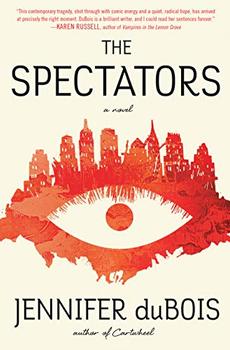
by Jennifer duBois
Published 2019
A shocking crime triggers a media firestorm for a controversial talk show host in this provocative novel - a story of redemption, a nostalgic portrait of New York City, and a searing indictment of our culture of spectacle.


These are not books, lumps of lifeless paper, but minds alive on the shelves
Click Here to find out who said this, as well as discovering other famous literary quotes!

Can you name the title?
Test your book knowledge with our daily trivia challenge!
Your guide toexceptional books
BookBrowse seeks out and recommends the best in contemporary fiction and nonfiction—books that not only engage and entertain but also deepen our understanding of ourselves and the world around us.

