-
Your next favorite book
is waiting.
Summary | Excerpt | Reviews | Beyond the book | Read-Alikes | Genres & Themes | Author Bio

A Novel
by Charlotte Runcie Book Reviewed by:
A theater critic at the Edinburgh Festival Fringe writes a vicious one-star review of a struggling actress he has a one-night stand with in this sharply funny, feminist tinderbox.
Alex Lyons always has his mind made up by the time the curtain comes down at a performance—the show either deserves a five-star rave or a one-star pan. Anything in between is meaningless. On the opening night of the Edinburgh Festival Fringe, he doesn't deliberate over the rating for Hayley Sinclair's show, nor does he hesitate when the opportunity presents itself to have a one-night stand with the struggling actress.
Unaware that she's gone home with the theater critic who's just written a career-ending review of her, Hayley wakes up at his apartment to see his scathing one-star critique in print on the kitchen table, and she's not sure which humiliation offends her the most. So she revamps her show into a viral sensation critiquing Alex Lyons himself—entitled son of a famous actress, serial philanderer, and by all accounts a terrible man. Yet Alex remains unapologetic. As his reputation goes up in flames, he insists on telling his unvarnished version of events to his colleague, Sophie. Through her eyes, we see that the deeper she gets pulled into his downfall, the more conflicted she becomes. After all, there are always two sides to every story.
A brilliant Trojan horse of a book about art, power, misogyny, and female rage, Bring the House Down is a searing, insightful, and often hilarious debut that captures the blurred line between reality and performance.
WEEK ZERO
Saturday, 29 July
Alex Lyons opened his laptop and wrote the review in the space of forty-five minutes after the show ended. It was a one-star review. He didn't agonise over that rating—I'd never seen him agonise over anything. The solo performance art¬ist, Hayley Sinclair, had a lot to say about the climate emergency, the patriarchy, and the looming end of the world, which was fair enough, but unfortunately her show was so terrible that, by half an hour in, Alex had decided that he actually wanted the world to end as soon as possible. Then, at least, he'd never have to risk seeing one of her performances again. That was a good line, so he put it in. He wrote hunched on a low wall outside the venue, thinking about where he could get a drink afterwards.
Alex was chief theatre critic for the national newspaper where I was a junior writer on the culture desk. We'd both worked at the paper for years, but that year, for the first time, Alex and I were both away from London...
It's no great shock that Alex—upon seeing a debut play entitled Climate Emergence-She—quickly dashes off a one-star review of the "tedious and derivative" one-woman show by a young American playwright, Hayley Sinclair. What does surprise Sophie, however, is when she wakes up the next morning at the company-procured flat she's sharing with Alex and discovers that the very same Hayley Sinclair has apparently spent the night with Alex, blissfully unaware (until the paper hits newsstands in a few hours, at least) that her one-night stand has publicly skewered her work...Sophie's first-person narration puts readers inside the mental origami she folds in order to justify Alex's behavior and her own complicity in continuing to befriend him, even after ever more damning stories come to light. What's remarkable is that Runcie manages to keep Sophie a predominantly sympathetic character, despite her self-delusions and, at times, ethically questionable behavior...continued
Full Review
 (668 words)
(Reviewed by Norah Piehl).
 Claire Lombardo, New York Times bestselling author of The Most Fun We Ever Had and Same As It Ever Was
Bring the House Down is sharp-witted, wise, and authentic—what a fierce, fantastically funny read. Nathan Hill, New York Times bestselling author of Wellness and The Nix
An astounding debut about the fraught relationship between artist and critic, truth and publicity, men and women. Bring the House Down reminds us how unwise it is to make easy judgments about people or art—which does not stop me from giving Charlotte Runcie five big stars.
Claire Lombardo, New York Times bestselling author of The Most Fun We Ever Had and Same As It Ever Was
Bring the House Down is sharp-witted, wise, and authentic—what a fierce, fantastically funny read. Nathan Hill, New York Times bestselling author of Wellness and The Nix
An astounding debut about the fraught relationship between artist and critic, truth and publicity, men and women. Bring the House Down reminds us how unwise it is to make easy judgments about people or art—which does not stop me from giving Charlotte Runcie five big stars.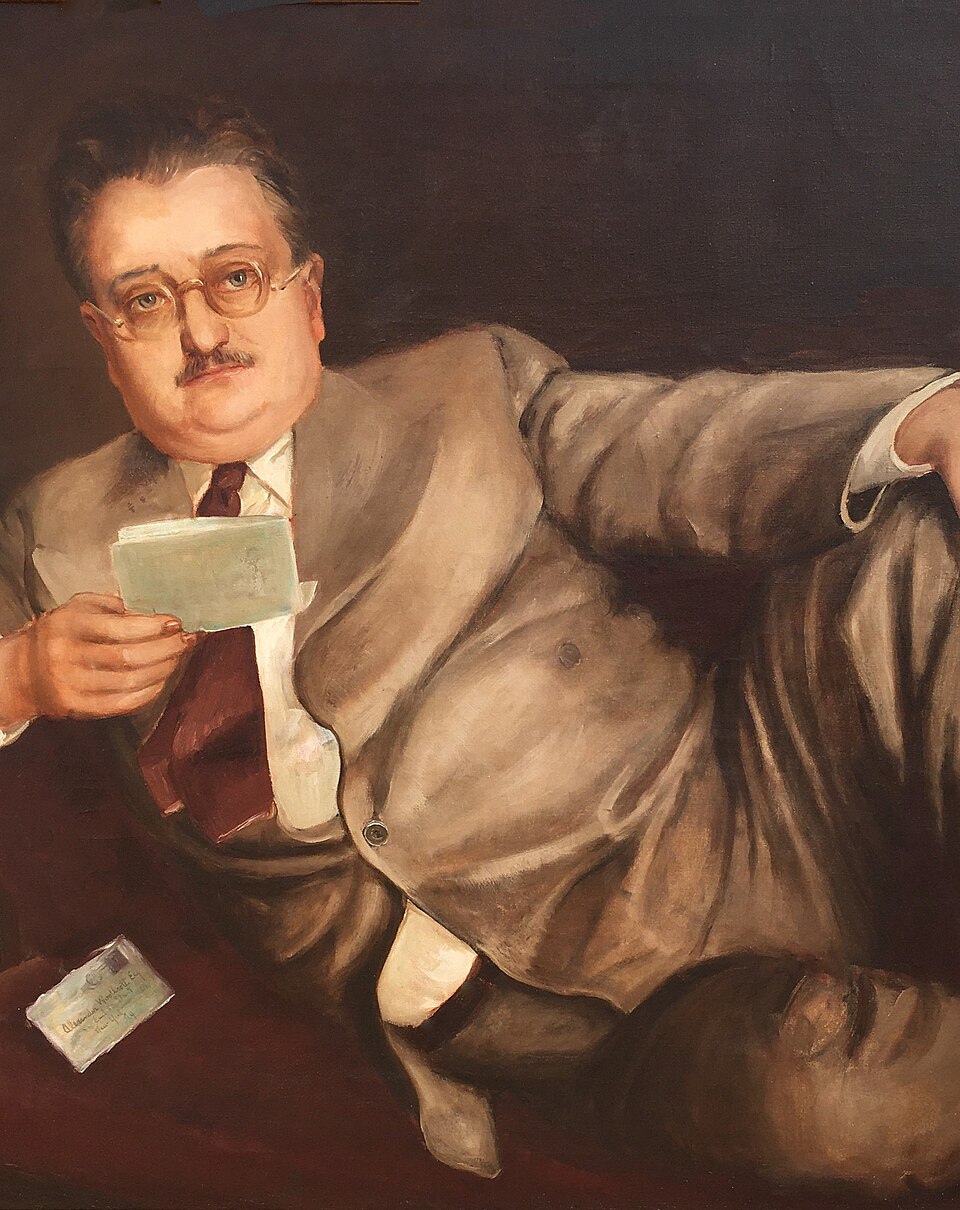 The jumping-off point for Charlotte Runcie's Bring the House Down is a one-star review of a one-woman play. Her fictional theater critic Alex Lyons claims "people like reading bad reviews." Apparently Lyons is not alone in this belief; the annals of theater history are awash in notoriously vitriolic critics.
Alexander Woollcott was a theater critic for the New York Times and the New York Herald in the early twentieth century, and a member of the Algonquin Round Table. For a time, theater owners the Shubert brothers banned Woollcott from their venues, since his negative reviews had doomed too many of their productions to failure. But according to a 1927 article from Time magazine, Woollcott was creative, too: "Manhattanites ...
If you liked Bring the House Down, try these:

by Mischa Berlinski
Published 2026
An exuberant, darkly humorous novel by the National Book Award–nominated author of Fieldwork.
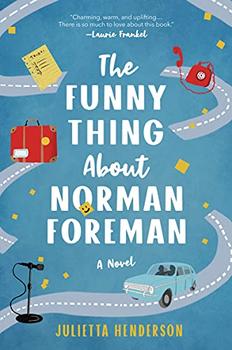
The Funny Thing About Norman Foreman
by Julietta Henderson
Published 2022
Julietta Henderson's delightfully charming, tender and uplifting debut takes us on a road trip with a mother and son who will live in the reader's heart for a long time to come, and teaches us that--no matter the odds--we must always reach for the stars.

by Susan Choi
Published 2020
Pulitzer finalist Susan Choi's multi-part, narrative-upending novel.
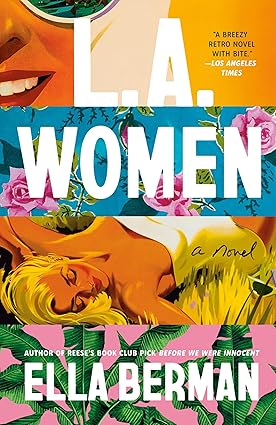
L.A. Women by Ella Berman
Two ambitious writers in 1960s LA face betrayal when one writes a novel based on the other's life.