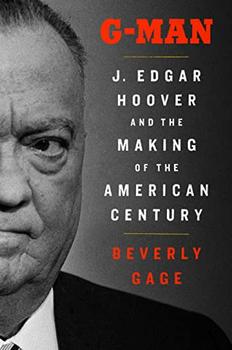
G-Man: J. Edgar Hoover and the Making of the American Century
by Beverly Gage
77 Years of Timeless American Tales (12/29/2025)
Beverly Gage wrote a biography of J. Edgar Hoover and states in the introduction that she does not necessarily count herself among his admirers. Her book, “G-Man,” explains why his story is important. Hoover’s long career, from Woodrow Wilson to Richard Nixon, includes many key moments in American history. The man remained an enigma socially and professionally despite key roles in the American government.
Hoover’s blind obsession with fighting Communism interested me the most, since the man managed to remain popular among Republicans and Democrats for the majority of his career. FDR’s programs challenged him in this unique way. For people my age, you will see a perspective on life after Pearl Harbor, and the lead-up to the Million Man March offers a view we clearly did not have before reading.
People of my generation tend to remember teachings as “one-way.” A Southerner like Hoover supported segregation because he thought that it protected his way of life. For this reason, you do not know right away (unless you already had an opinion on him) if you are reading about a hero or an antihero until the middle.
I am an amateur historian and have a working knowledge of most events in American history, but Hoover’s tenure is an excellent vehicle for telling many stories. The change of our country’s support of war, among many, includes assassinations encouraged by violent rhetoric, and motivating Americans through fear seems like a new idea until you research it.
According to Beverly Gage's book, G-Man: J. Edgar Hoover and the Making of the American Century, this biography presents a thoroughly researched account of Hoover's life that is as compelling as fiction and offers readers a new appreciation for this period in American history. It is a perfect tool to explain 77 years of sheer unpredictability.

COMBEE: Harriet Tubman, the Combahee River Raid, and Black Freedom during the Civil War
by Edda L. Fields-Black
Great Story, Too Much Detail (12/14/2025)
"Combee: Harriet Tubman, the Combahee River Raid, and Black Freedom during the Civil War" by Edda L. Fields-Black tells a story that I am confident you have never heard before. We need a ton of background on Tubman on the Eastern Shore of Maryland and the enslaved near the Combahee River to set the deep stage for a historic revolt.
Fields-Black makes a classy move by stressing to readers that the book is not a Tubman biography and recommending two great biographies for those seeking one. I prefer reading those. This book had so much setup that I felt guilty waiting for someone to die. I think that the raid did not start until page 325, and my patience did not.
To turn a negative into a positive, I will read other Tubman topics. The story could be amazing in different hands. Usually, I avoid responsibility by reading, but I found myself putting this one off. It picks up, surprisingly, after the raid, when Tubman works her magic and rallies the troops. Then, it inspires, but it takes a long time to get there.
It culminates in a celebration of language and individual liberty once all the introductions end, to the point that you feel bad about not enjoying the first part. Once you read the afterword, you will hear about the aftermath and triumphs that do not have the same effect in the main text. It is an odd feeling.
Fields-Black is a Professor of History at Carnegie Mellon and a good one, given the amount of research and detail included. It did not add up to a very entertaining novel for me. She did, however, remind me of how many amazing stories exist from this dark time in your history. I wanted to like it much more.

The Covenant of Water
by Abraham Verghese
A Long Book for People Who Don't Like Long Books (11/28/2025)
"The Covenant of Water" by Abraham Vergese sat on my bedside table for two years, as its intimidating size and depth made me nervous. It was worth it for me. There is enough going on to justify the length. A true sign of a great writer is when they make the story engaging before everything comes together and jells.
The plot, which you could find anywhere, deals with a family with a mysterious death by drowning every generation, resulting in 77 years of love, suffering, dramatic events, and severed family ties. Multiple story lines will make you miss characters when they are gone for too long. Even Digby, technically an adulteress, will arouse your empathy as he experiences unspeakable tragedy.
Philipose is another character who will make you sad as he struggles with deafness and the family's water curse. His knowledge of how to manage his abilities reflects how people who are hard of hearing persevere and behave differently from the rest of us. He becomes a parent and makes mistakes as a husband and parent that most may recognize.
Reading reviews written by others shows an unnatural focus on length. People consistently drudged through the 715 pages. That aspect did not bother me, given the many timelines to finish, though it is a fair point to consider when accounting for taste. My thumb stays up because Vergese does not linger too long on any one topic and thoroughly explains his premise.
When I read works by the greats, I often say, "I could never write like this." Vergese also finds a way to assure you that you could not be a doctor either, based on his character's health struggles. The levels here are beyond any book that you would randomly pick up, and, yes, you should pick it up.
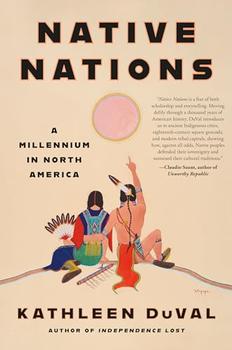
Native Nations: A Millennium in North America
by Kathleen DuVal
Wide in Scope, Rich in Knowledge (11/18/2025)
We call people savages so that we do not feel bad treating them like subhumans. Countries often refer to their governing style as "advanced" to draw attention away from the originators. The first millennium of civilization requires an extensive review to do justice to each group. For a writer, 1,000 years is pretty ambitious, but Kathleen DuVal does it justice.
"Native Nations: A Millennium in North America" by Kathleen DuVal will teach you about people. You may not realize that history books generally do not cover this period. I started to recall my 5th-grade history class and the names of Marquette and Joliet, but I had no long-standing knowledge of the Quapaws, Natchez, or Yazoo. Diplomacy had its humble beginnings during this time.
Since Native American history is part of American history, you will likely find both pride and embarrassment in what you learn. The short answer is that in-fighting among tribes made the Natives an easy target. They were marginalized, but also had enslaved Africans, once cotton and textiles took off as the next wave of prosperity and wealth.
I learned a great deal from reading this work and received a gentle reminder that history can be incredibly complex. We want to think that we live in a world where we would not force anyone from our land again, but the rhetoric may make you cringe. More importantly, you recognize that you cannot define these Nations by their tragedies.
This book may not be to everyone's taste due to its staggering length and ambitious scope. If you give it a chance, you will be glad you did and learn something. I have only known two people who identified as Native American well, but I now have many questions for them. The backstory has so many hidden layers and levels.
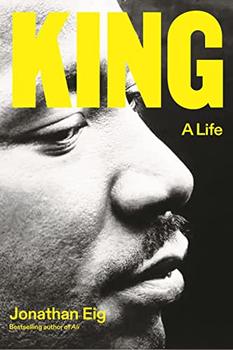
King: A Life
by Jonathan Eig
Strength in the Face of Mayhem (11/6/2025)
In discussing the life of Dr. Martin Luther King, the average American could take a quiz and earn a solid D-plus. Any glimpse into his life before the 1960s educates. Only knowing one aspect of his life and demeanor, I could not read any dialogue from him without envisioning him bellowing a platitude. Author Jonathan Eig seeks his true humanity.
"King: A Life" offers behind-the-scenes details that reveal character flaws while demonstrating, without question, how King's booming, articulate voice motivated many into nonviolent action during the Montgomery bus boycotts. His presence was also a pivotal vote-getter in the Kennedy-Nixon election when JFK freed MLK from an unlawful prison stint.
A famous quote attributed to King is that he never responded to his critics because his goals required too much time and effort. The protests involved time in jail and a high level of organization. Progress came slowly, and all of the big names of the 1960s politics tried to help and appease the white majority simultaneously. King's supporters knew he was not a perfect man, but they believed he was "perfect for the job" of enacting change.
The interactions between President Johnson and J. Edgar Hoover are the most interesting, as the leaders were both brash and active in the civil rights movement. Our modern leaders get one of those points right. It paints a different picture of a different type: a controversial war, accusations of Communism, and human rights violations. I knew so little about King's role in these.
An excellent biography makes you think and reads like a work of fiction. Protagonist King teaches us patience and pacifism, showing that few others had the patience or the wherewithal to implement change. Sure, you could watch a riot and say "Be more like King", but recognize how hard that is.
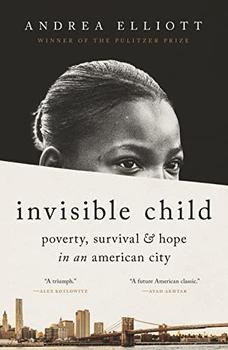
Invisible Child: Poverty, Survival & Hope in an American City
by Andrea Elliott
Eloquent Writing about Poverty (10/26/2025)
I complain more about money than the average person, but I have trouble imagining true poverty and reading about it. "Invisible Child: Poverty, Survival, & Hope in an American City" by Andrea Elliott loves its spunky protagonist, Dasani, so much that you cheer more than pity. The omnipresent crack epidemic and racist policies would seem cliché in less skillful hands.
The central part of Dasani's story occurs in Bedford-Stuyvesant, or "Bed-Stuy." Everyone, from family to teachers, has a background story that involves shelters and food stamps, but they all hope. When Dasani falls behind in school, they all know she can ill-afford another dangerous obstacle. She was too exceptional to struggle forever, so someone wrote a triumphant novel about her.
Dasani lands a golden opportunity to attend the Milton Hershey School and break "the cycle," but suffers when she feels she is abandoning her beloved family in need. Chanel, Dasani's mother, loses visitation rights due to her drug habits, and Dasani can only hear of this from a distance. Her family's fixed mindset causes them to repeat careless, disastrous mistakes.
The foster system remains broken, if this tale is any indication. The kids did nothing wrong. Their parents feel they have no options. You understand why lives of crime happen and why forgiveness among families occurs so easily. No matter how much they suffered, they always had family, even when the Administration of Children's Services says that they belong apart.
The story takes a significant turn right before the end, completely changing the narrative. It made for compelling drama, but it made me sad. Nonfiction can do that to you. If you fall on the side of demonizing welfare recipients, I will respect your opinion, but I will never agree with you again. Poverty is such pain and abject suffering.
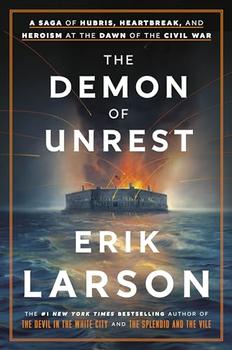
The Demon of Unrest: A Saga of Hubris, Heartbreak, and Heroism at the Dawn of the Civil War
by Erik Larson
A Whole New Level of Research (10/15/2025)
"The Demon of Unrest" by Erik Larson focuses on the months between Abraham Lincoln's election and the start of the Civil War, requiring much research, as with most of his work. The facts seem new, like you are reading fiction, especially those about James Buchanan and his role in overseeing the secession of South Carolina and the beginning of the conflict.
When I read that the novel would focus on the time between Lincoln's victory and Fort Sumter, I did not at first recognize how much verbal promises from Buchanan laid the groundwork for distrust and anger. When the South Carolina governor demanded a surrender, every act came off as aggression or escalation. It was a mess that few could navigate.
My history buff friends will know about the assassination attempt before Lincoln's inauguration, thwarted by a railroad president and others, but novices like me will find it quite fascinating. The author often uses "coercion" when Lincoln tries to walk the line between doing what is right and appeasing the South. No one knew how aggressive he would be.
The cast of characters, especially Major Robert Anderson and Governor Francis Perkins, shows the resolve on each side. Lincoln had friends like an ex-con, Stephen Hurlbut, who thought they had the connections to make a difference. Communication between the two sides was weak. Letters went undelivered, and many assumed hostility without confirmation, leading to uncertainty about intentions and goals up North.
Once we inevitably reached actual violent wartime, I felt the disarray and chaos associated with Fort Sumter. I grew to know some characters well enough to experience the horrors fully. When you are a Marylander, the Civil War is a big deal. Most of BookBrowse's picks for Best Nonfiction have plentiful research, unlike anything I could ever pull off myself.

Becoming Madam Secretary
by Stephanie Dray
Becoming One Of My Favorite Authors (10/4/2025)
"Becoming Madam Secretary" by Maryland author Stephanie Dray tells a story that even the most informed do not know. Frances Perkins goes from workers' rights representative to Secretary of Labor. Suppose you knew little about her story, like I did, good. There is much to learn, and you will enjoy the ride through early twentieth-century American History to get there.
Perkins lived when women chose between a career and marriage, and we see her trying to achieve both. From Teddy Roosevelt to Taft to Wilson, she fought for what was right for female workers. She undergoes a miscarriage and a stillborn child after insisting that her career took precedence. She found a way to meet all her goals that she could control.
Francis enters politics, realizing she has earned her workforce position but will still need to work twice as hard for acceptance as she becomes the family's lone breadwinner. Not long after the polio diagnosis, she gained a position with FDR when he won an election in New York. Those who barely thought we could govern did not anticipate a long career.
Writers have saturated the market with feminist historical fiction. Hence, an author needs to nail the tone, and Dray does so easily. Themes like misogyny and mental health probably occurred as they did in 1930. Since FDR presided over the Great Depression and had dozens of programs to combat it, Perkins has her hands full in charge of labor.
The genre exists so that we may glimpse a day and time other than our own. Dray (an Odenton resident) excels at this essential skill for such writers. Perkins comes off as indomitable and effective, paving the way for future female hires. Even in the moments that we question FDR, we know that she is reliable and strong.
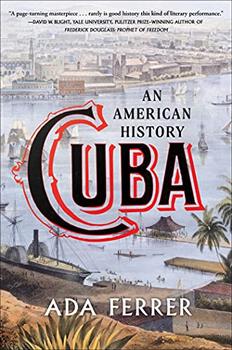
Cuba: An American History
by Ada Ferrer
You May Learn and Change Some Opinions (9/23/2025)
Americans consider everything in terms of how it relates to the United States. Cuba's history, however, connects to America so well that you could learn a lot by doing that. "Cuba: An American History" by Ada Ferrer starts with Columbus and ends with Castro, running through centuries of slavery, sugar plantations, and imperialism that history books touch upon in passing.
For the historically ignorant like me, you may not know Cuba's role in the slave trade and the abolition of slavery. They were a political football among those trying to curb expansion. Of course, our current media slant has stressed telling American stories positively, but you cannot explain our interactions with Cuba without both the good and the bad.
The 1930s served as the portion of the novel about which I knew the least. The rise of Batista after the stock market crash of 1939 showed how turbulent the world was then. The rise of Fidel Castro from law student and prisoner to a powerful, admired man will amaze you, since many factors made his ascent to power unlikely.
People have debated Marxism for generations, and it would not occur if there were not value in those theories; that said, you see a Cuba that depended on the United States and traded that dependency for an attachment to the Soviet Union. Castro's goals were ambitious, but he proved that the mission was not feasible for most countries in the modern world.
The reader leaves the book with new ideas about immigration, Communism, diplomacy, and trade. The embargo makes sense, and the advantages of open relations are evident. More to the point, we get a glimpse of the significance of the term "America" and why it holds such weight in our discussions of naming things. I am proud to be American!

Every Living Thing: The Great and Deadly Race to Know All Life
by Jason Roberts
Biology for Poets (9/12/2025)
"Every Living Thing: The Great and Deadly Race to Know All Life" by Jason Roberts takes two similar yet star-crossed professionals in a way that reminds you of "Amadeus." Two minds, Carl Linneaus and Georges-Louis Buffon, try to classify all living things in a world that cannot even correctly define the word "science." Brush up on your evolution and species.
Linneaus deserves his biography as the father of taxonomy and a physician tasked with combating Venereal disease. The author compares his classification system with a grocery store, simplifying results. Buffon called Linneaus's work "slender" and made significant changes that went against the latter's arrangement on grounds of creationism and reproduction. The author presents both as viable options.
Since Linneaus and Buffon had "apostles" and "acolytes," several employees died on missions across continents and cultures. Burglary is beneath these academics, but the longer and more prestigious documents carried weight. Linneaus's behavior slowly drifted into eccentricity, and people did not value his contributions as much later. Loyalty to creationists also influenced why future generations had different ideas.
Since the ambitious book covered their lives from the beginning of relevance to their deaths, the reader experiences the fragility of life in that day and age, coupled with the demise of one's lifelong research. Only when faced with compiling these observations do we realize the inherent racism created by dividing people into groups and declaring some inferior to the others, echoing today's worst thoughts.
The later years contain connections with Darwin and Mendel and how their work virtually eclipsed their predecessors, even though Linnaeus and Buffon laid the critical groundwork for so many after them. For science amateurs, the fact that these breakthroughs of thought work their way down to the discovery of DNA shows that the basics we learned began three hundred years ago.

The Missing Thread: A Women's History of the Ancient World
by Daisy Dunn
Every Latin Teacher Must Read This (9/1/2025)
"The Missing Thread: A Women's History of the Ancient World" by Daisy Dunn, a classicist, uses feminism as a tool to tell more about antiquity than the average person knows. Women found a role despite many obstacles. History refers to them as "weavers", for example, without acknowledging those who set up businesses with savvy and foresight, even when the law referred to them as "less-than."
Dunn tells the stories through Rome, Greece, and Persia, and will challenge your prior knowledge. When the three empires intertwine, you really learn new things. I should have known, but mostly male doctors using feminine as an excuse to request more sex from barely post-pubescent girls shocked me. Having a cooped wife at your every whim seemed convenient.
As a Latin teacher, I wanted to use this in class. Still, the graphic information about self-pleasure objects, forced abstinence, rampant rape, and self-serving recommendations for feminine health make for very adult content. It's a shame, because the information about the political maneuvers behind the scenes in a time of limited power inspired me to have ambition.
Without giving away the "ending", I will say that we travel from about 400 B.C. to the time of Caesar and Cleopatra, the latter demonstrating the way to wield influence. This allure extends to Livia and Octavia and shows how history books focus too much on the battlefields and not enough on the minds that affect change and political power.
If you love history, you need to read this book because there are facts that may have eluded you. Dunn has put her education to use and spews deep knowledge. Even if ancient history is not your thing, you will leave with an appreciation for those who study it for a living and always manage to find new, relevant facts.

Heart Lamp: Selected Stories
by Banu Mushtaq
Unbeknownst to me... (8/21/2025)
"Heart Lamp: Selected Stories" by Banu Mushtaq tells 12 stories of women living in a Muslim community in Southern India. They have many customs for the reader to learn and understand. Keep an AI resource handy for the vocabulary. The translator did a sound job, but many Islamic traditions involve words that the average Christian American will not know.
The third story, "Black Cobras", gets the novel going, with pontifications about polygamy and women's rights. Having "up to 4 wives" in India benefits no one; it only results in frustration. "A Decision of the Heart" reminds us of the complicated relationship between wives and their mothers-in-law. The cultural differences keep you engaged and do not reveal what will happen next.
The unique writing style takes a little getting used to. Mushtaq adds a lot of detail for short stories, and you will think you missed the point when nothing happens. For example, the story "High Heeled Shoe" shows how something so simple can become scandalous in the eyes of men whose culture does not consider cheating, divorce, or other impropriety.
Each engaging story starts anew and shows the cultural importance of unconditional respect for one's elders and tradition. You accept their reality and truth while predicting their inevitable actions accordingly. I learned more about the characters as the book went on, even though they were completely different. The norms and mores made more sense since I knew so little before.
As much as I enjoyed the stories, I hesitate to recommend them to everyone because I need to look up many terms and translations. Only the most patient will do so. At the end, I read all of the thank-yous and translation details and knew that I had just finished a one-of-a-kind experience and read the work of a talent.

The First State of Being: A Time-Travel Adventure Novel about Friendship and First Love?a Newbery Medal Winner
by Erin Entrada Kelly
Relive Your Youth (8/11/2025)
A friend said to me that I loved every book. No. I DNF a lot. The Newbery Medal winners are hit or miss for me. "The First State of Being" by Erin Entrada Kelly reminds me why I loved her 2018 winner, "Hello, Universe," and failed to connect with so many middle-grade novels since then. This time-travel one did the trick.
"The First State of Being" by Erin Entrada Kelly ponders all of the questions that pop culture has considered about returning to the past. They feel new here, though. There is a reason that the genre has permeated culture so many times. Seeing it from a kid's perspective adds new depth. Michael meets the mysterious Ridge and learns slowly.
Readers in my age bracket will enjoy that Ridge loves the nineties and has traveled there since 2199, in love with the culture and obsessed with the concept of malls. Our "future boy" has some contradictions, warning against the dangers of his craft while going through with it anyway, stressing that the present is always the best place to be.
Why has this topic endured for so long? People have fan theories about "Back to the Future" and the criminally underrated "Family Guy: Road to the Multiverse" and discuss them at length. Here, the author includes many trips to visit the scientific crew and explains the deeper side of their mission, hitting home for anyone who wishes to return in time.
In the end, you will be glad that you read it. So many deep ideas exist even in the dialogue of young children experiencing the extraordinary scientific developments. As a content warning, there is absolutely zero objectionable material, which is hard to do when writing a novel for rebellious kids. Enjoy the fantastical adventure and relive your long-gone youth.
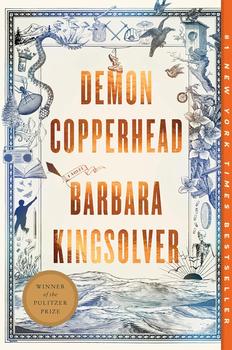
Demon Copperhead: A Novel
by Barbara Kingsolver
Worth the Hype (8/2/2025)
My librarian sister tells me she doesn't want to read anything anyone else tells her to read. If I had a penny for everyone who told me to read "Demon Copperhead," I would be wealthy. Thankfully, as I read my first Barbara Kingsolver novel, I found it engaging and accessible, a picaresque story for those uninitiated to the little-known genre.
The novel serves as a modern-day "David Copperfield", with Damon, or "Demon", growing up in foster care due to the addiction and eventual death of his mother, among other things. His journey leads him to Tennessee to find his estranged grandmother when every other avenue to food and shelter shuts down. His predicaments are heart-wrenching because we know how much he has endured.
Demon's adventures deal with trying to put the past behind him while avenging all that happened to him that was not his fault. Without a home, that is tough. Since his living situation varies so much, the ambitious book reads like a series of tragic vignettes until beloved people from Demon's former life emerge from the woodwork.
Based on the friends who recommended "Demon Copperhead" to me, I did not expect as much intense football and opioid use. It makes complete sense in the Appalachian setting, though. I had read too much on OxyContin, but by page 400, Kingsolver had developed characters so well that I was in their worlds. That must be why she is so beloved.
If the content warnings of pervasive drug use, language, or poverty drive you away, you are missing the point. Demon is one of the best-developed characters I can remember. The best novels are the ones whose quality you overlook until the end, when all loose ends come together and the message becomes clear. Thanks to all who recommended this.

There Are Rivers in the Sky: A Novel
by Elif Shafak
So Satisfying (7/22/2025)
The idea easily could have been hokey. A single droplet of water travels throughout generations and plays a role in multiple lives. "There Are Rivers in the Sky" by Elif Shafak has much to say. She tells three different stories with protagonists bonded by water's ability to remember events for longer than humans can, even when Arthur has an eidetic memory.
In addition to Arthur, we have Narin and Zaleekhah in more modern times. Narin is a ten-year-old in Iraq, and Zaleekhah is a hydrologist living on a houseboat in London. We have confidence in authors to believe everything will fall into place, but you cannot fully understand the endgame. Arthur's study of cuneiform could have been a novel itself.
One common mistake that Shafak avoids is making the ancient story as relatable as the more contemporary ones. We know Arthur and understand his professional predicaments concerning knowledge and opportunity. On the other hand, Narin finds that your ancestors' suffering can strike fear in future generations, and the rivers remember what the people have forgotten. All three protagonists know this.
Zaleekhah has lost her husband and remains focused on the memory of water after a relative lost his career in pursuit of this theory. This idea drives the advancing narrative. Reminding us about how destroying water could wipe out an entire ethnic group gives the motif power. I knew very little about the Yazidi population, and it shows a dangerous side to Iraq.
We focus so much on ISIS and its relationship to America that we forgot about how often terrorist organizations like that destroy ethnic groups in their land. When the story's threads come together, we are pleased with the resolution and horrified by the atrocities we have read. As a fiction book, it succeeds on almost every level.
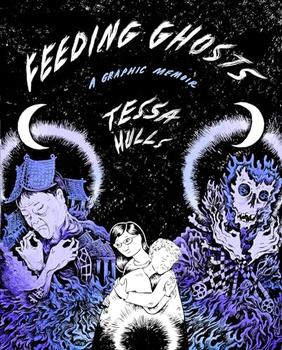
Feeding Ghosts: A Graphic Memoir
by Tessa Hulls
A Work of Genius (7/11/2025)
It is hard to write a graphic novel, even a good memoir, and a piece about Chinese-American history has a lot of company now. Luckily, I have grown to love all three subsets. "Feeding Ghosts: A Graphic Memoir" by Tessa Hulls uses striking visuals to tell the story of a woman who knows little about her Chinese background for reasons that she thought were "shame" but ended up to be "fear."
Paranoia in Communist China was at an all-time high with re-education and thought control, leading to mental health problems for Tessa's grandmother. Communism led to famine and dishonesty among its families, and many died trying to escape it. The process prompted Hull's mother to refrain from telling parts of the story.
The portions related to mental illness set the novel apart, starting a chicken-or-the-egg argument between the psychosis and the political upheaval. Which came first, the madness or the thought control? If you have ever tried to accumulate family history, you realize how much harder it would have been if some players were institutionalized or hiding.
The visuals will strike you as the author/artist carrying on the motif of ghosts haunting her mother and grandmother after political and mental unrest. The women resorted to undesirable marriages to improve their circumstances, and the pictures capture this haunting atmosphere. Over the three generations, the women struggle to identify mental health problems, trauma, and unhealthy coping mechanisms in each other and themselves.
This story will not be to everyone's taste, but the art, history, and mental illness thoughts are worth the price of admission and will show the power of memoirs. Wells has no easy answers, but anyone who has dealt with mental illness (either their own or that of their family) will tell you that these easy fixes do not exist.

The God of the Woods: A Novel
by Liz Moore
Now Is the Time to Panic (6/20/2025)
A VIP's kid turns up missing for her bunk early in the morning. The Counselor panics, and the Counselor-In-Training apparently "experimented" the night before. "The God of the Woods" by Liz Moore wastes no time introducing its conflict. She has various characters as the foci for the story and jumps around from the '50s to the '60s to the '70s to get us up to speed.
Quentin Tarantino has taught me that nonlinear storytelling will eventually run its course, so the multiple viewpoints, though many, did not distract me from enjoyment. The chapters end with cliffhangers, which makes you want to check in on the other timelines. A missing persons case like this lends itself well to the slow burn.
Pan was the God of the woods, and his name gives us the word "panic" due to the fear he put on people. Mourning families and the wrongfully accused in this novel embody that. Since I have watched a lot of SVU in the past 21 years, I studied the novel's language, place, and time to see which suspects did not qualify as sketchy.
The book's characters keep your interest, and you do not know what they will do next. Each struggling one appears broken or from a broken home. From the grieving mother to the confused camp counselor, everyone is experiencing trauma in an inspiring way. Any family that watches two children disappear will self-medicate and develop trust issues.
As a regular mystery reader, I kept obsessing over new plot points and analyzing their likelihood based on when the author introduced them in the novel. There are just enough suspects to make it interesting but digestible. The less you know, the better, so skip reading the flap. Enjoy the suspense and speculate. I never guess correctly, but you might.
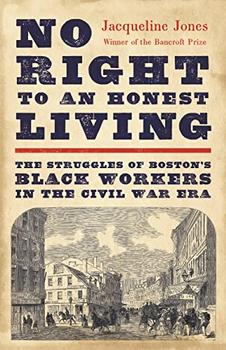
No Right to an Honest Living: The Struggles of Boston's Black Workers in the Civil War Era
by Jacqueline Jones
Writing Nonfiction Must Be So Hard (6/9/2025)
"No Right to an Honest Living: The Struggles of Boston's Black Workers in the Civil War Era" by Jacqueline Jones tells stories of people who succeeded with the deck stacked against them. Boston did the most to combat slavery but also the least to improve the quality of life after emancipation. Jones does a ridiculous amount of research to demonstrate this inequality.
The Black residents of Boston suffered from prejudice, for sure, but some of the bad luck that they experienced would make you cry. The odds were not in their favor. Characters from other historically significant stories, like John Brown and William Craft, make appearances to fight against these injustices and show why they happen to otherwise good people.
A fun game here in Maryland is to debate what caused the Civil War, and Jones demonstrates why it was such a dramatic debate. Abe Lincoln made it seem like the slavery question was over after the Emancipation Proclamation, but the struggle had just begun. As usual, the Black community in Boston tried to immerse themselves in more culture but found that it did not matter to most whites.
The three parts (pre-Civil War, Civil War, and Reconstruction) have three different stories to tell, and they are all engaging and relevant. The only advantage to the last section is that people start finding a wider range of job opportunities and education; thankfully, teaching is one of the more popular.
Jones illustrates how political mumbo jumbo and odd prejudice impeded progress. She does exhaustive research to do so. Historians, more than most, indicate why nonfiction qualifies as the hardest genre to write well. She takes something that few of us knew about and shows how it connects to modern society and the xenophobia that still exists today. It deserved the Pulitzer.
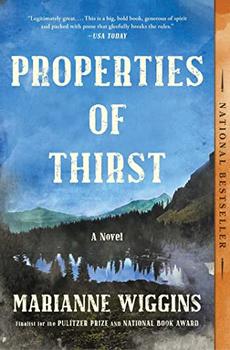
Properties of Thirst
by Marianne Wiggins
A Triumph of Epic Proportions (5/29/2025)
"Properties of Thirst" by Marianne Wiggins tells us about World War II from the perspective of the United States mainland. If you live in a temperamental land, a Japanese camp (nomenclature is essential) is unwelcome. We have a wide range of well-developed characters to show how Pearl Harbor and the incendiary attitude toward the Asian population changed lives in Southern California.
The story, surrounding the neighboring landowner and the Department of the Interior architect, shows people going about their jobs with at least some good intentions. Some even try to create for the subjugated. Schiff, the working stiff from the Department of the Interior entrusted with the home for 1,000 Asians, falls for the landowner's daughter, and things become complicated.
With Father, Son, Daughter, and Architect, you learn a lot about their backgrounds, to the point that you do not know the main character, which works. Shiff battles politics in his duty to build a camp and finds people upset with the process in various ways, citing the hypocrisy of FDR's Four Freedoms while denying rights to citizens.
The collection of viewpoints enables you to take a break from the most emotional storylines. Very little death occurs "on screen," but the time is heavy, especially for amateur history students. You have so many cultures represented (Jewish, Asian, and Hispanic) that you can focus on the turbulent era and realize that it affected many people in many ways.
Wiggins lost the ability to read or write after a stroke, so she wrote "Properties of Thirst" over a few years after her daughter helped her finish, making this a fantastic achievement. The characters here are special and enjoyable, and the book's non-linear storytellers will please those who want to think about what they are reading; my thumb is up with much admiration.
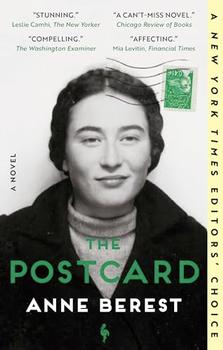
The Postcard
by Anne Berest
What a Journey! (5/18/2025)
If you are looking for light entertainment about the Holocaust, "The Postcard" by Anne Berest is not that book. Should you desire something heavy that packs an emotional wallop, look no further. I have learned a lot about Jewish culture, but here we see lively celebrations and abject suffering, the latter making the former all the more tragic and bittersweet.
I needed to consult an AI family tree a few times to ensure I followed correctly. Some ill-fated characters in 1940 recognized the historically significant horrors they were experiencing, and others saw it as an opportunity. Things become real only when they begin to assign barracks and numbers, and the frightened reader recognizes the intense claustrophobia and fear that awaits them.
The storyline goes like this. The Berest family receives a postcard with nothing written but their ancestors' names. The narrator then makes it her mission to find out who sent it and why. The result is a mixture of survivor's guilt and anti-Semitism that most likely affects a large number of Jewish descendants. Judaism, part culture and part religion, carries significant weight in one's identity.
The modern-day narrative becomes a mystery for Anne to solve about the postcard. She tries to determine which family, friends, or neighbors were involved. If you or any of your relatives have gone down the family history rabbit hole before, you will recognize Anne's relentless pursuit of the sad truth and what she finds.
Some characters and sad plotlines happen late in the process, and I found that the ambitious writer had a different moral and lesson, not decreasing the quality, than I anticipated. The ending is chaotic, confusing, and random, but I fear that was accurate for French Jews in 1942. It still amazes me how many stories have come out of this time.









 Power Reviewer

