Page 1 of 1
There are currently 2 reader reviews for Everything Is Tuberculosis
Write your own review!
 Anthony_Conty
I Had No Idea
Anthony_Conty
I Had No Idea
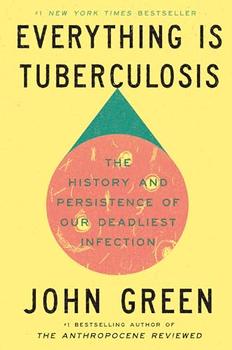
“Everything is Tuberculosis: The History and Persistence of our Deadliest Infection” by John Green discusses an illness we have forgotten, as it has become less common in the fortunate United States. The U.S. has 3 cases per every 100,000 people, whereas Sierra Leone has 372. It is debilitating but we have forgotten it after COVID and HIV took over the news.
The disease's history is long, as people romanticized it as an artist’s ailment that heightened creativity. Green quickly points out how this can be as detrimental as absolute condemnation. Tuberculosis has a long history, and like in the case of the common cold, cancer, and AIDS, we recognize that learning about an illness and finding a cure are challenging.
Green tells a lot about history, but also through the development of a boy named Henry afflicted with the malady. He has so many meds and lives in a facility, leading to a discussion about how medical conditions affect some ethnic and socioeconomic groups more than others; unfortunately, assumptions about self-care and responsibility exist among factors beyond their immediate control.
The cost of illness vs. wellness plays a key role in the non-medical author's analysis of the inability to access appropriate treatment. Most are required to use the cheapest method. Americans tend to call Africa a country, and that advances in, say, Lesotho, mean affluence in Sierra Leone. You cannot read this type of literature without feeling for the poor.
Novels like this require hope, or they come off as manipulative and sensational. One has reasons for positivity and fear. Green manages to engage the reader while exploring the problem area. Fun fact: Green thanks a guy from Penguin Random House who lived down the hall from me freshman year at PSU and majored in English for publishing his book!
Lana_Maskus
Empathy & Science
Everything Is Tuberculosis is outstanding. It is extremely well researched and the author has spent significant amounts of time in countries with high TB rates and with organizations working to eradicate it. His empathy shines through for those who have it and for those whose living conditions, which they cannot control, exponentially increase their risk of contracting the disease. This line in the book blew me away, "We live in between what we choose and what is chosen for us."

 Book Reviewed by: