
-
Your next favorite book
is waiting.
Summary | Excerpt | Reviews | Beyond the Book | Read-Alikes | Genres & Themes | Author Bio
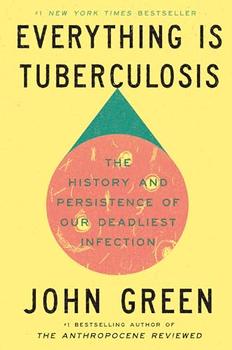
The History and Persistence of Our Deadliest Infection
by John Green Book Reviewed by:
This article relates to Everything Is Tuberculosis

 One idea that stuck with me from John Green's book Everything Is Tuberculosis was how TB became racialized. And a brief look at history shows the same pattern occurring not just with tuberculosis but with nearly every major outbreak. Which means that pathogens and bacteria weren't and aren't the only things that spread during such epidemics. Pre-existing racial biases, inequalities, and injustices become more apparent and widespread as well. From the plague and typhus to HIV and COVID-19, illnesses have repeatedly exposed and amplified a host of social faults.
Racialization of disease primarily has three different aspects: scapegoating, structural inequality, and medical bias. It can be observed both between different countries (such as former colonies and colonial powers) and within a country's own borders.
1. Scapegoating and Stigmatization
Epidemics are often used by politicians and leaders to target and blame "the other." Marginalized groups such as immigrants, ethnic minorities, or Indigenous people are labeled as "unhygienic" or ignorant, for example, in an effort to push racist policies, marginalize these groups even further, and shift responsibility away from systemic failures.
During the Black Death, Jewish people were falsely accused of poisoning wells and massacred in retaliation. In the 1892 New York typhus epidemic, a ship carrying ~700 mainly Russian-Jewish immigrants was quarantined, and dozens were locked in an immigrant tenement even if asymptomatic. Similar narratives have appeared throughout history, such as when Irish immigrants were blamed for cholera, Italians for polio, Haitians for HIV, and more recently, when terms such as "Chinese virus" were used for COVID-19.
Scapegoating doesn't only fuel racism and violence in communities, though. It creates stigmatization in the healthcare system itself by engineering biases and wrong perceptions, which may cause many cases of a virus to go undiagnosed or even discourage individuals from vulnerable communities from seeking testing or care altogether.
The narrative also shifts depending on who gets sick, since marginalized groups are far more likely to be directly blamed for their own illness. As Green notes, when tuberculosis was common among Europeans it was often romanticized and seen as proof of beauty, fragility, and artistic genius, while the exact same illness within the colonies was seen as proof of their people's ignorance and inferiority.
2. Structural Inequality
Diseases and their outcomes are shaped more by social and structural inequalities than by biology or pathogens. They spread along the fault lines of society, such as poverty, overcrowded housing, underfunded health care systems, malnutrition, and lack of access to clean water. The World Health Organization mentions that poverty is one of the most powerful predictors of diseases like tuberculosis, adding that people in wealthier countries can expect to live a lot longer than those in poorer ones (~62 years in low-income nations versus ~81 in high-income countries). Although disparities between countries have many roots, one of them can be traced back to colonialism. When colonial powers have retreated from the nations they colonized, they have typically left behind weak systems and poor infrastructures, which, in combination with unethical practices like patenting lifesaving drugs and price-gouging, create a situation that is hard to break free from.
Similar inequalities can be found within countries where many marginalized communities carry a disproportionate burden of chronic diseases. Overcrowded neighborhoods with limited healthcare, working in low-wage jobs that carry higher exposure to disease and rarely offer paid sick leave, under-resourced local clinics, and poor diet due to circumstance are only some of the many issues created by inequality. Issues that have been repeatedly proven not only to worsen but directly cause illnesses.
In short, it is poverty, discrimination, and institutional neglect that largely determine who gets ill and who survives.
3. Research and Medical Bias
Racialization also occurs in medical research and practice. Most medical studies and clinical trials have been conducted on white populations, which leaves major gaps in knowledge about other groups, meaning that potential differences in drug efficacy or side effects, for example, might go unnoticed. Different risk factors may also go understudied.
Medical education is no exception. Textbooks are predominantly composed of images of light-skinned subjects, which can lead doctors to overlook signs of illness in patients with darker skin tones. Conditions like skin cancer, Lyme disease, or cyanosis (turning blue from low oxygen) can appear very differently on dark skin, leading to delayed diagnosis. Such gaps can also reinforce outdated myths—such as false beliefs about racial differences in physiology or pain sensitivity that continue to harm nonwhite patients.
The problem is transferred to new technologies as well. Diagnostic algorithms trained on majority-white datasets can under-detect disease in nonwhite people, and medical devices calibrated only for lighter skin tones can give inaccurate readings on darker-skinned patients. Studies have shown that pulse oximeters, for example, overestimate blood oxygen levels in dark-skinned patients, causing delays in recognizing hypoxia (when the body's tissues lack sufficient oxygen) in Black and Hispanic patients compared to whites and subsequent delays in treatment for conditions like COVID-19.
Conclusion
Summing up, those who label diseases as "foreign" and blame "the other" erase their own role in shaping global health inequities. Replacing xenophobia with science and blame with accountability to address the false narratives is the first step towards correcting these wrongs. And of course, medicine and diagnostic tools must be made available to everyone by controlling their cost. Because, as history shows us, it is not germs alone but social inequalities that dictate who suffers most.
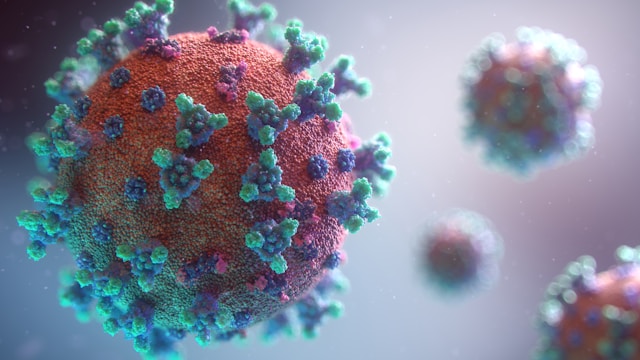
Visualization of the coronavirus causing COVID-19, by Fusion Medical Animation via Unsplash
Filed under Society and Politics
 This article relates to Everything Is Tuberculosis.
It first ran in the December 10, 2025
issue of BookBrowse Recommends.
This article relates to Everything Is Tuberculosis.
It first ran in the December 10, 2025
issue of BookBrowse Recommends.

L.A. Women by Ella Berman
Two ambitious writers in 1960s LA face betrayal when one writes a novel based on the other's life.





Your guide toexceptional books
BookBrowse seeks out and recommends the best in contemporary fiction and nonfiction—books that not only engage and entertain but also deepen our understanding of ourselves and the world around us.

