
-
Your next favorite book
is waiting.
Summary | Excerpt | Reading Guide | Reviews | Beyond the book | Read-Alikes | Genres & Themes | Author Bio
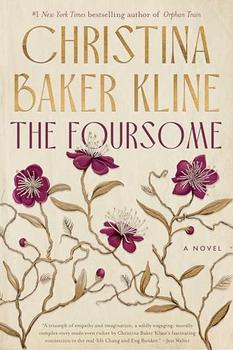
A Novel
by Christina Baker Kline Book Reviewed by:
Sarah Yates's prospects are grim. After falling pregnant out of wedlock and losing the baby, her reputation, as well as that of her sister, Adelaide, has been ruined. So when conjoined twins Chang and Eng Bunker—the original "Siamese twins," so named because they were originally from Siam (now Thailand)—decide to settle down in Wilkes County, North Carolina, after many lucrative years of touring as "curiosities," and scandalously declare their intent to marry, Adelaide decides to take advantage of the situation. Within a few years, Sarah and Adelaide are married to Chang and Eng, and thus begins their complicated life as two married couples who are really a party of four. As the couples navigate a life that doesn't fit within the rigid rules of mid-19th century Southern society—both because of the twins' Asian background and their physical connection—cracks begin to form.
Many books have been written about Chang and Eng, yet little is known about the two sisters who became their wives and birthed their combined 21 children. Using historical records, oral histories, and biographies, Christina Baker Kline has created a fictionalized but realistic inner life for Sarah "Sallie" Yates, the wife to Eng. Although Sarah's story is told in the first person, her narrative initially feels distant; she's indecisive, hesitant, and quiet, and she feels like a weak character who passively allows others—mainly Adelaide—to push her into major life decisions, including marriage. Although the physical complexities of her marriage initially scare Sarah and she remains at arm's length from her husband, Eng's gentleness and attentiveness eventually allow Sarah to fall in love with him, and this romance changes the tone of the story and the dynamic of the relationship between the foursome.
Despite the sensational nature of Sarah and Eng's marriage, the story is strongest when it focuses on little day-to-day moments. There are many scenes of Sarah and Adelaide reading and doing needlework, details of Chang and Eng's work on their farm, and accounts of the daily tasks performed by the enslaved people there. When the sisters become pregnant at the same time, they find a sense of camaraderie, seeing themselves "for the first time…reflected in each other—not in rivalry, but in kinship" and soaking up "the steady companionship of waiting." Once children start being born, there are many relatable moments of early motherhood: "The sound of crying seems stitched into the air…sometimes I wondered if Addie and I might both simply fall asleep on our feet, rocking our babies until dawn." Other aspects of their living arrangement are less relatable, but no less interesting, such as the negotiation of physical space among "four strong personalities" (including, at first, sharing one oversized bed) and the difficulties of intra-marriage communication—Sarah laments that "there was no space for the kind of talk other husbands and wives take for granted, for idle observation and whispered truths that deepen trust in a marriage."
For several years, both families live in one house, but eventually a second home is built some distance away, and Chang and Eng take alternating three-day stays with each wife and family at the different homes. For Sarah, this new arrangement inspires reflection on a person's loyalty to blood versus the bonds of marriage; when one of Sarah and Eng's children is killed in a terrible accident, Eng refuses to even ask his brother to forego the three day stay rule to stay and bury his daughter. "I hate that despite my pleading, my sobbing, my grief, he would choose his brother over me," Sarah says.
Her relationship with Eng is further tested once Sarah begins to truly consider the nature of slavery. Sarah grew up in a slaveholding household, and she took at least one slave with her into her married life. Chang and Eng paid for additional enslaved people over the years, finally numbering as many as 18 (most under the age of 7) just before the onset of the Civil War—this despite being essentially treated as slaves when they were first brought from Siam to the United States. Sarah gradually undergoes a moral awakening around slavery, especially after she uncovers one of her husband's biggest secrets.
The Foursome is a slower-paced, character-driven novel that explores the complexities of marriage inside a relationship that was incredibly complicated for the fact that it involved not just two but four people. Kline's fictional depiction of Sarah is both unique and layered—she's an everyday, relatable woman who undergoes significant character development and moral education. A unique and fascinating work of historical fiction, Kline's latest novel will appeal to fans of family drama and historical fiction.
 This review
first ran in the June 24, 2026
issue of BookBrowse Recommends.
This review
first ran in the June 24, 2026
issue of BookBrowse Recommends.

If you liked The Foursome, try these:

by Dan Chaon
Published 2026
A playfully macabre and utterly thrilling tale about orphaned twins on the run from their murderous uncle who find refuge in a bizarre traveling carnival, from a master of literary horror.
by Christina Baker Kline
Published 2021
The author of the #1 New York Times bestseller Orphan Train returns with an ambitious, emotionally resonant historical novel that captures the hardship, oppression, opportunity and hope of a trio of women's lives - two English convicts and an orphaned Aboriginal girl - in nineteenth-century Australia.
by Ta-Nehisi Coates
Published 2020
In his boldly imagined first novel, Ta-Nehisi Coates, the National Book Award–winning author of Between the World and Me, brings home the most intimate evil of enslavement: the cleaving and separation of families.
L.A. Women by Ella Berman
Two ambitious writers in 1960s LA face betrayal when one writes a novel based on the other's life.




Your guide toexceptional books
BookBrowse seeks out and recommends the best in contemporary fiction and nonfiction—books that not only engage and entertain but also deepen our understanding of ourselves and the world around us.

