
-
Your next favorite book
is waiting.
Summary | Excerpt | Reviews | Beyond the book | Read-Alikes | Genres & Themes | Author Bio

A Novel
by Marie NDiaye Book Reviewed by:
Marie NDiaye is one of the most famous writers in Europe and has rumors of a Nobel win swirling around her, yet many American readers have never heard of her. But several of her books have been published in Jordan Stump's translations from the French in recent years, and this new novel, The Witch, originally released in 1996, has been shortlisted for the International Booker Prize (her work was also nominated for the prize in 2013 and 2016). The English-speaking world may finally be catching up, so now is a great time for American readers to become familiar with NDiaye's work. And The Witch, while not necessarily reflective of her latest writing, is a short, condensed display of some of the most notable and memorable qualities of her novels, and therefore a more-than-suitable introduction.
NDiaye leans into the bizarre and grotesque while exploring the very ordinary dilemmas of ordinary people. The Witch begins with a supernatural premise: Lucie, who has inherited certain powers of vision and foresight from her mother, tasks herself with passing on these powers to her twin preteen daughters. And while additional otherworldly events occur, the focus is not primarily on the powers themselves, but on how her daughters respond to them and how Lucie feels about everything that happens next. The story is thoroughly steeped in modern French society—in neighborly rumors and gossip, in class aspirations and pretensions, in female solidarity and lack thereof—so readers of realist literary fiction who aren't immediately sold on reading a story about "a witch" won't necessarily stumble over the magical elements. What may be a harder sell is just how weird this book is and how far it eventually goes off the rails, but those who like it will probably love it. Publishers Weekly gave The Witch a middling review, conceding that "Diehard fans ought to take a look," but it's hard to imagine that Marie NDiaye has any other type of fan. She's just that kind of writer.
For better or worse, probably worse, Lucie has shared the secret of her powers with Isabelle, an insufferable woman whose social influence rules the neighborhood where Lucie's family lives. Isabelle has become set on the idea of having Lucie read the future of her son, Steve, an awkward, nervous child who at one point is described wearing a shirt that says, "I LOVE MY MOM." In the meantime, Lucie's marriage with her husband Pierrot appears to be on fragile ground and he soon disappears—to his mother's house in Poitiers (see Beyond the Book), Lucie's powers tell her, but beyond that, she doesn't know what he's planning. Lucie subsequently becomes preoccupied with the idea of reuniting her parents, who have been living separately. As all this is happening, Lucie's daughters, Maud and Lise, are truly coming into their powers, advancing far beyond what Lucie is capable of, and she seems in danger of losing them, too.
NDiaye doesn't spend much time on details and setup. Minus the witchcraft, these are all people and situations that can easily be imagined by the reader with a little help—actions, words, and descriptions convey vivid, often devastating pictures. Lucie remarks, "Isabelle liked to boast that her freezer was always stuffed with pizzas of every brand and variety, because she wasn't about to play the nice mommy to the point of cooking and serving anything but frozen pizza to that little pest Steve and his drone of a father, those two half-wits." And as her daughters seem unfazed by her drifting relationship with their father: "My daughters' knowledge of human behavior, acquired not from books (they only read magazines) but by way of films and TV, was so rudimentary, international, and standardized that it had an undeniable usefulness in very common situations such as this." These observations might sound cynical, intended to be skewering of their subjects, but NDiaye has a way of writing with a strange mix of affection and wonder for human foibles and failures, and of constructing sentences that unfurl in unexpected directions.
While it would be easy to simplify Lucie's powers into a metaphor—for family tradition, for feminist solidarity, for maternal influence—it's better to just enjoy this thoroughly inventive novel at face value. This is a profound, moving, and extremely funny story about a woman searching for stability as everything she knows careens out of control.
 This review
first ran in the April 22, 2026
issue of BookBrowse Recommends.
This review
first ran in the April 22, 2026
issue of BookBrowse Recommends.

If you liked The Witch, try these:

by Katie Kitamura
Published 2026
One woman, the performance of a lifetime. Or two. An exhilarating, destabilizing Möbius strip of a novel that asks whether we ever really know the people we love.

by Danzy Senna
Published 2025
A brilliant dark comedy about love and ambition, failure and reinvention, and the racial- identity-industrial complex from the bestselling author of Caucasia.

by Yasmin Zaher
Published 2025
A bold and unabashed novel about a young Palestinian woman's unraveling as she teaches at a New York City middle school, gets caught up in a scheme reselling Birkin bags, and strives to gain control over her body and mind
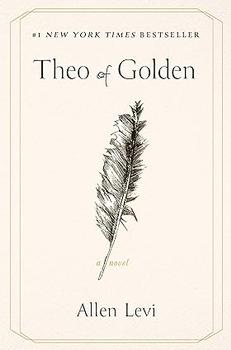
Theo of Golden by Allen Levi
One spring morning, a stranger arrives in the small southern city of Golden. No one knows where he has come from…or why…





Your guide toexceptional books
BookBrowse seeks out and recommends the best in contemporary fiction and nonfiction—books that not only engage and entertain but also deepen our understanding of ourselves and the world around us.

