
-
Your next favorite book
is waiting.
Summary | Excerpt | Reviews | Beyond the book | Read-Alikes | Genres & Themes | Author Bio

A Novel
by Hallie Cantor Book Reviewed by:
As a longtime fan of a podcast hosted by two comedians who are trying to make it in Hollywood, I have been plagued for years by one question: How do these people have so much money??? They take "general meetings" with executives that, they joke, go nowhere; they are staffed as writers on shows, but it only lasts for a few months before they have to scramble for more work; they live expensively but complain about how little it pays to work in the arts. What's the deal?
Luckily, Hallie Cantor's debut novel, Like This, But Funnier, has filled in some gaps for me. For one thing, there's the "development deal." A writer might pitch and sell an idea to a network and net "six figures" (not exactly the specifics I was hoping for, but I'll take it), but never see (or have their fans see) anything get made at all.
This is what Caroline Neumann, Cantor's protagonist and stand-in, has been doing. She's a TV writer in Los Angeles who used to work in the writers' rooms of a few award-winning shows, but has been underemployed in recent years and has been focusing on development instead—a hit to her ego, identity, and self-worth. "It would've been easier to handle if she'd never known what it was like in those rooms," Cantor writes. "But she'd been in the club once, and she'd lost it, and she didn't know what she'd done wrong." She feels incredible amounts of envy, shame, and self-hatred about her career stagnations and failures, to a degree that is painful to read. Caroline's husband, Harry, who left the grind of his own artistic career years earlier to become a clinical psychologist, is interested in having kids, but Caroline (34F) is hesitant. She doesn't want to fall into the "Mom Hole," she insists, the "place you went when you had a kid and lost your entire identity." Reading between the lines: she doesn't feel successful enough.
This is the context for the main plotline of the novel: Caroline, feeling bad about herself one day, starts snooping through Harry's office drawers and stumbles upon his notes from a patient session: a dream in which the patient strangles the parents of her students, puts them in a meat grinder, and buries them in the school garden. (Harry had written "Anger," underlined, after his notes. "Sheesh. For that, he got $250 an hour?" Caroline thinks.) Caroline can immediately guess who this patient is: Harry's favorite, a woman around her age that Harry only calls "The Teacher," a special education teacher who is dying to fall in love and have kids of her own (essentially, in Caroline's mind, a saint). Then, as if snooping wasn't bad enough, Caroline accidentally mentions the dream in a pitch meeting for an unrelated TV show, and the exec latches onto it. What was supposed to be a workplace comedy set in a New York bar becomes, over the next few rounds of notes and couple hundred pages, a thriller/romance/drama about a special education teacher who accidentally kills her student's father, then kills another person to cover up her crime, then works with the hot PE teacher to kill yet another threat… a genre-confused, nonsensical, middlebrow, melodramatic mess that Caroline is unable to stop from gathering steam.
The more that Caroline tries to halfheartedly convince these executives that this is a terrible TV show that she doesn't want to make, the more enamored they (and two big stars who become attached to the project) are with the idea. And also, Caroline doesn't want to pass up those six figures! Like Jane, the fictional teacher she's writing about, Caroline keeps digging herself deeper into a guilt-ridden hole, unable to stop and unable to tell anyone the truth about what she's doing—especially Harry. Fittingly, there are sections of this book that are legitimately tense and gripping, thriller-like in their execution. When she realizes she needs more information about the life of a teacher, Caroline stalks The Teacher after her appointment at Harry's office, follows her to a yoga class, and befriends her—igniting a relationship that only creates more stress and lies.
While the book is a page-turner, it never becomes actually creepy, and Cantor never lets Caroline indulge in truly absurd or surprising behavior—every time she starts to do something that might take the plot in a genuinely dramatic direction, she pulls back into reality; or else Cantor gets her out of the situation safely before being confronted with any consequences. This, I think, is what limits the book. Cantor draws explicit parallels between Caroline's situation and Jane's, but where Jane's narrative becomes melodramatic pablum, Caroline's is confined to the "vague longing" and ambivalence and internal ruminating of realist novels. And as much as I love realist novels, I think I'd have liked some more pablum. The best parts of the book are Caroline's pitch documents and pilot scripts; hers is genuinely a great writerly mind, able to take any story idea, no matter how muddled, and turn it into something funny and smart. And also, 300 pages of self-hating internal monologue, with few if any attempts at improving one's circumstances, gets a bit boring (even if, of course, it's very relatable). I'd genuinely recommend this book as a kind of curative homework for anyone who struggles with negative self-talk—listen to yourself! As they say, it's cheaper than therapy.
 This review
first ran in the April 8, 2026
issue of BookBrowse Recommends.
This review
first ran in the April 8, 2026
issue of BookBrowse Recommends.

If you liked Like This, But Funnier, try these:

by Danzy Senna
Published 2025
A brilliant dark comedy about love and ambition, failure and reinvention, and the racial- identity-industrial complex from the bestselling author of Caucasia.
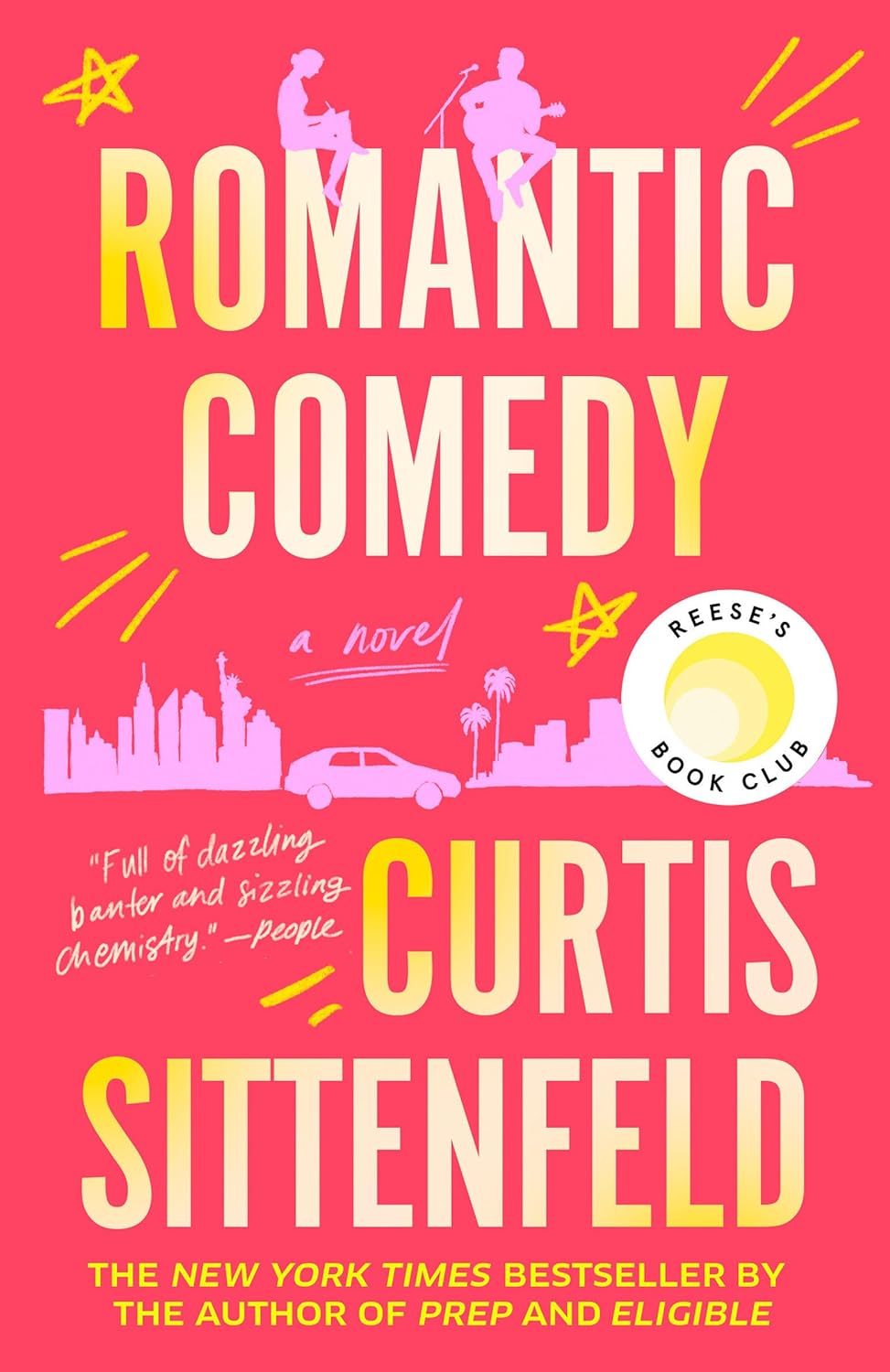
by Curtis Sittenfeld
Published 2024
A comedy writer thinks she's sworn off love, until a dreamy pop star flips the script on all her assumptions—a hilarious, observant, and deeply tender novel from the New York Times bestselling author of Eligible, Rodham, and Prep.
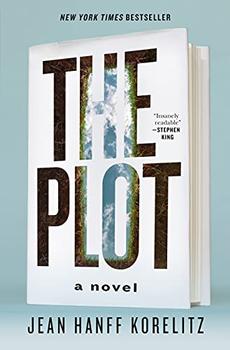
by Jean Hanff Korelitz
Published 2022
Hailed as "breathtakingly suspenseful," Jean Hanff Korelitz's The Plot is a propulsive read about a story too good not to steal, and the writer who steals it.
Theo of Golden by Allen Levi
One spring morning, a stranger arrives in the small southern city of Golden. No one knows where he has come from…or why…




Your guide toexceptional books
BookBrowse seeks out and recommends the best in contemporary fiction and nonfiction—books that not only engage and entertain but also deepen our understanding of ourselves and the world around us.

