
-
Your next favorite book
is waiting.
Summary | Excerpt | Reading Guide | Reviews | Beyond the book | Read-Alikes | Genres & Themes | Author Bio

A Novel
by María Ospina Book Reviewed by:
A recent crop of animal-focused memoirs and novels have examined the relationships between humans and animals or considered the lessons we humans might learn about our individual lives, or our own species more broadly, from striving to understand, for example, a hawk or an octopus. In Only a Little While Here, María Ospina takes a markedly different approach in a novel that thoroughly centers the lives of animals while also keeping them at a remove from human relationships or even human understanding.
The novel, structured like a series of broadly interconnected short stories, opens and closes with two dogs, Kati and Mona. Kati has been forced to fend for herself on the streets of Bogotá ever since her human companion was, along with many other unhoused people living in a city park, taken into police custody. Mona, who used to live in an apartment, has been inexplicably abandoned by her owner on the streets. At the close of the first section, the two seem to find comfort in one another amid the cold unfriendliness of an animal shelter. When readers meet Kati and Mona again later, it's to see the two separated, as Kati is adopted by a new human and taken to live several hours away, in the country.
A dog is a common subject of fiction, but the three animals whose lives are examined in the middle chapters of the novel are rather less typical. First, readers meet a scarlet tanager in the midst of an annual fall migration from the northern United States to his winter home in the South American forest. His travels are interrupted by numerous detours, caused by human activity and obstacles (such as airplanes, skyscrapers, and military drones) that the bird cannot possibly comprehend. His instincts persist, however, as he makes his way south.
A june bug is the star of the next (and most broadly humorous) story—soon after emerging from her larval state, she's trapped in a plastic bag with a bunch of chard (in a scene that will prompt readers to remember to thoroughly wash their vegetables before eating). Chard and bug are transported by car to the big city—only to meet a violent but completely natural end.
Finally, a baby porcupine whose mother was killed by a dog is brought to a wild animal clinic by the dog's owner, wracked with feelings of guilt over the role she inadvertently played in this young animal's life. This chapter offers the most consistent human-centered perspective, as the narrative alternates between the seemingly bewildered porcupine and the woman's feelings of attachment and loss.
Throughout, Ospina painstakingly avoids imposing human-like thoughts and feelings onto her animal characters, or, as in the fate of the june bug, conveying human-centered feelings of regret or sadness at the troubles they encounter. Animals are always described by their behavior rather than via the interiority of their thoughts, and the frequent statements about their underlying feelings or motivations are carefully couched in conditional language. On the one hand, this is an intriguing and admirable method of ensuring that the animals are depicted on their own terms, not portrayed as quasi-humans in furry or feathery clothing. But the resulting prose can feel at times almost exhausting in its repeated speculations (italics added):
"Perhaps the tanager recognizes the surviving oak in the middle of the pasture when he lands there as if searching for somewhere to recover from the confusion. Maybe he knows that he perched there before and feels the welcome of the living tree still embraced by bromeliads, fungi, and ferns. Who knows if he hears a vaporous bewilderment rise from its leaves or if he senses its cries over the absence of its tribe, over bonds cleaved by a chain saw. Maybe he can understand…"
One likes to hope the sentences in the novel's original Spanish are more varied in structure and word choice, but despite translator Heather Cleary's admirable and often elegant efforts, paragraph after paragraph of sentences written this way can grow tedious. The point being made here is that humans cannot pretend to understand animals on our terms, only on theirs, which are largely opaque to us. The human who adopts Kati at the novel's end, in fact, is implicitly critiqued for her ham-fisted efforts to understand and relate to Kati's thoughts and emotions.
What's left to Ospina, then, is to position these inscrutable animals against a backdrop of human concerns, which at times are used to relate metaphorically to the creatures' journeys toward or away from home. Gentrification, climate change, and the ravages of war and revolution are all present here, but the most pervasive themes are those of forced migration, displacement, and detainment, big issues that find parallels in these small stories of bugs, birds, and mammals. Although the novelist does so in a way that might initially feel alienating to many readers, Only a Little While Here still elicits deep reflection not only on the mysteries of the animal kingdom but also on the ongoing tragedies of our own.
 This review
first ran in the April 8, 2026
issue of BookBrowse Recommends.
This review
first ran in the April 8, 2026
issue of BookBrowse Recommends.

If you liked Only a Little While Here, try these:

by Portia Elan
Published 2026
Five interlocking lives. One beloved story. A dazzling adventure across centuries and continents in search of the things that hold us together.

by Chloe Dalton
Published 2026
A moving and fascinating meditation on freedom, trust, loss, and our relationship with the natural world, explored through the story of one woman's unlikely friendship with a wild hare.

by Shelby Van Pelt
Published 2025
Winner of the 2022 BookBrowse Debut Award
For fans of A Man Called Ove, a charming, witty and compulsively readable exploration of friendship, reckoning, and hope that traces a widow's unlikely connection with a giant Pacific octopus.
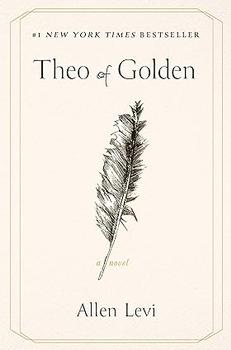
Theo of Golden by Allen Levi
One spring morning, a stranger arrives in the small southern city of Golden. No one knows where he has come from…or why…






Your guide toexceptional books
BookBrowse seeks out and recommends the best in contemporary fiction and nonfiction—books that not only engage and entertain but also deepen our understanding of ourselves and the world around us.

