
-
Your next favorite book
is waiting.
Summary | Excerpt | Reviews | Beyond the book | Read-Alikes | Genres & Themes | Author Bio

 Book Reviewed by:
The Sound and the Fury is widely considered to be Nobel Prize–winning author William Faulkner's masterpiece. Based in part on Faulkner's own experiences, the novel describes the deterioration and ultimate collapse of the Compsons, a once-prominent white Mississippi family.
The novel is composed of four sections, the first three of which are narrated by the Compsons' sons. Benjy, whose point of view readers encounter in the first segment, is the youngest Compson child, an intellectually disabled man of 33 whom we meet on Saturday, April 7, 1928—the day before Easter Sunday. He's unable to comprehend the passage of time, to differentiate between past and present. We next read the perspective of his eldest brother, Quentin, in a section set in 1910, at the end of Quentin's first year at Harvard. Jason Compson IV, the middle child, narrates the next section, and we find that by 1928 he has grown into a bitter, money-obsessed bigot (and, frankly, one of the most loathsome characters in classic literature). The final section takes place the day after Benjy's narrative, on Easter Sunday, and is from the perspective of the Compsons' long-time servant, Dilsey Gibson, who is Black. She's aware she is witnessing the tragic decline of the family with whom she's spent her life but is unable to stop its destruction.
Each narrator's voice is distinct and represents a different aspect of the novel's themes, but all the characters' attention centers on the boys' sister, Caddy. The brothers are profoundly affected by her promiscuity. Benjy can't understand that his sister, the only person who ever showed him any kindness or affection, has left for good. Quentin, who is obsessed with antebellum myths of chivalric honor and purity, can't come to terms with his sister's out-of-wedlock pregnancy. And Jason blames Caddy for his lack of a career, because her husband promised him a job in banking but withdrew the offer after discovering Caddy's child was not his own. While Quentin and Jason blame Caddy for their family's downfall, however, Faulkner himself indicates the decline began with their parents, the nihilistic, alcoholic Jason III and his self-absorbed, hypochondriacal wife, Caroline.
With the exception of the final chapter, Faulkner uses stream-of-consciousness narration to depict the inner workings of the Compsons' minds (see Beyond the Book). Readers also get the full picture of the family's history through their individual recollections of past events as well as their offhand thoughts, each character adding to the mosaic. Benjy, for example, remembers chasing a schoolgirl he believed was Caddy, and knows his behavior had some sort of consequence that remains unclear in his section. Much later, in Jason's monologue, we learn the family had Benjy castrated when Jason, alluding to the event, opines that they should have sterilized Caddy as well. Throughout Quentin's section it's implied he's planning suicide, but his drowning is only confirmed when a resentful Jason thinks, "I never had university advantages because at Harvard they teach you how to go for a swim at night without knowing how to swim…"
Faulkner's technique throughout is astonishing; the multi-layered storytelling is masterful, intricate, and utterly distinct. That said, The Sound and the Fury can be, for the reader, a profoundly challenging work. Benjy's section is confounding, as Faulkner conveys the character's inability to conceive of time through sudden shifts to the past (sometimes, but not always, marked by italics). Quentin's chapter is almost as dense, although it's a bit clearer when he shifts to the past, while Jason's is the most straightforward of the three. Because of this narrative complexity, the novel might require more than one reading to decipher (and a good search engine helps a lot, too). But that's one of the joys of reading this novel; the Compsons' story is a puzzle that readers are challenged to assemble.
It's worth noting that there are racial slurs in the book. The "n-word" is used throughout, and Dilsey and her family are treated almost as if the Compsons are their enslavers rather than their employers. Faulkner elevates Dilsey to the moral core of the book, however, painting her as the household's only source of stability.
I, for one, treasure The Sound and the Fury; to me it's an unrivaled creation, brilliant in ways few other books are. It might not be an easy read, but it's an immensely satisfying one.
 This review
first ran in the January 28, 2026
issue of BookBrowse Recommends.
This review
first ran in the January 28, 2026
issue of BookBrowse Recommends.

If you liked The Sound and the Fury, try these:
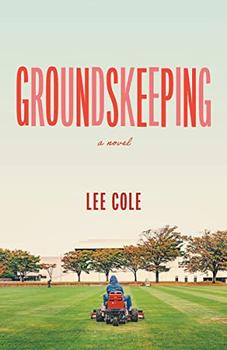
by Lee Cole
Published 2023
An indelible love story about two very different people navigating the entanglements of class and identity and coming of age in an America coming apart at the seams - this is "an extraordinary debut about the ties that bind families together and tear them apart across generations" (Ann Patchett, best-selling author of The Dutch House).
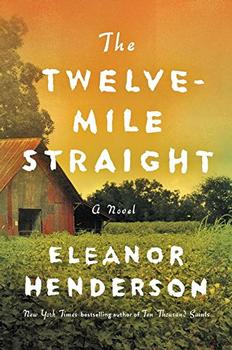
by Eleanor Henderson
Published 2018
From New York Times bestselling author Eleanor Henderson, an audacious American epic set in rural Georgia during the years of the Depression and Prohibition.
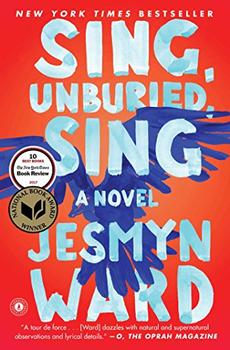
by Jesmyn Ward
Published 2018
A searing and profound Southern odyssey by National Book Award winner Jesmyn Ward.
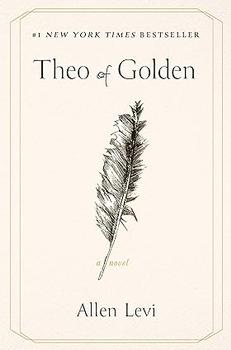
Theo of Golden by Allen Levi
One spring morning, a stranger arrives in the small southern city of Golden. No one knows where he has come from…or why…






Your guide toexceptional books
BookBrowse seeks out and recommends the best in contemporary fiction and nonfiction—books that not only engage and entertain but also deepen our understanding of ourselves and the world around us.

