
-
Your next favorite book
is waiting.
Summary | Excerpt | Reviews | Beyond the book | Read-Alikes | Genres & Themes | Author Bio

A Novel
by Billy-Ray Belcourt Book Reviewed by:
"I was going to make something that was the opposite of a country: beautiful." This declaration comes from the unnamed narrator of Billy-Ray Belcourt's A Minor Chorus, and it deftly sums up the mood and priorities of the book. For Belcourt and his character, aesthetics and art are inseparable from politics, which are inseparable from reality, including the reality of the ongoing oppression and genocide of Indigenous people living under North American settler-colonial rule. And this reality, Belcourt shows, is intimately and mundanely connected to the larger reality of everyday existence—for everyone—under this kind of governance.
The narrator, a queer Cree grad student in Edmonton disillusioned with the university, has decided to pause work on his dissertation to write a novel. His research will involve returning to his rural Alberta hometown to interview some of the residents there. The story before us may be the eventual novel the narrator writes, but we are also in the position of traveling alongside him as he pieces together what he wants it to encompass, viewing his scattered thoughts about literature, theory, queerness, indigeneity, and more, which gives the writing an off-the-cuff feel. Through its characters, their experiences thick with history, A Minor Chorus moves back and forth in time. While relayed in the past tense, it is in conversation with the present and future, alive.
That this is a difficult book to pin down at its edges, to say where it ends or begins, to say whether its fictional narrative is a representation of the character's fieldwork and notes or rough draft or final version, seems intentional. The narrator wants to free himself of the restrictions of academia through creative work, but he is also suspicious of the restrictions of the traditional novel. At one point late in the story, while visiting his cousin Jack in a detention facility, he thinks "about how novels frame human existence and sensation so narrowly that a character can appear to be trapped in a structure without agency. This wasn't analogous to a prison by any means, but in my mind it seemed to underscore the way normal people, writers that is, play the part of a security guard or a correctional officer under the auspices of literature."
Belcourt's novel is also difficult to pin down because, as the title suggests, it's an ensemble piece. The narrator means to use the stories of the people in his hometown as material for his book, and there's no clear line between his designated interviewees and those he has spontaneous conversations with along the way. As the character progresses in his research, we come to understand more about him through his interactions with his friends, family, and strangers. Through his great-aunt Mary, we learn about his closeness with Jack when they were boys, and how Jack was later driven to activities that led to his eventual arrest, trapped by his lack of employment options and vulnerability to police surveillance as an Indigenous man, a fate that the narrator may have narrowly escaped. We learn how Michael, an older gay man who still lives in the narrator's hometown, alerted the narrator to the possibilities of queer masculinity simply by quietly existing. Through Graham, a white divorcé the narrator meets on Grindr who is still pining for his ex-wife, the narrator's own struggles with love and longing are illuminated. In a conversation with the aunt who mostly raised him, we come to see the narrator's difficult relationship with his mother, who was absent in his youth—the pain she has caused him but also the forgiveness and understanding he holds for her, feeling that her actions are inseparable from the effects of racism and colonialism on her.
All these anecdotes, as they are mentioned here, could be considered tragedies separately, but together, they form something that feels of a different quality and weight. While the narrator is a passionate young person steeped in intellectual culture and therefore somewhat prone to making lofty proclamations about other people's lives, he carries their stories with respect, and his carrying of them seems to have the effect of making them lighter—even stories shared from people who don't know each other begin to seem connected and part of a mutually supportive structure. It's also a joy to encounter a narrator who spreads words and ideas as generously as Belcourt's does. He communicates in the manner and form of someone with an intensely academic education, but he does so about subjects that matter, genuinely, and he shows self-awareness, reflecting that he "was interested in how a singular voice, when heard from a sociological distance, implicated a larger population, in how the autobiographical was rarely an individualistic mode; all of its wonder and devastation was social," but then continuing, "I knew I couldn't articulate that interest in those terms…I often questioned what use that language was when it alienated so many. But just as we don't get to choose who we love, as the saying goes, I don't think we get to choose which kinds of language envelop us like another layer of skin."
And the narrator is omnivorous when it comes to language, mixing registers and formats, combining irreverence with intellectualism. At one point he posts to social media, "My theory of aesthetics is that if you're queer you're predisposed to the condition of overwriting because when you come into your identity after a time of closetedness excess becomes a way of plotting yourself in a different story than the one you inherited. It's literally gay to be a bad writer!" If this remark is meant to be self-referential and self-deprecating, it only hits close enough to the mark to amuse; part of the appeal of A Minor Chorus is that it reads easily and freely, like a journal entry rather than the carefully edited, intentional project it obviously is. But the significance of Belcourt making room both to play with text and to say exactly what he means can't be downplayed. It allows for a naturally occurring optimism that wouldn't be possible without such a direct and honest approach.
Possibly my favorite language in this endlessly quotable book lies in some of its more visually oriented, descriptive passages, in particular one that reminds me of Yuri Herrera's depiction of the United States in Signs Preceding the End of the World, through the eyes of a woman who has crossed the border from Mexico, as a strange, institutionalized place, where a city is "an edgy arrangement of cement particles and yellow paint." Belcourt writes of the Canadian countryside—an ordinary, loaded term—near his hometown with a consciousness of everything it contains: "I passed through reserves as well as predominantly white villages and hamlets, one after the other, a pattern that could only have been devised from a colonizer's militaristic imagination, and maybe it was. There were swaths of forest around the reserves and farmers' fields in between…Nothing was inextricable from the trauma of the twentieth century…yet the topography was gorgeous, yet my people were still so full of life." This description, at once quotidian, menacing, and hopeful, calls attention to how politicized a landscape can be. There's a relief in seeing the part that isn't usually acknowledged said plainly, and this only enhances the other true part; it isn't the country that's beautiful, it's what remains despite it.
 This review
first ran in the January 28, 2026
issue of BookBrowse Recommends.
This review
first ran in the January 28, 2026
issue of BookBrowse Recommends.

If you liked A Minor Chorus, try these:

by Aaron John Curtis
Published 2026
A coming-of-middle-age novel about an Ahkwesáhsne man's reluctant return home and what it takes to heal.
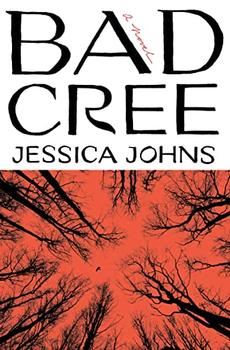
by Jessica Johns
Published 2023
In this gripping, horror-laced debut, a young Cree woman's dreams lead her on a perilous journey of self-discovery that ultimately forces her to confront the toll of a legacy of violence on her family, her community and the land they call home.
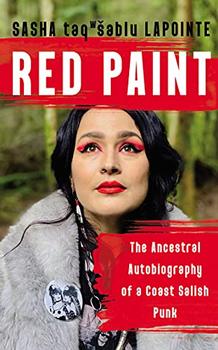
by Sasha taqʷšəblu LaPointe
Published 2023
An Indigenous artist blends the aesthetics of punk rock with the traditional spiritual practices of the women in her lineage in this bold, contemporary journey to reclaim her heritage and unleash her power and voice while searching for a permanent home.
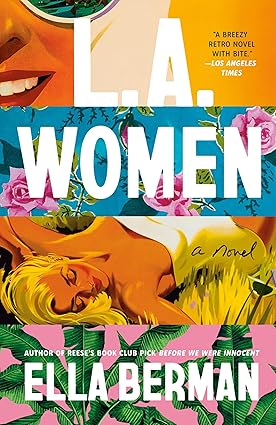
L.A. Women by Ella Berman
Two ambitious writers in 1960s LA face betrayal when one writes a novel based on the other's life.






Your guide toexceptional books
BookBrowse seeks out and recommends the best in contemporary fiction and nonfiction—books that not only engage and entertain but also deepen our understanding of ourselves and the world around us.

