
-
Your next favorite book
is waiting.
Summary | Excerpt | Reviews | Beyond the Book | Read-Alikes | Genres & Themes | Author Bio

A Novel
by Billy-Ray Belcourt Book Reviewed by:
This article relates to A Minor Chorus

 Billy-Ray Belcourt's A Minor Chorus examines aspects of the human condition in a way that is deeply erudite but also intensely physical. Through this approach, Belcourt demonstrates how the problems and questions of existence don't reside in some nebulous realm of the mind, but are bound up in the politics of how we inhabit our bodies, and how we move inside them in space, freely or otherwise. For the book's unnamed narrator, a queer Cree grad student who returns from Edmonton to his rural hometown to gather material for a novel, the philosophical despair he feels about his own life and life in general is inextricably connected to the physical and material realities of his existence as a gay Indigenous man in a settler-colonial state.
Belcourt's expression of bodies in space manifests both in the narrator's observations of the limitations and restrictions in the world around him, such as when he visits his incarcerated cousin Jack in a detention facility ("a…hypermediated realm where my entire body, my entire personhood, would be subject to interrogation, to surveillance from nowhere and everywhere"), and in the ways that he seeks to free his own body from the carceral state. One of these is writing. "If nothing else," he thinks, "art could usher in a brief trace of another kind of embodiment, another experience of having a body that wasn't already absorbed into the misery machine called life under white supremacist capitalist heteropatriarchy." Another is sex, a vehicle to embodiment for which he's willing to take some risks, using Grindr for anonymous hookups.
This is how he meets Graham, a middle-aged white man. Their encounter is described at first in such a way that their movements appear synchronized: "We stepped rhythmically toward each other, / as if about to begin a choreographed dance." Shortly after, however, we see them physically at odds: "My arms gave out and I crashed down onto him. / Kaboom, I said. / He winced melodramatically, contorting his face as if he had just been unexpectedly blinded." Here, the narrator's playfulness is contrasted with Graham's rigidity. The dynamic between them isn't serious, Graham is dramatizing his reaction, and we don't have the sense that his more reserved demeanor should be simplistically read as political conservatism. But as the narrator learns about Graham's life, it becomes impossible not to see the two men's bodily movements as indicative of the social and physical spaces they are used to inhabiting.
Graham's backstory begins with a movement; the narrator notices he's tugging at his ring finger and asks him about "the invisible wedding ring you keep fiddling with." This leads to the tale of his ex-wife, Sara, who began to withdraw from him when she suspected his attraction to men. He expresses to the narrator that he would have stayed with her for the rest of his life. But in retrospect, he sees that they were misaligned in their views about marriage, that she saw it as "a relinquishment of possibility," and was therefore bothered even by "something that existed solely as potential." Graham confesses that he still lives in the house he and Sara bought together, keeping his encounters with men, which he refers to as "experiment[ing] sexually," to hotel rooms. He says of the time during his marriage that "he'd only known how to be in a body, how to move and think, as an extension of Sara," and one has the sense that this may still be the case. At the very least, there is a strict location-based division between his home, a shrine to the past, and his connections with men, which happen elsewhere. These connections are obviously not strictly physical, as he opens up to the narrator—perhaps, physical intimacies lead naturally to other intimacies, but one wonders what meaning he assigns them, if any at all.
If the detention center is the most literal manifestation of the carceral state, the reader can see Graham's life as an ordinary, self-imposed example of it. Graham is privileged enough to avoid the kind of everyday encounters with law enforcement that Jack and the narrator have experienced from the time they were boys, aware of themselves as simultaneously invisible and policed, expendable from society. Presumed to be a straight white male for most of his life, Graham has been able to move securely, if not comfortably, in a world shaped by the white supremacist capitalist heteropatriarchy of which the narrator is acutely aware, and yet, having lost some status in that world because he failed to fulfill all its expectations, he chooses to police rather than free himself. He is temporarily present in the same space as the narrator, but imprisoned by the restrictions he has placed on his desires.
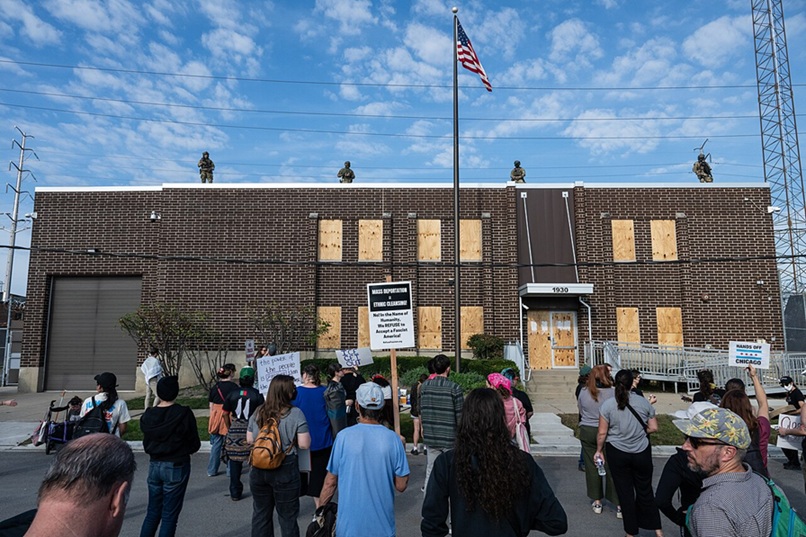
As I write this, United States Immigration and Customs Enforcement is conducting raids in Minneapolis and other places. These events have made it unsafe for people of color to physically exist in public (more than usual), and have included the detainment of four members of the Oglala Sioux Tribe and the murder of a queer white woman, among other killings and violations of personhood, demonstrating how the criminalization of immigration, indigeneity, and queerness are linked in systems of settler-colonialism that only know how to break down the door while simultaneously slamming it shut. Here, we see not an exceptional abuse of power but an inevitable intensifying of the connection between the threat of violence wielded by the state towards those it deems expendable and the everyday, interpersonally maintained hierarchies of existence that support it, and we see this happening in cities where immigrants; Black, Indigenous, and other racially marginalized people; and queer people have specifically gone to avoid physical scrutiny.
Belcourt is far from the only writer to have pointed out that the social policing of people's bodies in smaller ways, from homophobia to gender essentialism to casual expressions of racism, including how some police their own bodies to make them adhere to expectations, is inseparable from the larger violences of the state, but A Minor Chorus is an especially potent example of a work of fiction that demonstrates this. It's easy to draw parallels from its content, continuously, to the injustices of the day under the rule of Canada, the US, and other governments.
In Belcourt's novel, the narrator lives a much more dangerous life than Graham as a visibly queer Cree man, but he is freer with his body and how he positions it in the world around him, perhaps because he is more aware of how precious and fleeting his existence is, perhaps because he has less to lose in a world shaped by white supremacist capitalist heteropatriarchy, and everything he has to gain is outside of it. What Graham doesn't seem to be aware of is that he has much to gain outside that world, too.
USCIS (ICE) Processing Center in Broadview in Chicago, courtesy of Paul Goyette via Flickr, CC-by-4.0.
Filed under Books and Authors
 This article relates to A Minor Chorus.
It first ran in the January 28, 2026
issue of BookBrowse Recommends.
This article relates to A Minor Chorus.
It first ran in the January 28, 2026
issue of BookBrowse Recommends.

L.A. Women by Ella Berman
Two ambitious writers in 1960s LA face betrayal when one writes a novel based on the other's life.







Your guide toexceptional books
BookBrowse seeks out and recommends the best in contemporary fiction and nonfiction—books that not only engage and entertain but also deepen our understanding of ourselves and the world around us.

